Key takeaways
- Budget: a webcam on an arm or a basic USB document camera for occasional use.
- Mid-range: IPEVO V4K and similar USB cameras for regular home or hybrid teaching.
- Upper mid-range: IPEVO VZ-X and compact HDMI models.
- Premium: Lumens, Elmo and Epson institutional cameras with lighting and zoom.
For most home users and teachers, an IPEVO document camera such as the V4K or VZ-X is the practical pick, while schools that need rugged, standardised units tend to look at Lumens, Elmo or Epson classroom models, and anyone scanning only occasionally may get by with a smartphone stand or a webcam on an arm. The right choice depends on who will use it, how it connects and how much of the desk surface you need to capture.
Our top picks


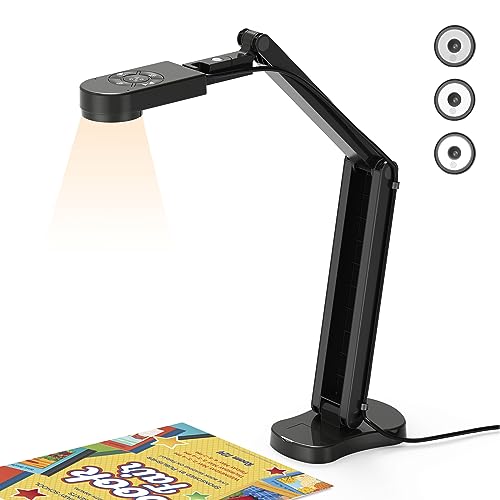

As an Amazon Associate we earn from qualifying purchases at no extra cost to you.
Document Cameras at a Glance
Figures below reflect what the makers publish; models and connections vary by region, so read the product page for the version sold to you.
| Model | Best for | Key stated features | Limits |
|---|---|---|---|
| IPEVO V4K | Home, remote teaching, travel | Compact USB camera with an 8-megapixel sensor, autofocus, flexible arm design | Needs a computer or compatible device; no built-in display |
| IPEVO VZ-X | Classrooms wanting wireless and HDMI | Wireless and wired connection options, high-resolution camera, designed for presenting without a computer | Higher budget tier than the V4K; more setup options to learn |
| Epson DC-series classroom cameras | Schools standardising on one brand | Classroom-focused models with HDMI and USB outputs per the maker | Larger and less portable |
| Lumens document cameras | Professional and higher education rooms | Full-size cameras with built-in lighting and zoom, range of models | Premium tier, more than a home user needs |
| Elmo document cameras | Long-term school installations | Established classroom brand with a range of resolutions and connections | Premium tier; check which resolution each model offers |
| Webcam on a stand | Occasional use on a tight budget | Any USB webcam on a desk arm pointing down | Fixed focus issues, glare, limited close-up quality |
What a Document Camera Actually Does
A document camera points down at a page, an object or your hands and sends the image to a screen, projector or video call. Teachers use them to show worksheets and demonstrate experiments, while remote workers use them for signing documents, sharing hand-drawn sketches and showing small items. Compared with a phone on a stand, a dedicated unit offers a steadier arm, a consistent field of view, autofocus tuned for close range and software that handles screen sharing.
Features to Compare
Resolution and Autofocus
Eight megapixels is the common high-resolution tier, enough to capture a page of text legibly in a video call. Lower resolution units can still handle large print. Autofocus matters because the camera must refocus whenever you swap pages or lift an object, and reviewers often name slow focusing as a common complaint on cheaper units.
Field of View and Reach
Look at the maker’s stated capture area. A camera that covers A4 or letter-size paper in one frame is the minimum for document work. Larger areas let you show an open book or an A3 sheet, but at a lower detail level. Gooseneck designs add reach but may wobble when the desk is shaken.
Connection Options
USB cameras plug into a computer and appear as a webcam, which is simple for video calls. HDMI output lets you present on a projector or monitor without a computer. Wireless models reduce cable clutter in classrooms but depend on a good network. Check that your operating system and teaching software are supported.
Lighting and Glare
Glossy pages reflect room lights, and some models include built-in LED lights or tilted heads to manage glare. If your camera lacks lights, a desk lamp placed to the side often helps. Reviewers report that matte paper is easier to capture than glossy printouts.
Software
Annotation, recording, image capture and split screens are common software features. Free software from the maker covers basic needs. Schools often value compatibility with existing interactive whiteboards and learning platforms.
Portability and Build
Lightweight folding cameras fit in a bag for teachers who move between rooms. Heavier models are steadier on a desk but stay in one place. Classroom units should also withstand frequent handling, so look at the build quality described by reviewers.
IPEVO V4K: Home and Remote Teaching
The V4K is a compact USB camera with an 8-megapixel sensor and autofocus, widely cited by reviewers as a straightforward choice for remote teachers. It folds small enough for a bag and works with common video conferencing tools. Because it needs a computer, it is less suitable for classrooms that want to project directly.
IPEVO VZ-X: Wireless Classroom Option
The VZ-X adds a stand-alone feel with HDMI and wireless options, designed so a teacher can present without a laptop. It sits at a higher budget tier but suits those who move around a room. Setup takes a little longer than a plug-in USB camera.
Epson, Lumens and Elmo: Institutional Models
These brands make full-size cameras with built-in lights, zoom and various connection ports, aimed at schools, training rooms and conference rooms. They tend to cost more and take more desk space, but they offer consistent performance and support for long-term use. If you manage many classrooms, standardising on one family simplifies training and spare parts.
Budget Tier Summary
- Budget: a webcam on an arm or a basic USB document camera for occasional use.
- Mid-range: IPEVO V4K and similar USB cameras for regular home or hybrid teaching.
- Upper mid-range: IPEVO VZ-X and compact HDMI models.
- Premium: Lumens, Elmo and Epson institutional cameras with lighting and zoom.
Setup and Care Tips
- Place the camera on a stable surface and avoid positions where the arm can be knocked.
- Clean the lens gently with a microfibre cloth.
- Use a plain, non-reflective mat to reduce glare and improve auto exposure.
- Check that cables are routed away from walkways to avoid tripping.
- Test the camera with your conferencing software before the first live session.
Pick the Right Document Camera
| Pick this if you… | Choose |
|---|---|
| teach remotely and want something portable | IPEVO V4K |
| present in a classroom without a laptop | IPEVO VZ-X or an HDMI classroom model |
| manage a school and want standardised units | Epson, Lumens or Elmo |
| need it only occasionally | Webcam on an arm or phone stand |
Alternatives
- Phone on a desk stand: flexible and often free, but with the app and focus issues of a phone camera.
- Flatbed or sheet-fed scanner: better for archiving documents than for live presenting.
- Overhead webcam mounts: some webcam makers sell desk-mounting kits for a similar setup.
Buying Checklist and Common Mistakes
Start with where the camera will live. A teacher who carries gear between rooms needs a light folding unit and a short cable, while a permanent classroom installation can use a heavier camera with lights and a fixed mounting position. Next, decide whether you present to a projector, a monitor or a video call, because that determines whether USB, HDMI or wireless output matters most. Many buyers overlook the cable length, so measure the distance from the desk to the display or computer before ordering.
A frequent mistake is paying for resolution that the display cannot show. A standard classroom projector or a video call compresses the image, so an extremely high resolution adds little. Another is ignoring software: a camera that ships with simple annotation and recording tools saves time compared with one that needs a separate paid program. Finally, think about the objects you will show. If you plan to display three-dimensional items such as science specimens or crafts, look for a camera with a flexible arm and a generous focus range, and consider a unit with a rotating head so you can also face the class.
For households, a document camera also suits hobbies such as crafts, model building and tutoring. Because a downward-facing view is steadier than a handheld phone, it works well for showing handwriting and small repairs during a video call.
Frequently Asked Questions
Is a document camera better than a phone on a stand?
A dedicated camera usually has a steadier arm, a fixed view and software for presenting. A phone offers high-quality optics and costs nothing extra if you own one. For occasional use a phone stand is enough, but for regular teaching a document camera is more convenient.
What resolution do I need?
Eight megapixels is a common high-resolution tier and handles standard text well on a video call. Lower resolutions work for larger print and drawings. Higher resolution matters more if you want to show small details or capture full pages for later use.
Can a document camera work with Zoom or Teams?
Most USB models appear as a webcam, so they can be selected as the video source in conferencing software. Check the maker’s compatibility notes for your operating system. Some units also offer HDMI output for projectors.
How do I avoid glare on glossy paper?
Move lights to the side, use a matte mat or tilt the page slightly. Models with adjustable heads or built-in lights can help. Matte paper is easier to capture than glossy.
Are wireless document cameras reliable?
They are convenient but depend on the strength of your network. Wired connections tend to be more consistent in busy classrooms. Test the wireless setup in the actual room before relying on it.
Can I use a document camera for scanning?
Yes, many models capture still images of pages. For high-volume or archival scanning, a dedicated scanner offers better consistency. A document camera is better for quick captures and live demonstration.
More from Amazon
Programs that pair well with the guide above. Offers and eligibility are set by Amazon and may change.
Free shipping on eligible items, Prime Video and more. Eligible new members can start with a free trial.
Start a Prime free trialAudiobooks and podcasts to listen to on the go. Eligible new members can start with a free trial.
Try Audible freeAd-free music streaming. Eligible new subscribers can start with a free trial.
Try Music Unlimited freeA free business account with business pricing and bulk-buying tools for work, shop or home office.
Create a business accountAs an Amazon Associate we earn from qualifying purchases.