
For most people starting out, a compact vlogging mirrorless such as the Sony ZV-E10 II or Canon EOS R50 is the simplest route to good video, while serious hybrid shooters should look at full-frame bodies like the Panasonic Lumix S5 II or Sony FX3, and travellers who value size above everything should consider the DJI Osmo Pocket 3. The right choice depends less on headline resolution and more on autofocus behaviour, stabilisation, recording limits, lens choice and how much weight you are willing to carry.
This guide groups current options by the kind of shooter they suit. Specifications below are what the makers publish; where reviewers report real-world behaviour, that is attributed to the outlet rather than stated as fact. Always read the maker’s current spec sheet before buying, because firmware updates and regional variants can change recording modes.
Our top picks
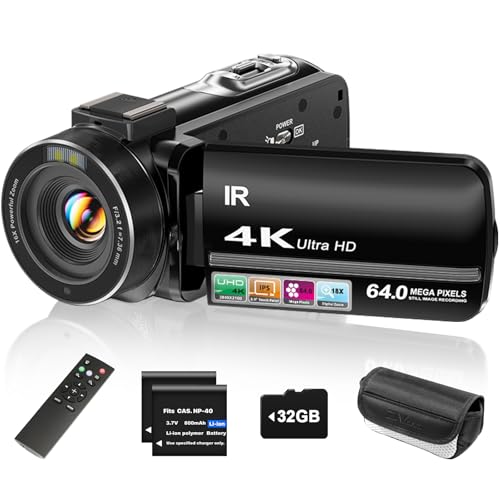 ZYDIIE 4K Video Camera Camcorder UHD 64MP
- 4K & 64MP Video Camera Camcorder: Capture life…
- 18X Digital Zoom & Infrared Night Vision: This…
- 3.0 Inches Touchscreen with 270° Rotation: This camcorder…
| Product | Key specs | |
|---|---|---|
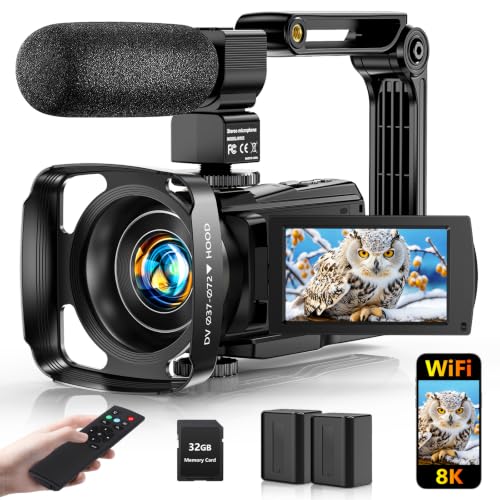 2026 8K Video Camera Camcorder | Check price | |
| ZYDIIE 4K Video Camera Camcorder UHD 64MP | 4K & 64MP Video Camera Camcorder: Capture life… 18X Digital Zoom & Infrared Night Vision: This… 3.0 Inches Touchscreen with 270° Rotation: This camcorder… | Check price |
 4K Video Camera Camcorder | Check price | |
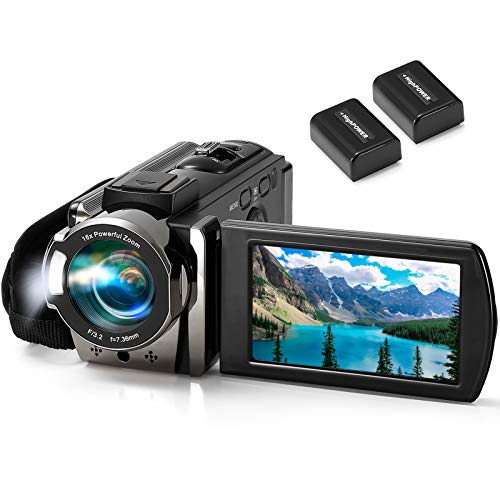 kimire Video Camera Camcorder Digital Camera Recorder | 【Video Camera as Webcam】: The video camera is… 【Multifunction Camcorder】: 1080P(15fps) Video Resolution, 24M(6000x4500) Image Resolution,… 【Pause Function】: This video camera supports Pause function,so… | Check price |
As an Amazon Associate we earn from qualifying purchases at no extra cost to you.
At a Glance: Video Cameras Compared
| Camera | Type | Best for | Key stated traits | Limits |
|---|---|---|---|---|
| Sony ZV-E10 II | APS-C mirrorless, interchangeable lens | Vloggers and YouTube creators | 4K recording, flip-out screen, product-showcase and background-defocus modes, strong autofocus tracking | Smaller sensor, fewer physical controls than pro bodies |
| Sony ZV-1 II | Compact, fixed wide zoom | Handheld talking-head and travel clips | Wide-angle fixed lens, 1-inch type sensor, built-in microphone with windscreen | No lens swapping, limited telephoto reach |
| Canon EOS R50 | APS-C mirrorless | First-time buyers wanting ease of use | 4K video, subject-tracking autofocus, light body, RF-S lens range | Basic controls and modest battery life |
| Panasonic Lumix S5 II | Full-frame mirrorless | Hybrid photo and video work | Phase-detect autofocus, high-resolution video modes, active cooling listed by maker | Larger body and lenses, a higher spend tier |
| Sony FX30 | Cinema Line APS-C | Filmmakers wanting a video-first body | 4K at high frame rates, cinema-style colour options, fan cooling | Minimal stills focus, no in-body stabilisation in some modes |
| DJI Osmo Pocket 3 | Handheld gimbal camera | Travel, walking and run-and-gun clips | 1-inch type sensor, built-in three-axis stabilisation, rotating screen | Fixed lens, small sensor versus mirrorless, limited manual lens control |
| Sony FDR-AX43A | Traditional camcorder | Events, school shows and long recordings | Optical zoom lens, 4K recording, built-in stabilisation, long-form recording | Weaker low-light look than large-sensor cameras |
Understanding What Matters in a Video Camera
Autofocus and eye tracking
If you film yourself, autofocus matters more than any other feature. Modern cameras from Sony, Canon and Panasonic offer face and eye detection that keeps a subject sharp as they move. Reviewers at major outlets generally describe Sony and Canon autofocus as among the most dependable for solo creators, while Panasonic has narrowed the gap with its phase-detect systems on newer bodies.
Sensor size and low light
Larger sensors gather more light, which usually means cleaner footage indoors. Full-frame cameras such as the Lumix S5 II lead here, APS-C bodies sit in the middle, and 1-inch type sensors in compacts and the Osmo Pocket 3 sit lower. In daylight the differences shrink considerably.
Stabilisation
Handheld footage lives or dies on stabilisation. In-body systems, lens-based systems and electronic modes each trade sharpness, crop and smoothness. Electronic stabilisation typically crops the frame slightly, which matters on a wide lens. A gimbal-equipped camera like the Osmo Pocket 3 sidesteps this for walking shots.
Recording limits and heat
Some small bodies stop recording when they warm up, particularly at high resolution in warm weather. Makers publish recording-time guidance, and reviewers often test it. Cameras with fans or large heat-sink designs, such as the Lumix S5 II and Sony FX30, are marketed toward long takes.
Audio
Built-in microphones are fine for casual clips but pick up wind and room echo. Check for a 3.5 mm microphone input, a hot shoe with digital audio, and a headphone jack if you plan to monitor sound. The ZV-E10 II lists a microphone input and a multi-interface shoe, while the compact ZV-1 II relies more on its built-in capsule with a windscreen.
Best by Use Case
Best for vloggers: Sony ZV-E10 II
The ZV-E10 II is aimed squarely at creators. Sony lists a fully articulating screen, 4K recording and creator-oriented features such as background defocus and a product-showcase mode that shifts focus between your face and an object you hold up. Because it takes interchangeable E-mount lenses, you can start with a wide zoom and grow into faster primes. Reviewers frequently point out the lack of in-body stabilisation on its predecessor line, so pairing it with a stabilised lens or using electronic stabilisation is common advice.
Best pocket camera: Sony ZV-1 II or DJI Osmo Pocket 3
Both fit in a jacket pocket. The ZV-1 II offers a wide fixed zoom lens suited to arm-length selfie framing. The Osmo Pocket 3, according to DJI, combines a 1-inch type sensor with a three-axis gimbal and a rotating touchscreen, which makes smooth walk-and-talk footage easy. The trade-off is that neither camera has swappable lenses, and neither will match a large-sensor body in dim rooms.
Best for beginners on a modest budget: Canon EOS R50
The R50 is small, light and straightforward. Canon lists subject-detection autofocus and 4K recording, and the RF-S lens ecosystem is growing, although reviewers note it has fewer native budget lenses than Sony’s E-mount. Its menus are friendly to newcomers, and it also works well as a stills camera for family use.
Best hybrid performer: Panasonic Lumix S5 II
The S5 II brought phase-detect autofocus to the Lumix S line. Panasonic lists full-frame video with generous bit-depth and codec options, and reviewers often praise its stabilisation and its value among full-frame video-capable bodies. The body and L-mount lenses are larger and heavier, so it suits people who plan to mount it on a rig, tripod or gimbal rather than carry it all day.
Best for filmmakers: Sony FX30
The FX30 is part of Sony’s Cinema Line and is built around video: tally lamp, mounting points, fan cooling and cinema-style picture profiles. It records 4K at higher frame rates for slow motion, according to Sony. If you need stills as well, it is a less natural fit than a hybrid camera.
Best for events and long recordings: Sony FDR-AX43A
Traditional camcorders remain useful when you want a long zoom range, comfortable handles, a built-in stabilised lens and the confidence of long recording times. School concerts, weddings from the back of the hall and sports halls are typical examples. The compromise is image quality in low light and shallow depth of field, where larger sensors win.
Budget Tiers
| Tier | What you get | Typical choices | Trade-off |
|---|---|---|---|
| Budget | Light APS-C bodies, compacts, entry camcorders | Canon EOS R50, Sony ZV-1 II | Basic controls, smaller batteries, less rugged builds |
| Mid-range | Creator-focused mirrorless with better audio and screens | Sony ZV-E10 II, DJI Osmo Pocket 3 | Still limited low-light performance versus full-frame |
| Premium | Full-frame and Cinema Line bodies with better codecs | Panasonic Lumix S5 II, Sony FX30 | Heavier kit, lens costs add up, steeper learning curve |
Remember that the body is only part of the budget. Budget for memory cards that meet the maker’s stated speed class, spare batteries, a lens, a microphone and a tripod or gimbal. For high-bitrate modes, the maker usually specifies a minimum card rating in the manual.
Fit, Size and Care Notes
- Lens mount ecosystem: Buying into E-mount, RF, L-mount or another system commits you to its lenses. Third-party lenses from Sigma, Tamron and Viltrox are common on E-mount, while Canon restricts some third-party RF autofocus support.
- Weight on a gimbal: If you plan to use a handheld gimbal, compare the camera and lens weight against the gimbal’s stated payload.
- Battery life: Small bodies often have modest batteries. Keep one or two spares for full-day shoots, and note that cold weather reduces battery performance.
- Heat and storage: Do not leave cameras in a hot car. Store them dry, with silica gel in humid climates, and clean lens elements with a blower and microfibre cloth rather than rubbing dust.
- Screens and rigs: Flip-out screens can be blocked by a cage or top handle, so look at accessory layouts before committing.
Pick X If… Decision Table
| Pick this | If you |
|---|---|
| Sony ZV-E10 II | Create YouTube videos, want swappable lenses and strong autofocus tracking |
| Sony ZV-1 II | Want a pocket camera for selfie-style clips without changing lenses |
| Canon EOS R50 | Are new to cameras and want an easy, light, family-friendly body |
| DJI Osmo Pocket 3 | Travel, walk and film, and want built-in gimbal stability in a tiny body |
| Panasonic Lumix S5 II | Shoot both photos and serious video and accept a larger kit |
| Sony FX30 | Plan short films, interviews or commercial work and want a cinema-style body |
| Sony FDR-AX43A | Record long events from a distance with a simple zoom camcorder |
Alternatives Worth Considering
- Canon EOS R10: A step up from the R50 with a more capable body layout, popular with creators who want faster controls.
- Fujifilm X-S20: A stills-and-video APS-C body with a favoured colour look and in-body stabilisation, as listed by Fujifilm.
- Panasonic Lumix G-series bodies: Micro Four Thirds cameras with compact lenses and long-standing video features, a good fit for travel kits.
- GoPro Hero action cameras: Rugged, waterproof options for sports and point-of-view clips rather than controlled interviews.
Frequently Asked Questions
Is a mirrorless camera better than a camcorder for video?
Mirrorless cameras generally offer larger sensors, interchangeable lenses and better low-light results. Camcorders offer long zoom ranges, built-in handles and long recording times. Choose a camcorder for events and long takes, and mirrorless for a cinematic look.
Do I need 4K?
Not always, since many viewers watch on phones or in 1080p. However, 4K gives you room to crop and reframe in editing, and most current cameras record it. If storage and editing speed are concerns, 1080p is still a valid delivery format.
Which is better for a beginner, a compact or a mirrorless camera?
A compact like the ZV-1 II is simple and portable, while a mirrorless camera like the R50 or ZV-E10 II lets you grow with new lenses. If you suspect you will want a more cinematic background blur later, mirrorless is the more flexible starting point.
How important is in-body stabilisation?
It is very helpful for handheld shooting, because it reduces shake without a gimbal. If your camera lacks it, look for stabilised lenses, electronic modes or use a tripod or gimbal.
What accessories should I buy first?
A reliable memory card, a spare battery, a clip-on or shotgun microphone and a tripod are the usual first purchases. Good audio often improves perceived quality more than a more expensive camera body.
Can a phone replace a dedicated video camera?
Modern phones produce excellent footage in good light, but dedicated cameras still offer better lenses, stronger low-light performance, manual controls and longer recording. A phone is fine for casual clips; a dedicated camera helps when you want consistent, professional-looking results.





