Key takeaways
- Mount the camera at the height and angle the manual suggests, usually facing north or south to avoid sun glare at sunrise and sunset.
- Clear branches in front of the sensor, which can cause false triggers.
- Use a quality SD card at the capacity and speed class listed by the maker, and format it in the camera.
- Check local laws. Some places restrict baiting, camera use on public land or cellular cameras in hunting, and privacy laws apply when cameras might capture neighbours or people.
- Obtain landowner permission before installing any camera.
For most buyers, a cellular trail camera from a maker such as Spypoint, Tactacam Reveal or Moultrie suits those who want photos sent to a phone, a standard no-glow or low-glow camera from Browning or Bushnell suits people who check an SD card, and a solar-powered model suits remote sites you rarely visit. The best choice depends on signal coverage, how often you visit, and whether you are watching wildlife, a property or both.
Our top picks
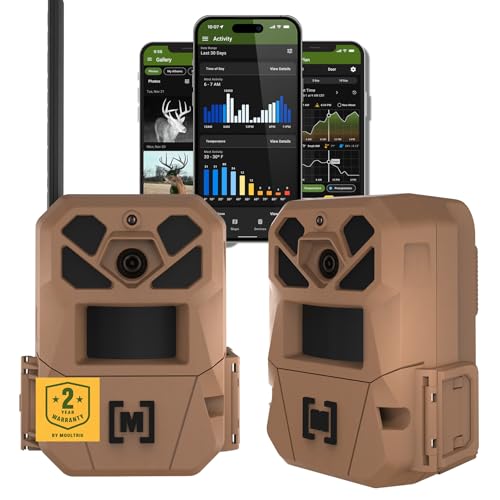


As an Amazon Associate we earn from qualifying purchases at no extra cost to you.
How to choose a trail camera
Trail cameras, also called game cameras, use a motion sensor to trigger a photo or video when an animal or person passes. They are used by hunters, wildlife watchers and property owners. Models differ in three big ways: how they send images (SD card only, Wi-Fi/Bluetooth or cellular), how they light the night (no-glow, low-glow or white flash), and how they are powered (AA batteries, rechargeable packs or solar panels). Spec sheets also list trigger speed and detection range, which affect how often you capture a moving animal.
At a glance
| Family | Best for | Key stated features | Limits |
|---|---|---|---|
| Spypoint Flex and Flex-S | Cellular reports with simple setup | Cellular transmission, app-based photo alerts, solar panel options, per the maker | Cellular plan required; coverage depends on the network |
| Spypoint Force and Link-Micro series | Compact cameras and lower-budget cellular | Smaller bodies, optional cellular on some models | Fewer features than flagship models |
| Tactacam Reveal series | Hunters who want fast cellular delivery | Cellular models, app, options for different network providers, per the maker | Data plan needed; premium tier |
| Moultrie Edge and Mobile series | Mid-range cellular and SD cameras | Broad lineup including cellular models with an app | Features vary widely by model |
| Browning Strike Force and Recon Force | SD card cameras known for fast trigger | Several models with no-glow or low-glow infrared, per the maker | You must visit to collect images, unless cellular is added |
| Bushnell Core and CelluCORE | Trusted optics and ease of use | Core series SD cameras and CelluCORE cellular cameras | Check the model for infrared type and video length |
| Reolink Go and solar trail models | Security-style monitoring of a remote area | 4G cellular and solar options for remote watching | Not designed primarily for hunting use |
Model names and cellular carriers change between years. Read the maker’s current specifications for the exact camera you consider.
Types of trail camera
SD card cameras
These store photos on a memory card. You visit the camera, pull the card and view the pictures. They are the lowest-budget option, and they have no monthly fee. Browning Strike Force, Browning Recon Force and Bushnell Core series are typical examples. They suit people who can check the camera often, for example a backyard or a nearby hunting lease. Trigger speed and recovery time are the specs reviewers highlight most.
Cellular cameras
Cellular cameras send pictures to your phone through a mobile network. Spypoint Flex, Tactacam Reveal, Moultrie Mobile and Bushnell CelluCORE belong here. They save trips and reduce disturbance at the site, which helps wildlife monitoring. The trade-offs are the camera’s higher purchase cost, a data plan fee and the need for a signal. Check the maker’s coverage map and the networks the camera supports before buying.
Wi-Fi and Bluetooth cameras
Some SD cameras connect to your phone when you stand nearby, letting you view images without removing the card. This is useful for property owners who visit regularly. Range is short, and you still need to visit.
Solar-powered cameras
A solar panel can extend battery life, especially on cellular cameras that use more power. The maker usually sells it as an accessory or a bundle. Panels need sunlight, so shaded forest sites may not benefit much.
Key features compared
Trigger speed and detection range
Trigger speed is the time from motion detection to photo. Faster is better for animals that move quickly. Detection range shows how far the sensor can see. Makers list these under controlled conditions, so treat figures as indicative.
Infrared type
No-glow infrared produces no visible light and is less likely to spook animals or attract attention, but the picture range is shorter. Low-glow has a faint red glow, and white flash gives full-colour night photos with the most visible flash. The choice depends on whether stealth or image quality matters more.
Photo and video resolution
Makers quote megapixels, but interpolated figures do not always mean better pictures. Reviewers focus on the actual sensor and lens. Video clips are useful for behaviour. A model with a long video length uses more battery and storage.
Battery and power
Most cameras run on AA batteries, with lithium cells recommended by many makers for cold weather. Rechargeable packs and external power ports are available on some models. Cellular cameras usually use more power.
Build and security
Look for a weather-resistant case, a lock slot or security bracket and a strap or mount. If theft is a concern, choose a model that lets you add a lock box or cable.
Fit and setup notes
- Mount the camera at the height and angle the manual suggests, usually facing north or south to avoid sun glare at sunrise and sunset.
- Clear branches in front of the sensor, which can cause false triggers.
- Use a quality SD card at the capacity and speed class listed by the maker, and format it in the camera.
- Check local laws. Some places restrict baiting, camera use on public land or cellular cameras in hunting, and privacy laws apply when cameras might capture neighbours or people.
- Obtain landowner permission before installing any camera.
Budget tiers
| Tier | Choice | Notes |
|---|---|---|
| Budget | Entry-level SD cameras from Browning, Bushnell, Moultrie or Wildgame Innovations | No fees; you visit the site |
| Mid-range | Spypoint Flex, Moultrie Mobile, Bushnell CelluCORE | Cellular alerts with a data plan |
| Premium | Tactacam Reveal and high-end Browning or Spypoint models with solar options | Fast trigger, strong build and reliable cellular delivery |
Pick X if…
| If you… | Pick | Why |
|---|---|---|
| Want alerts without visiting | Cellular camera such as Spypoint Flex or Tactacam Reveal | Photos delivered to your phone |
| Want to avoid monthly fees | Browning Strike Force or Bushnell Core | SD card storage only |
| Need to stay hidden from animals | No-glow infrared model | No visible flash |
| Monitor a remote property | Solar-powered cellular model | Less battery changing |
| Want to try without much spending | Entry-level SD camera | Low entry cost |
| Want clear night colour | White-flash model | Colour night images, more visible |
Alternatives
- Wi-Fi security cameras: good near a house where mains power or Wi-Fi is available, though not made for rough woodland use.
- Wildlife camcorders and mirrorless cameras with a motion trigger: for photographers who want higher quality images.
- Motion-activated action cameras: short-term use but limited battery life.
Care and safety notes
Handle lithium batteries as described by the maker and do not mix old and new cells. Keep desiccant packs inside the case if the manual suggests them. Check the camera regularly, keep the lens clean and be careful of wildlife, thorny brush and insects when installing. Never use trail cameras to record people in private spaces, and follow local rules for signs and notification.
Placement and results
Where you put the camera usually matters more than which model you buy. Trails, field edges, water sources and feeders concentrate animal movement. Mount the unit about knee to chest height depending on the animal you want, and angle it slightly down so the sensor covers the path. Test the field of view by walking in front of it, and leave the camera for a couple of weeks before moving it, since animals may avoid new objects at first. Keep notes of each location so you can compare activity between sites and seasons.
Managing data and plans
Cellular cameras can generate many images, and plans differ in photo limits, image sizes and whether older pictures are stored online. Some cameras let you choose a lower resolution for transmission while keeping full-size copies on the SD card. Setting a longer delay between triggers reduces duplicate pictures and saves battery and data. Review the app’s settings for scheduled reports, which can send a summary rather than every photo.
Frequently Asked Questions
What is the best trail camera for beginners?
A mid-range SD card camera from a known brand is a good start because there are no monthly fees. If you cannot visit often, a cellular model such as Spypoint Flex is easier but adds a data plan. Begin with one camera and learn about placement before adding more.
Do cellular trail cameras need a subscription?
Most do. Makers sell monthly or yearly data plans, and many offer free or lower tiers with limits on photo count. Read the plan terms and confirm network coverage in your area before purchase.
Are no-glow cameras better than low-glow?
No-glow cameras are less visible to animals and people, but the night range is often shorter. Low-glow cameras can illuminate farther but show a faint red glow. Pick based on whether stealth or range matters more.
How many batteries do trail cameras use?
The number varies by model, often 8 to 12 AA cells. Lithium batteries are recommended by many makers for cold conditions. Solar panels or rechargeable packs can reduce changes.
Where should I mount a trail camera?
Mount it on a sturdy tree or post at the height the manual suggests, angled slightly down at a trail or feeder area. Avoid facing east or west to reduce sun glare. Clear moving branches to limit false triggers.
Are trail cameras legal everywhere?
Rules differ by location. Some regions limit cameras on public land or for hunting, and privacy law may apply if people could be recorded. Check local regulations and get landowner permission.