
Key takeaways
- 24.1 Megapixel CMOS (APS-C) sensor with is 100–6400…
- Built-in Wi-Fi and NFC technology
- 9-Point AF system and AI Servo AF
The best APS-C camera for most photographers is the Fujifilm X-T50 or X-S20 if you want style and handling, the Sony a6700 if autofocus and video features matter most, the Canon EOS R7 for action and wildlife, and the Nikon Z50II for a friendly all-rounder. APS-C sensors are smaller than full frame, which keeps bodies, lenses and costs down while still delivering excellent image quality for travel, family, street and enthusiast work.
Our top picks
 Canon EOS Rebel T7 DSLR Camera EF-S
- 24.1 Megapixel CMOS (APS-C) sensor with is 100–6400…
- Built-in Wi-Fi and NFC technology
- 9-Point AF system and AI Servo AF
| Product | Key specs | |
|---|---|---|
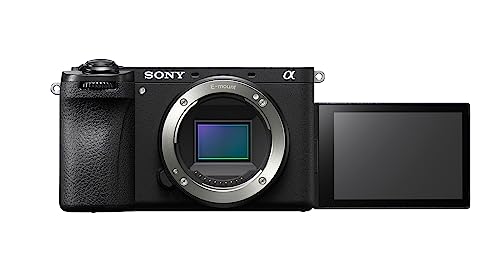 Sony Alpha a6700 APS-C Mirrorless Camera Body | Check price | |
 Sony Alpha 6700 APS-C Camera with 18-135mm | Check price | |
| Canon EOS Rebel T7 DSLR Camera EF-S | 24.1 Megapixel CMOS (APS-C) sensor with is 100–6400… Built-in Wi-Fi and NFC technology 9-Point AF system and AI Servo AF | Check price |
 Canon EOS Rebel T7 DSLR Camera Double | Improved Dual Pixel CMOS AF and eye detection… Built-in Wi-Fi and NFC technology working temperature range:… 9-Point AF system and AI Servo AF | Check price |
As an Amazon Associate we earn from qualifying purchases at no extra cost to you.
APS-C Cameras at a Glance
| Camera | Best for | Key stated specs | Limits |
|---|---|---|---|
| Fujifilm X-T50 | Travel, street, stills-first shooters | Maker lists 40-megapixel sensor, in-body stabilisation, film simulation dial | Smaller grip; high-resolution files are large |
| Fujifilm X-S20 | Hybrid photo and video, long shoots | 26-megapixel sensor, in-body stabilisation, vlog-oriented controls, large battery | Less retro dial control than the X-T line |
| Sony a6700 | Autofocus, video, mixed work | 26-megapixel sensor, AI-based subject recognition, in-body stabilisation, 4K video up to high frame rates | Menus are dense; single card slot |
| Canon EOS R7 | Sports, birds, wildlife | 32.5-megapixel sensor, in-body stabilisation, fast electronic shutter, dual card slots | Larger body; fewer native APS-C lenses |
| Canon EOS R10 | Budget action and everyday use | 24-megapixel sensor, fast burst shooting, compact body | No in-body stabilisation |
| Nikon Z50II | First serious camera, general use | 21-megapixel sensor, 4K video, subject-detection autofocus, flip-out screen | Fewer native DX lenses |
| Fujifilm X-M5 | Compact, light travel and vlogging | 26-megapixel sensor, small body, no viewfinder | No built-in viewfinder; lighter build |
Specs here are the maker’s headline figures. Check the product page for exact numbers, since firmware updates can add features after launch.
What APS-C Means for You
APS-C sensors are roughly 23 by 15 millimetres, depending on the brand, which is smaller than a full-frame sensor. The practical effects are a crop factor (about 1.5 times for most brands and 1.6 for Canon), so a 50mm lens frames like a longer one, and a little less ability to blur backgrounds or handle very dark scenes. In daily use, modern APS-C sensors deliver clean images at moderate ISO settings and are more than enough for prints, social media and photo books.
The main advantage is size. A telephoto lens covering a long range is smaller and lighter on APS-C, and the whole kit is easier to carry. That is why wildlife shooters often pick the Canon R7 and travellers choose the Fujifilm line.
Fujifilm X-T50 and X-S20
Fujifilm’s X-series is popular for its styling and its film simulation modes, which produce attractive colour straight from the camera. The X-T50 pairs a high-resolution sensor with in-body stabilisation and mechanical dials, and reviewers frequently praise its portability compared with larger bodies. The X-S20 uses a more conventional mode dial and a bigger battery, and it is aimed at people mixing stills with video. Fujifilm’s lens range is wide and includes compact primes, which suit street and travel work.
Sony a6700
The a6700 is the strongest option when focus tracking and video capability decide the purchase. Sony lists AI-based recognition for people, animals, birds, vehicles and more, and the camera supports high-frame-rate 4K recording. Sony’s E-mount has the widest set of lenses from both Sony and third-party makers, which helps budget buyers. The main drawback is menu complexity, which takes time to learn, and the body is smaller than some hands prefer.
Canon EOS R7 and R10
The R7 targets action. Its high-resolution sensor, fast burst rates and strong subject tracking make it a favourite for birds, sports and pets. Dual card slots add security for important shoots. The R10 offers many of the same autofocus capabilities in a lighter, cheaper body but skips in-body stabilisation, so it depends on stabilised lenses. Canon’s RF-S lens range is still growing, and Canon limits third-party autofocus lenses on its mount, so factor in lens costs.
Nikon Z50II
The Z50II follows the original Z50 with a newer processor, improved subject detection and a flip-out screen. It is an approachable camera for a first upgrade from a phone, with a comfortable grip and straightforward menus. Nikon’s DX lens range is smaller than Sony’s or Fujifilm’s, but Nikon Z full-frame lenses fit the body, which gives a path to upgrade later.
Budget Tiers
- Budget: Canon EOS R10, Fujifilm X-M5 and older Sony a6000-series bodies still on sale. Good image quality, fewer pro features.
- Mid-range: Nikon Z50II, Fujifilm X-S20 and Fujifilm X-T50. Best value for most enthusiasts.
- Premium for APS-C: Sony a6700 and Canon EOS R7. More capable autofocus and speed, with higher body costs.
Lens and Compatibility Notes
- Mount first: Cameras only accept their own mount. Fujifilm X, Sony E, Canon RF and Nikon Z are not interchangeable without adapters.
- Full-frame lenses: Most mirrorless mounts accept full-frame lenses on APS-C bodies, with the crop factor applied. They are bigger and cost more.
- Kit lenses: Entry kits are fine to learn on. A fast prime such as a 35mm or 50mm equivalent is a low-cost way to improve low-light and portrait results.
- Memory cards: Check the card type and speed class for 4K video. Single-slot bodies mean no instant backup.
- Battery life: Mirrorless bodies drain faster than DSLRs. A spare battery is a sensible extra for travel.
Pick X If… Decision Table
| Pick this | If you want |
|---|---|
| Fujifilm X-T50 | Dial-based control, colour straight from the camera, high-resolution travel photography |
| Fujifilm X-S20 | A hybrid camera with long battery life for stills and video |
| Sony a6700 | The most capable autofocus and widest lens choice in APS-C |
| Canon EOS R7 | Fast action, bird and wildlife shooting with stabilisation |
| Canon EOS R10 | A lighter, lower-cost body for action and everyday use |
| Nikon Z50II | A friendly, balanced camera with a route to full-frame lenses |
| Fujifilm X-M5 | A very small camera for vlogging or travel |
Alternatives Worth Considering
- Fujifilm X100VI: A fixed-lens APS-C compact with a 23mm lens and stabilisation, popular for street photography but not suitable if you want interchangeable lenses.
- Micro Four Thirds bodies from OM System and Panasonic: Smaller sensors, smaller lenses, and strong stabilisation for travel and telephoto work.
- Entry full-frame bodies: If low-light performance matters more than size, bodies such as the Canon EOS R8 or Nikon Z5II are worth a look.
Autofocus, Stabilisation and Video Compared
Autofocus is where the biggest differences lie between generations. Current bodies from Sony, Canon, Nikon and Fujifilm use subject detection that recognises faces, eyes, animals and vehicles, and reviewers report that this makes tracking children, pets and birds far more reliable than older contrast-based systems. If you mostly photograph landscapes or still subjects, an older body is perfectly adequate. If you shoot moving subjects, the newer processors are worth the extra.
In-body stabilisation is present on the Fujifilm X-T50 and X-S20, Sony a6700 and Canon R7, according to the makers. It lets you hand-hold at slower shutter speeds and smooths video footage. Bodies without it, such as the Canon R10, can still produce sharp results with stabilised lenses or by raising the shutter speed.
For video, look at the maximum frame rate in 4K, whether there is a crop at that setting, the quality of the rear screen and whether the camera has a microphone input. Overheating limits are noted by some reviewers on compact bodies during long clips, so read the maker’s recording limits if you plan interviews or events.
Accessories Worth Budgeting For
- A fast prime lens for portraits and low-light scenes.
- A second battery, since mirrorless cameras use more power than DSLRs.
- A fast, reliable memory card matched to your video needs.
- A padded bag or sling with dividers to protect the body and lenses.
- A small tripod or clamp for night scenes, long exposures and video.
Frequently Asked Questions
Is APS-C good enough for professional work?
Yes, many professionals use APS-C cameras for event, documentary and wildlife work. Image quality is excellent at moderate ISO settings. Full frame helps mainly in very low light or when you need the shallowest depth of field.
What is the crop factor on APS-C?
It is about 1.5 times on Sony, Nikon and Fujifilm, and about 1.6 times on Canon. A 50mm lens on these cameras frames like a 75mm or 80mm lens on full frame. This is useful for telephoto reach but makes wide-angle work require wider lenses.
Do I need in-body stabilisation?
It helps with handheld video, low-light stills and non-stabilised lenses. If your lenses are already stabilised, it is less critical. Bodies without it, such as the Canon R10, rely on lens stabilisation.
Can I use full-frame lenses on an APS-C camera?
In most cases yes, if the mount matches. The camera crops the image automatically. You get the benefits of a high-quality lens but at a larger size and weight.
Which APS-C camera is best for video?
The Sony a6700 and Fujifilm X-S20 are the usual picks for hybrid users, with features such as stabilisation, high-frame-rate 4K and good heat management according to reviewers. The Nikon Z50II and Fujifilm X-M5 also suit casual vloggers who want a compact body.
Should I buy an older model to save money?
Previous generations can be good value, especially from Sony. The trade-off is older autofocus and fewer video features. If you shoot moving subjects, newer autofocus makes a visible difference.





