Key takeaways
- For most editors, buy the BenQ SW272U or another well-calibrated 27-inch 4K color monitor. Choose the ASUS ProArt PA32UCG when HDR is central to your work, the Apple Studio Display when 5K sharpness and Mac integration matter most, the LG OLED Pro for exceptional contrast…
The best monitors for video editing depend on whether you prioritize dependable color, HDR mastering, high pixel density, or a practical dual-monitor setup: the BenQ SW272U is the strongest color-focused choice for most editors, while the ASUS ProArt PA32UCG is better for serious HDR work and the Apple Studio Display suits Mac-based 5K workflows.
Our top picks

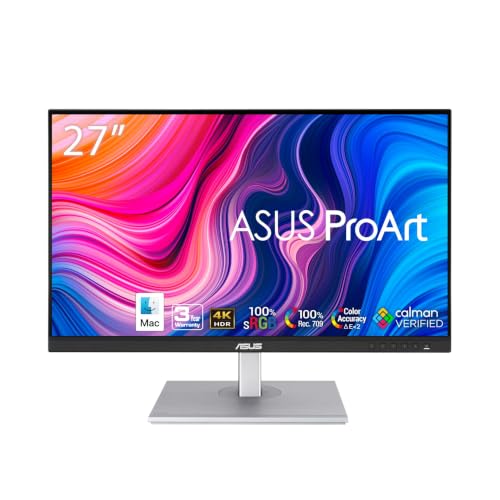
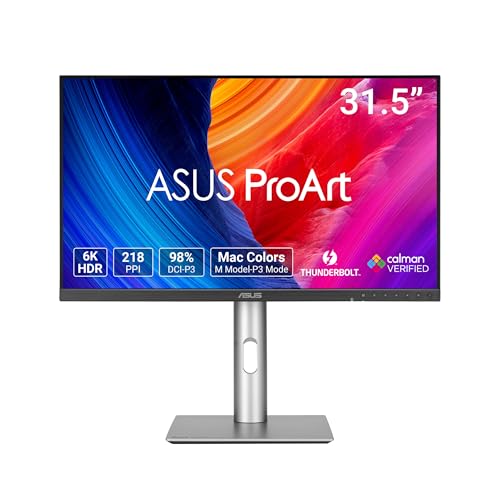

As an Amazon Associate we earn from qualifying purchases at no extra cost to you. Ratings are shown as listed on Amazon.
Best monitors for video editing at a glance
| Monitor | Best for | Size and resolution | Color and HDR highlights | Typical market range |
|---|---|---|---|---|
| BenQ SW272U | SDR editing, photography, color-critical work | 27 inches, 3840 × 2160 | 99% Adobe RGB, 100% sRGB, wide DCI-P3 coverage; up to about 400 nits | $800–$1,100 |
| ASUS ProArt PA32UCG | HDR mastering and professional post-production | 32 inches, 3840 × 2160 | Mini-LED backlight, 1152-zone local dimming, up to 1600-nit peak HDR | $2,000–$3,000 |
| Apple Studio Display | Mac editing, 5K timelines and sharp interface text | 27 inches, 5120 × 2880 | Wide P3 color, 600 nits; excellent SDR image but not a true HDR reference monitor | $1,300–$1,700 |
| LG UltraFine OLED Pro 32BP950 | Deep blacks and OLED contrast | 32 inches, 3840 × 2160 | OLED panel, wide DCI-P3 coverage, DisplayHDR 400 True Black class | $2,000–$3,000 |
| Dell UltraSharp U3224KB | Large 6K workspace and connected desk setups | 32 inches, 6144 × 3456 | Wide-gamut IPS Black panel, approximately 450-nit brightness, high pixel density | $2,000–$2,500 |
Our picks by editing situation
Best overall for most editors: BenQ SW272U
The BenQ SW272U is a sensible choice for editors working mainly in SDR, YouTube, documentary, corporate, and commercial video. Its 27-inch 4K display provides enough room for a video viewer, timeline, scopes, and bins without overwhelming a small desk. The wide-gamut panel is especially useful when projects include still images, motion graphics, or footage intended for both web and print.
Its value is not just the color gamut. A color-focused monitor typically offers more useful factory modes, uniformity controls, and hardware calibration support than a general office display. It is still important to calibrate it with a colorimeter, because an impressive specification does not guarantee accurate brightness or white balance in your room.
Best for HDR: ASUS ProArt PA32UCG
Choose the ASUS ProArt PA32UCG if HDR is a regular part of your paid workflow rather than an occasional delivery format. Its 32-inch screen, mini-LED backlight, high peak brightness, and 1152-zone local dimming are designed to show a much wider brightness range than a conventional 400-nit monitor.
This is the better tool for checking highlight detail, bright skies, specular reflections, and dark scenes in HDR. It is also considerably more expensive and physically larger. Local dimming can produce halos around bright objects, so it should not be treated as identical to a professional reference display. For final mastering, use the monitor’s appropriate HDR mode, a controlled viewing environment, and the delivery specification required by the client or platform.
Best for Mac users who want a sharp 5K workspace: Apple Studio Display
The Apple Studio Display is attractive for Final Cut Pro, DaVinci Resolve, and Adobe Premiere Pro users who value crisp text and a clean single-monitor desk. Its 5120 × 2880 resolution gives a 27-inch screen the same high-density feel as a modern laptop display, making menus, scopes, and interface text unusually sharp.
It is a strong SDR editing monitor, but its 600-nit brightness and wide P3 color should not be confused with full HDR mastering capability. There is no local-dimming HDR system comparable to the ASUS ProArt PA32UCG. It also offers fewer ergonomic features in its least expensive stand configuration, so check whether you need height adjustment or a VESA mount before purchasing.
Best for OLED contrast: LG UltraFine OLED Pro 32BP950
An OLED monitor can make dark grading work easier because each pixel can turn off independently, producing extremely deep blacks and minimal blooming. The LG UltraFine OLED Pro 32BP950 is therefore appealing for cinematic footage, dark interiors, and editors who dislike the gray blacks common on ordinary IPS panels.
OLED ownership has trade-offs. Static elements such as a persistent timeline, scopes, or application panels can contribute to image retention over long periods. Use the panel’s pixel-refresh and screen-saving functions, vary the interface when practical, and avoid leaving a bright static screen displayed for hours. OLED is excellent for contrast evaluation, but it is not automatically the best choice for every long, static desktop workload.
Best for a large 6K editing canvas: Dell UltraSharp U3224KB
The Dell UltraSharp U3224KB is aimed at editors who want one large, high-resolution display rather than two smaller screens. A 32-inch 6K canvas can show a large viewer, a full timeline, and several panels while keeping text and interface elements sharp. Its integrated connectivity and desk-oriented design can also reduce cable clutter in a workstation shared with a laptop.
It is more of a high-resolution productivity and editing display than a dedicated HDR reference monitor. If your work is primarily SDR and you want maximum workspace, its pixel density can be more useful than spending the same money on a smaller HDR screen.
How the key specifications affect editing
Resolution and screen size
A 27-inch 4K monitor is a strong fit for desks approximately 24 to 30 inches deep. It gives you a sharp image without requiring excessive viewing distance. A 32-inch 4K monitor makes interface controls easier to read but has lower pixel density, while a 32-inch 6K display combines physical size with sharper text and more room for panels.
For 4K footage, a 4K monitor lets you inspect the image at native resolution. For 6K or 8K footage, a 6K display provides more room for the viewer and timeline, but it does not replace checking the final file at the target delivery resolution.
Color accuracy and gamut
Look for a monitor with a published sRGB, DCI-P3, or Adobe RGB coverage figure that matches your delivery work. Most online video is prepared in Rec. 709 or a related SDR workflow, while newer HDR projects commonly use wider-gamut working spaces. A monitor with a wide gamut can display more colors, but inaccurate calibration can still produce incorrect grades.
Hardware calibration, a stable preset, uniformity compensation, and a colorimeter are often more useful than a small difference in advertised gamut percentage. Keep the monitor in a consistent mode while editing rather than switching between vivid presets.
HDR performance
HDR quality depends on more than peak brightness. Local-dimming control, black level, highlight detail, sustained brightness, tone mapping, and software support all matter. A monitor labeled HDR may only accept an HDR signal and provide limited visible improvement. For serious HDR work, prioritize a high-brightness mini-LED or professional reference display with documented dimming behavior.
Connectivity
USB-C with video and power delivery is useful when a laptop is the main editing computer. Thunderbolt can simplify a single-cable desk, but confirm the actual bandwidth and whether the monitor’s ports support downstream peripherals. HDMI 2.1 is valuable for high-resolution, high-refresh video output, while DisplayPort remains common on desktop workstations.
Decision matrix for choosing quickly
| Your situation | Recommended direction | Why |
|---|---|---|
| Under $1,000, mostly SDR, limited desk | 27-inch 4K color-focused monitor | Good sharpness and accuracy without paying for HDR hardware you may not use |
| Frequent HDR delivery and professional clients | 32-inch mini-LED HDR monitor | Higher brightness and local dimming make HDR decisions more dependable |
| MacBook-based workflow and text-heavy editing | 27-inch 5K monitor | High pixel density keeps timelines, scopes, and menus exceptionally sharp |
| Long hours with static application panels | IPS or mini-LED rather than OLED | Lower concern about image retention during stationary desktop use |
| One-monitor setup with many panels open | 32-inch 6K or 32-inch 4K monitor | More physical workspace reduces constant panel resizing and window switching |
Setup and ownership advice
Place the monitor so that windows and strong lamps do not reflect directly into the panel. Let it warm up before calibration, then set a comfortable fixed brightness rather than constantly changing it to match a bright office. Calibrate after major changes to lighting or monitor mode, and keep a written record of the chosen color space and gamma.
Clean the screen with a soft, lint-free cloth lightly dampened with water. Do not spray liquid directly onto the panel or use household glass cleaner, since coatings can be damaged. The most common editing mistake is grading in a vivid, uncalibrated mode and then judging the result on a different display. A good monitor improves the decision-making process, but a controlled workflow is what makes those decisions repeatable.
Bottom line
For most editors, buy the BenQ SW272U or another well-calibrated 27-inch 4K color monitor. Choose the ASUS ProArt PA32UCG when HDR is central to your work, the Apple Studio Display when 5K sharpness and Mac integration matter most, the LG OLED Pro for exceptional contrast with careful ownership, and the Dell UltraSharp U3224KB when a spacious 6K single-screen workspace is the priority.