Key takeaways
- Best all-around: a two-piece, 2.5-inch silicone sphere mold such as the Tovolo Sphere Ice Molds.
- Best for the clearest, slowest-melting ice: a directional-freezing insulated mold, such as a Wintersmiths-style ice ball maker.
- Best for frequent entertaining: a rigid multi-sphere system that freezes several balls at once, provided your freezer has enough vertical clearance.
- Best for small rocks glasses: a 2-inch or smaller sphere mold rather than a large 2.5-inch model.
- Best low-cost choice: a single-cavity silicone mold with a flat, stable base and a separate lid.
The best ice ball makers for slow-melting cocktails are rigid insulated molds that produce a 2.5-inch sphere, seal reliably, and fit the glass you actually use; for most home bars, a two-piece silicone sphere mold is the best balance of price, release ease, and storage.
Our top picks
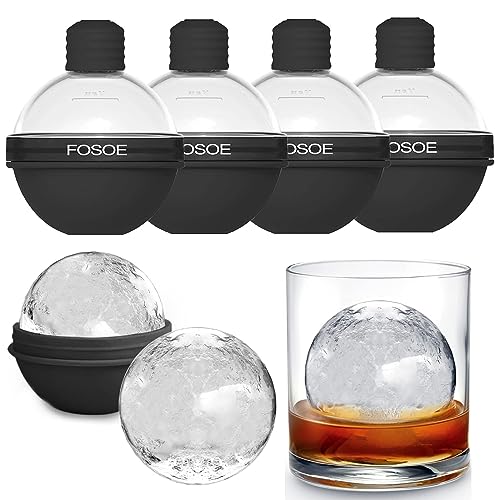

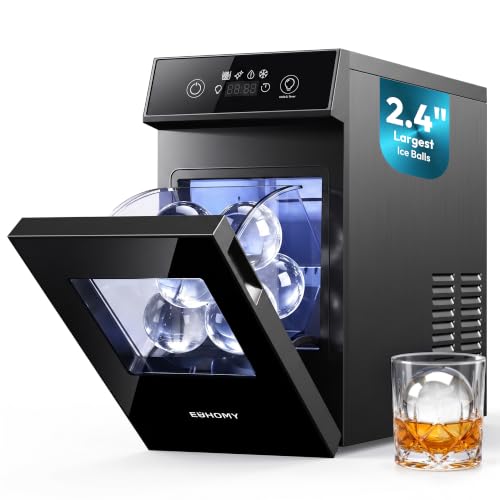

As an Amazon Associate we earn from qualifying purchases at no extra cost to you. Ratings are shown as listed on Amazon.
Quick picks by situation
- Best all-around: a two-piece, 2.5-inch silicone sphere mold such as the Tovolo Sphere Ice Molds.
- Best for the clearest, slowest-melting ice: a directional-freezing insulated mold, such as a Wintersmiths-style ice ball maker.
- Best for frequent entertaining: a rigid multi-sphere system that freezes several balls at once, provided your freezer has enough vertical clearance.
- Best for small rocks glasses: a 2-inch or smaller sphere mold rather than a large 2.5-inch model.
- Best low-cost choice: a single-cavity silicone mold with a flat, stable base and a separate lid.
What makes an ice ball maker good for cocktails?
Ice balls melt more slowly than an equivalent amount of small cubes because they expose less surface area to the drink. Size matters more than shape alone: a 2.5-inch sphere contains roughly 20% more ice than a 2-inch sphere, so it usually lasts longer but also displaces more liquid.
The most important buying criteria are:
- Ice-ball diameter: 2 inches suits compact rocks glasses; 2.5 inches is the most versatile cocktail size; 3 inches is mainly for large tumblers and punch bowls.
- Freezing time: expect about 6–10 hours for a small silicone sphere and 12–24 hours for a large or insulated mold, depending on freezer temperature and starting-water temperature.
- Leak resistance: a lid that overlaps the lower half is more dependable than two loose silicone halves. A level freezer shelf is still essential.
- Release ease: flexible silicone is forgiving; rigid plastic or metal can produce a cleaner shape but generally needs a short warm-up before release.
- Material: food-grade silicone is easy to demold and tolerates freezer use. Stainless steel is durable and odor-resistant but can be less convenient. Plastic is lightweight but may cloud, crack, or retain smells over time.
Head-to-head comparison
| Maker type | Typical ball size | Typical capacity | Freezing time | Leak resistance | Best glass fit | Typical market range |
|---|---|---|---|---|---|---|
| Single silicone sphere mold | 2–2.5 in | 1 ball | 6–10 hours | Fair to good | Small and standard rocks glasses | $8–$18 |
| Two-cavity silicone mold | 2.5 in | 2 balls | 8–12 hours | Good when lid overlaps base | Standard rocks glasses | $15–$30 |
| Rigid insulated directional mold | 2.5–3 in | 1 ball | 12–24 hours | Very good | Large tumblers and premium cocktails | $35–$80 |
| Multi-ball rigid system | 2–2.5 in | 4–6 balls | 10–20 hours | Good to very good | Entertaining and larger freezers | $30–$70 |
| Metal sphere mold | 2–2.5 in | 1–2 balls | 8–16 hours | Varies by closure | Standard rocks glasses | $20–$60 |
These are practical ranges rather than guaranteed specifications: freezer temperature, fill level, mold material, and whether the mold is covered all change the result.
Best choices in more detail
Best all-around: silicone sphere molds
The Tovolo Sphere Ice Molds are a sensible starting point because the flexible silicone makes removal simple and the spherical format works with whiskey, rum, stirred cocktails, and nonalcoholic drinks. Look for the version whose stated diameter is close to 2.5 inches. Its main limitation is that silicone molds can flex when moved, causing spills unless the mold has a rigid base or is filled after being placed in the freezer.
Choose this style if you make one or two drinks at a time, want inexpensive replacement parts, and do not need crystal-clear ice. It is also the easiest category for beginners.
Best for clarity: insulated directional-freezing makers
Insulated ice ball makers freeze water from one direction, pushing air and impurities toward a reservoir rather than trapping them throughout the sphere. Brands such as Wintersmiths are associated with this style. The result can be denser and more attractive than a conventional freezer mold, although “clear” depends on the water, freezer conditions, and cleaning routine.
The trade-off is speed and capacity. A large insulated maker may occupy substantial vertical space and need overnight freezing. It is worth choosing when presentation matters or when you regularly serve spirit-forward drinks where one large, slow-melting piece is the centerpiece.
Best for small glasses: 2-inch molds
Measure the inside diameter of your glass before buying. A 2-inch ball has a diameter of about 51 mm; a 2.5-inch ball is about 64 mm. For a glass with a narrow opening, the larger ball may be impossible to insert or remove after it melts slightly.
A useful clearance rule is to choose a ball at least 6 mm smaller than the narrowest opening. Thus, a 2-inch sphere needs an opening of roughly 2.25 inches or more for comfortable handling, while a 2.5-inch sphere is happier in a glass opening near 2.75 inches or wider.
Decision matrix
| Your situation | Recommended format | Why | What to avoid |
|---|---|---|---|
| Budget under $20 | Single or two-cavity silicone mold | Low entry cost and easy release | Thin lids that do not overlap the base |
| First-time buyer | 2–2.5-inch silicone model | Fastest learning curve and easiest cleaning | Large directional systems with many parts |
| Small freezer or crowded shelf | One-cavity horizontal mold | Uses less vertical clearance | Tall insulated towers |
| Several cocktails every weekend | Four- or six-ball rigid system | Enough output to avoid repeated batches | Single-cavity molds unless you have several |
| Presentation and clarity are priorities | Directional insulated maker | Denser, cleaner-looking ice | Open silicone halves filled with warm tap water |
Worked sizing and cost calculation
Suppose you serve two cocktails per week and use one 2.5-inch ball per drink. A two-cavity mold gives two drinks per batch, so you need one overnight batch weekly. At a $24 purchase price over two years, assuming 100 usable batches, the mold costs about $0.24 per batch, or $0.12 per ball. A four-cavity system costing $45 may cost more initially but becomes more convenient if you serve four or more drinks at once.
The calculation changes if you use ice only occasionally. For six cocktails per month, a $15 mold used 72 times in a year costs about $0.21 per ball when each batch makes one ball, before considering water and electricity. Capacity and convenience often matter more than saving a few cents.
How to get better results
- Place the empty mold on a level shelf first. Filling it after placement prevents sloshing and reduces leaks.
- Leave the specified headspace. Water expands as it freezes. Overfilling can bow the lid, split seams, or create a lopsided ball.
- Freeze for a full cycle. If the center is soft, return the mold to the freezer rather than forcing removal.
- Warm the exterior briefly. Run the outside under cool-to-lukewarm water for a few seconds. Do not use hot water, which can fracture ice or stress the mold.
- Dry the mold completely. Store it open or unlatched to prevent stale odors and mildew around the seal.
Durability and ownership realities
The part most likely to wear first is not the silicone cavity but the closure: tabs lose tension, plastic lids warp, and thin seams eventually leak. Odor retention is another common issue, especially if the mold shares a freezer with strongly scented food. Wash with mild dish soap, rinse carefully, and avoid abrasive pads. Unless the manufacturer says otherwise, hand-washing is the safer choice for lids and insulated assemblies.
Do not use a glass or metal sphere mold as a cocktail chiller unless its instructions specifically allow it; some designs are intended to chill the drink from the outside or require a particular filling method. Also avoid adding fruit pieces to a tight sphere mold: they can obstruct the seal and make demolding difficult.
Bottom line
For most buyers, choose a leak-resistant silicone maker producing a 2.5-inch ball. Downsize to 2 inches for narrow rocks glasses, upgrade to directional freezing for clearer presentation, and choose four or more cavities when you make drinks for guests. The best ice ball maker is the one that fits your glass, freezer shelf, and drinking frequency—not necessarily the one with the largest or clearest sphere.