
Our Top Picks

A good hiking drone earns its place in your pack by disappearing into it. It should weigh less than your water bottle, fold flat against your back panel, and still deliver steady aerial footage when the wind picks up along a ridge. The best drones for hiking balance weight, flight time, wind handling, and image quality, so you can capture the valley below without a second bag of gear.


As an Amazon Associate, we earn from qualifying purchases.
What Matters Most in a Hiking Drone
Weight comes first. Every gram counts on a long climb, and a drone under 249 grams also keeps paperwork simple in many countries, since that weight class often sits below the threshold for mandatory registration for recreational flying. Check the rules for your destination before you go, because local regulations vary and some parks ban drones entirely.
Flight time comes next. A single battery that lasts 30 minutes or more gives you time to scout a viewpoint, frame a shot, and land with charge to spare. Cold mountain air drains batteries faster than a warm afternoon at home, so pack a spare battery and keep both close to your body until launch.
Wind resistance matters more on a trail than in a backyard. Ridges, passes, and open summits funnel gusts that can push a light drone around. Look for a model rated for Level 5 wind resistance, which handles winds up to 38 kph, and a three-axis gimbal that keeps footage smooth even when the airframe is working hard.
Camera quality should match how you plan to use the footage. A 4K camera with a larger sensor captures richer detail in the mixed light of a forest canopy, while a smaller sensor still does fine for social clips and trail memories. Obstacle sensing is a bonus on narrow trails lined with branches, though no sensor replaces careful flying.
1. DJI Mini 3
The DJI Mini 3 is the most well-rounded hiking drone in this lineup. At 248 grams it sits just under the 249-gram threshold, so it folds into a jacket pocket and keeps registration simple for recreational flying in the United States. Its 38-minute maximum flight time is the longest here, which means fewer battery swaps and more time filming from a single launch point.
The camera records 4K HDR video and captures 48-megapixel stills, giving you plenty of detail for large prints of a mountain panorama. True vertical shooting is a handy extra for tall waterfalls and cliff faces, letting you frame a full scene without cropping later. Level 5 wind resistance holds the drone steady in gusts up to 38 kph, and the three-axis gimbal smooths out the bumps when the air gets rough.
On the trail, the Mini 3 shines because it asks so little of you. It powers up quickly and returns home on its own when the battery runs low. The optional Intelligent Flight Battery Plus stretches flight time to 51 minutes, though it pushes the aircraft over 249 grams, so check the rules for your destination if you use it. For most hikers, the standard battery and a spare in the pack are the right call.
Specs
- Weight 248 g; max flight time 38 minutes; video 4K HDR at 30 fps; stills 48 MP; wind resistance Level 5 (38 kph); transmission range 10 km; 3-axis gimbal.
2. DJI Mini 2 SE
The DJI Mini 2 SE is the lightest way into the DJI ecosystem and a smart pick for hikers who want reliable aerial footage without a heavy load. It weighs less than 249 grams, folds down small, and records 2.7K video that looks clean on a phone or laptop screen. Its 31-minute maximum flight time covers a full viewpoint session, and the Fly More combo adds two extra batteries for up to 93 minutes of total flying.
Like its bigger sibling, the Mini 2 SE carries Level 5 wind resistance, so it holds position in gusts up to 38 kph. The three-axis gimbal keeps video steady while you walk a ridgeline in a crosswind, and the 10 km transmission range gives you room to explore a wide valley from one launch spot. Return to home and the simple controls in the DJI Fly app make it a forgiving first drone for hikers who are new to flying.
Image quality is the main trade-off. The 12-megapixel sensor and 2.7K video do not match the 4K output of the Mini 3, but they are more than enough for trail journals and trip videos. If your pack is already heavy with camera gear and you want a drone that adds almost nothing to it, the Mini 2 SE is hard to beat.
Specs
- Weight under 249 g; max flight time 31 minutes; video 2.7K at 30 fps; stills 12 MP; wind resistance Level 5 (38 kph); transmission range 10 km; 3-axis gimbal.
3. DJI Air 2S
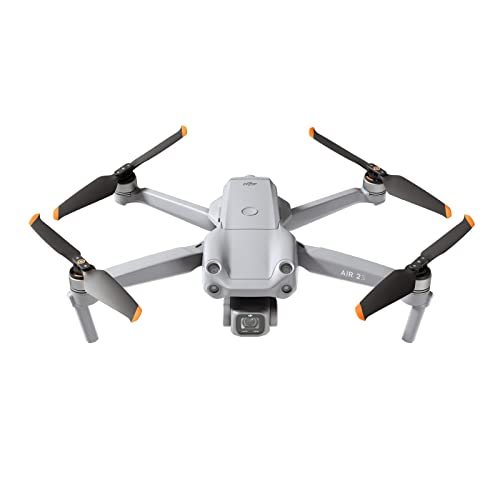
The DJI Air 2S is the pick for hikers who put image quality first and are willing to carry a little more for it. At 595 grams it is the heaviest drone here, and because it weighs more than 249 grams you will need to register it for recreational flying in the United States and in many other countries. In exchange, you get a 1-inch sensor that captures 20-megapixel stills and 5.4K video with noticeably better detail and dynamic range than any sub-250-gram model.
That larger sensor shows its value at dawn and dusk, when trail light turns soft and contrasty. The Air 2S holds highlight detail in bright sky and keeps shadow detail in dark forest, which smaller sensors struggle to do. Four-direction obstacle sensing adds a layer of safety when you fly near trees and rock faces, and the 31-minute flight time matches the Mini models.
The Air 2S still folds down to roughly the size of a water bottle, so it fits in a pack side pocket or a small camera insert. It is the right choice when the hike itself is a photo mission and you plan your route around golden hour at a summit. Carry one spare battery and a compact charging hub, and you will have enough airtime for the best light of the day.
Specs
- Weight 595 g; max flight time 31 minutes; video 5.4K at 30 fps, 4K at 60 fps; stills 20 MP, 1-inch CMOS sensor; transmission range 12 km; obstacle sensing in four directions; 3-axis gimbal.
4. DJI Neo
The DJI Neo is the smallest drone in this guide, and the most fun to fly on a casual hike. At 135 grams it weighs less than a phone, fits in a shirt pocket, and takes off from your palm, so you can launch it on a narrow trail without finding a flat clearing. It follows you with subject tracking, so you can film yourself walking a ridgeline hands-free while the drone handles the flying.
The Neo records 4K video with a single-axis gimbal and built-in propeller guards, which make it the most forgiving drone here if you brush a branch. Its 18-minute maximum flight time is the shortest in this lineup, so plan short clips rather than long continuous flights, and carry extra batteries if you want more than a few takes. Wind handling is modest compared with the Mini models, so save it for calm mornings and sheltered valleys rather than exposed summits.
Where the Neo wins is spontaneity. It needs no remote controller for basic flights, launches in seconds, and captures QuickShots that turn a short walk into a polished clip. For hikers who want quick aerial selfies and follow-me footage without stopping the group, it is the easiest drone to bring along.
Specs
- Weight 135 g; max flight time 18 minutes; video 4K at 30 fps; palm takeoff and landing; subject tracking and QuickShots; built-in propeller guards.
5. HOVERAir X1

The HOVERAir X1 takes a different approach from the DJI models: it is a self-flying camera that follows you with no controller at all. At 125 grams it is the lightest drone in this guide, and its enclosed propellers make it safe to launch from your hand on a crowded trail. You pick a flight mode, toss it gently into the air, and it films you while you hike, then lands back in your palm.
The X1 records 2.7K video with electronic stabilization and HDR capture, which suits trail vlogs and follow-me clips. Its flight time is about 11 minutes per battery, the shortest here, so it works best for short bursts of footage rather than long scenic flights. A spare battery or two fits easily in a hip belt pocket and weighs almost nothing.
This drone is not built for windy summits or long-range landscape work. Its strength is hands-free filming on the move: walking through a forest, crossing a stream, or climbing a switchback while the camera floats ahead of you. For hikers who want a flying companion that needs no piloting skill, the X1 is the simplest option in this guide.
Specs
- Weight 125 g; max flight time about 11 minutes; video 2.7K at 30 fps with HDR; follow-me and self-flying modes; palm takeoff and landing; enclosed propellers; foldable design.
How to Pack a Drone for the Trail
Treat your drone like camera gear, not like a toy. Keep it in a padded case or wrap it in a dry bag so dust and rain stay out. Store batteries in a separate pocket away from sharp objects, and never pack a swollen or damaged battery. In cold weather, carry batteries inside your jacket so they stay warm and deliver full flight time.
Bring a microfiber cloth for the lens and the gimbal, because trail dust settles fast. A small landing pad is useful on muddy or snowy ground, though a flat rock or dry grass works in a pinch. Download offline maps and check the airspace for your route before you leave home, since cell signal is unreliable on many trails.
Drone Registration and Local Rules for Hikers
Rules change by country and by park, so check before every trip. In the United States, drones under 249 grams flown for recreation do not need FAA registration, and Remote ID is not required for that weight class, though flying near airports and in controlled airspace still needs authorization. Drones over 249 grams, like the Air 2S, must be registered with the FAA, and the registration number must be marked on the aircraft.
Many national parks in the United States ban drone flights entirely, and the same is true of protected areas in other countries. Always check the rules for the specific park, trail, and land manager before you launch. Respect wildlife, keep a distance from other hikers, and never fly over crowds.
Final Thoughts
The DJI Mini 3 is the best all-around hiking drone, combining the longest flight time, strong wind handling, and 4K HDR video in a sub-249-gram body. The Mini 2 SE is the best value for hikers who want a light, dependable drone and can live with 2.7K video. The Air 2S is the best choice when image quality matters most and you accept the extra weight and registration step. The DJI Neo and the HOVERAir X1 are the best options for hands-free, follow-me footage on casual hikes where fun and simplicity matter more than range.
Pick the drone that matches how you hike. If you climb long distances with a full pack, weight and flight time should drive your choice. If you plan your hikes around photography, the camera should come first. Either way, a small drone that you actually carry beats a heavy one that stays at home.
Frequently Asked Questions
What is the best drone for hiking?
The DJI Mini 3 is the best all-around hiking drone. It weighs 248 grams, flies for up to 38 minutes per battery, handles Level 5 winds, and records 4K HDR video, so it covers weight, flight time, and image quality in one packable body.
Do I need to register a drone for hiking?
It depends on the weight and where you fly. In the United States, drones under 249 grams flown for recreation do not need FAA registration, while heavier drones like the DJI Air 2S must be registered. Many national parks ban drones entirely, so always check local rules before your trip.
How many batteries should I bring on a hike?
Bring at least one spare battery in addition to the one in the drone. Cold air shortens flight time, and a spare lets you film at two viewpoints instead of one. Keep batteries warm inside your jacket in cold weather and store them in a separate pocket away from sharp gear.
Can I fly a drone in a national park?
Most national parks in the United States prohibit drone flights, and many protected areas in other countries have similar bans. Check the rules for the specific park and land manager before you go, and fly only where drones are allowed, away from crowds and wildlife.
More from Amazon
Programs that pair well with the guide above. Offers and eligibility are set by Amazon and may change.
Free shipping on eligible items, Prime Video and more. Eligible new members can start with a free trial.
Start a Prime free trialAudiobooks and podcasts to listen to on the go. Eligible new members can start with a free trial.
Try Audible freeAd-free music streaming. Eligible new subscribers can start with a free trial.
Try Music Unlimited freeA free business account with business pricing and bulk-buying tools for work, shop or home office.
Create a business accountAs an Amazon Associate we earn from qualifying purchases.









