Our Short List of 3
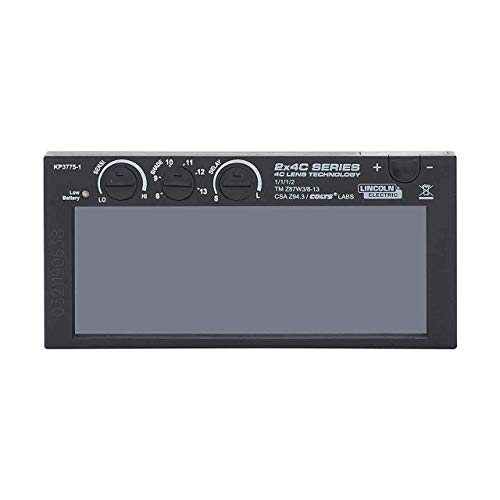
- Best for: Welders who want a variable shade 8 to 13 replacement lens from a major welding brand for a standard 2×4 hood.
- Shade: variable shade 8 to 13
- Model: KP3775-1, 2×4 C-Series
- Power source: solar cell, as listed in the model specification data
- Switching speed: 1/25,000 of a second

- Best for: Welders who switch between light and heavy processes and want one variable shade 5 to 13 lens in a 2×4 hood.
- Shade: variable shade 5 to 13
- Format: 2×4 auto-darkening replacement lens
- View tint: blue tint, as described in listing summaries
- Light state: shade 3, as described in listing summaries
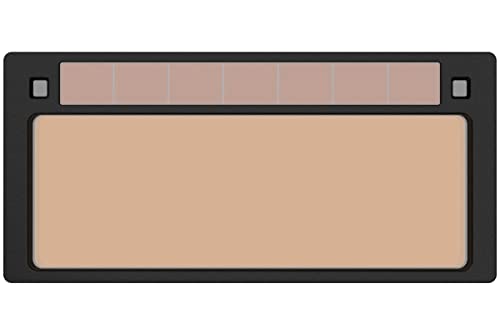
- Best for: Pipeliner and pancake hood users who run one process and want a thin, fixed shade 10.5 auto darkening lens with no settings to manage.
- Dark shade: fixed shade 10.5
- Light state: shade 3, as listed
- Lens size: 4.25 x 2 x 0.19 inches
- Weight: 1.12 ounces
All 4 Picks at a Glance
| Product | Specs | Action |
|---|---|---|
| Lincoln Electric 2×4 C-Series KP3775-1 |
| Check price on Amazon |
| AmeriArc 2×4 Auto-Darkening Welding Lens |
| Check price on Amazon |
| Tefuawe 2×4 Gold Welding Lens |
| Check price on Amazon |
 2×4 Auto Darkening Welding Lens (HD True Color) |
| Check price on Amazon |
Key takeaways
- Compare 4 replacement auto darkening welding lenses for 2x4 hoods, checked by shade range, switching speed, optical rating and TIG rating from the listing.
Buying a replacement auto darkening lens is a decision about trust in a part most welders rarely think about until it fails. The lens has to darken in a fraction of a second, every arc strike, all day, inside the hood you already own. That makes the listing details unusually concrete: the cartridge has to match the 2 by 4.25 inch opening in a pipeliner or pancake hood, the shade range has to cover your process and amperage, and the stated TIG rating decides whether the sensors hold steady on low-amp work or flicker when it matters.
This guide is for welders upgrading a fixed-shade hood, pipeliner and pancake hood users replacing a tired cartridge, and TIG welders who need a lens that behaves at low amperage. Every pick is a replacement auto darkening lens for a welding helmet, not a complete helmet and not a camera lens, chosen from the name and specifications on its Amazon product page or listing data tied to that exact ASIN.
Quick Picks
As an Amazon Associate we earn from qualifying purchases
| Product | Best for | Key spec from title |
|---|---|---|
| Lincoln Electric 2×4 C-Series KP3775-1 | Welders who want a name-brand variable shade lens | Variable shade 8-13 auto-darkening welding lens |
| AmeriArc 2×4 Auto-Darkening Welding Lens | Welders who want the widest shade range | Variable shade 5-13 |
| Tefuawe 2×4 Gold Welding Lens | Pipeliner hoods and simple fixed-shade work | Fixed shade 10.5, TIG rating 5 amps, 0.19 inch thick |
| 2×4 Auto Darkening Welding Lens (HD True Color) | Welders who want a replaceable battery design | Adjustable shade 5-13, HD True Color, gold coating |
How to Choose
Start With the Cartridge Size Your Hood Accepts
A replacement lens only works if it physically fits the hood, and the standard opening for this category is 2 by 4.25 inches, the size used by pipeliner hoods, pancake masks and many flip-front helmets. All four picks in this guide are built around that format, but thickness still varies more than buyers expect: the Tefuawe cartridge is listed at 0.19 inches thick, while the Lincoln Electric KP3775-1 is listed at 0.31 inches and the HD True Color lens at 0.33 inches, or 0.375 inches assembled with a protection lens. A thick cartridge in a shallow retainer can refuse to seat or can crowd out the cover lens and cheater lens you run with it. Measure the stack your hood currently holds, lens plus cover plates, and compare it with the thickness on the listing before ordering.
Decide Between Fixed and Variable Shade
Shade choice is where fixed and variable lenses split. A fixed shade lens such as the Tefuawe darkens to one shade, 10.5 in that listing, every time the arc strikes. That simplicity suits a welder who runs one process at a known amperage all day, and there are no settings to knock out of adjustment. A variable shade lens, 8 to 13 on the Lincoln Electric and 5 to 13 on the AmeriArc and the HD True Color lens, lets one cartridge cover plasma cutting at the light end, TIG in the middle and heavy stick work at the dark end. The trade is controls: variable lenses add shade, sensitivity and delay adjustments that must be set correctly for the job. Match the choice to how often your work changes, not to which specification list looks longer.
Check the TIG Rating and Sensor Behaviour at Low Amps
Low-amperage TIG is the test that separates replacement lenses, because a weak arc gives the sensors little light to react to and a borderline lens flickers or fails to darken. The listings in this guide state their low-end behaviour differently, which is exactly why it deserves its own check. The Tefuawe gold lens states a TIG rating of 5 amps, the Lincoln Electric specification for the KP3775-1 states a rating above 5 amps, and the HD True Color lens is described for DC TIG applications up to 60 amps in its listing summary. Switching speed is the second figure to read: two of these listings state 1/25,000 of a second. If your work is mostly low-amp TIG on thin material, put the stated TIG rating first and treat a missing rating as a reason to choose a different lens.
Read the Power Source Before You Rely on It
Replacement lenses power themselves in three different ways, and the listing states which one you are getting. The Tefuawe is described as solar assisted with sealed batteries, which means no battery changes but also no battery rescue when the cell finally fades. The HD True Color lens takes the opposite approach, with a replaceable CR1025 battery, a stated usage figure of about 800 hours and solar charging support, so a spare coin cell in the toolbox keeps it alive for years. The Lincoln Electric KP3775-1 is listed with a solar cell power source. None of these is wrong, but they fail differently: a sealed lens dies as a unit, while a replaceable-battery lens usually just needs a fresh cell. Decide which failure mode you would rather manage in the middle of a job.
The 4 Best Options
Lincoln Electric 2×4 C-Series KP3775-1
- Best for: Welders who want a variable shade 8 to 13 replacement lens from a major welding brand for a standard 2×4 hood.
- Shade: variable shade 8 to 13
- Model: KP3775-1, 2×4 C-Series
- Power source: solar cell, as listed in the model specification data
- Switching speed: 1/25,000 of a second
Welders who want a variable shade 8 to 13 replacement lens from a major welding brand for a standard 2×4 hood.
At 0.31 inches thick this is one of the thicker cartridges in the guide, so confirm your hood retainer has room for the lens plus your cover lens stack before ordering.
The Lincoln Electric KP3775-1 is the established-brand option in this group, a 2×4 C-Series cartridge with variable shade 8 to 13 and the 4C lens technology Lincoln Electric names in its own series material. The specification data tied to this model lists a solar cell power source, a switching speed of 1/25,000 of a second, two sensors and a TIG rating above 5 amps, in a cartridge measuring 4.25 by 2.00 by 0.31 inches. Secondary listing summaries also state a light state of shade 3 and an optical clarity rating of 1/1/1/2. For a welder who wants analog-style variable control inside a standard pipeliner or flip-front hood, and who values a major welding brand behind the cartridge, this is the conservative pick of the four.
AmeriArc 2×4 Auto-Darkening Welding Lens
- Best for: Welders who switch between light and heavy processes and want one variable shade 5 to 13 lens in a 2×4 hood.
- Shade: variable shade 5 to 13
- Format: 2×4 auto-darkening replacement lens
- View tint: blue tint, as described in listing summaries
- Light state: shade 3, as described in listing summaries
Welders who switch between light and heavy processes and want one variable shade 5 to 13 lens in a 2×4 hood.
The wide shade range only helps if the sensitivity and delay are set for each process, so plan a few test strikes on scrap after fitting it rather than trusting the factory settings.
The AmeriArc covers the widest dark range in this guide, variable shade 5 to 13, which makes it the flexible option for a welder whose week runs from light cutting and low-shade work up to heavy stick welding. Listing summaries for this lens describe a blue tint view with no green or orange tones, a light state of shade 3 for setup and inspection work, and adjustable shade, delay time and sensitivity settings so the cartridge can be tuned to the process instead of living with one fixed response. It is sized for the standard 2 by 4 format used by pipeline helmets and pancake shields. For a one-hood welder who changes processes often, that 5 to 13 span is the deciding specification, because it removes the need to own separate fixed lenses for light and heavy work.
Tefuawe 2×4 Gold Welding Lens
- Best for: Pipeliner and pancake hood users who run one process and want a thin, fixed shade 10.5 auto darkening lens with no settings to manage.
- Dark shade: fixed shade 10.5
- Light state: shade 3, as listed
- Lens size: 4.25 x 2 x 0.19 inches
- Weight: 1.12 ounces
Pipeliner and pancake hood users who run one process and want a thin, fixed shade 10.5 auto darkening lens with no settings to manage.
Shade, sensitivity and delay are all fixed on this lens, so if your amperage or process changes through the day there is nothing to adjust; confirm shade 10.5 suits your regular work before ordering.
The Tefuawe Gold F10.5 is the simplicity pick: a fixed shade 10.5 cartridge with a light state of shade 3, a gold coating and the thinnest body in this guide at 0.19 inches. That slim profile is a genuine advantage in pipeliner and pancake hoods where retainer space is tight and a thick electronic cartridge can fight the cover lens. The listing states a TIG rating of 5 amps, a weight of 1.12 ounces, solar assisted power with sealed batteries, and a package that includes the lens plus two spare cover lenses. The listing also states the lens is produced in accordance with CE EN379 and ANSI Z87.1 standards. Welders who run one process all day and want auto darkening without menus, dials or settings to drift will find this the easiest lens here to live with.
2×4 Auto Darkening Welding Lens (HD True Color)
- Best for: Shop welders who want variable shade 5 to 13, true color viewing and a replaceable battery in a standard 2×4 cartridge.
- Shade range: adjustable shade 5 to 13
- Darkening response: 1/25,000 of a second, as listed
- Viewing technology: HD True Color with gold coating, blue-tinted view
- Optical clarity rating: 1/1/1/2, as listed
Shop welders who want variable shade 5 to 13, true color viewing and a replaceable battery in a standard 2×4 cartridge.
The listing describes DC TIG use up to 60 amps rather than a low minimum TIG rating, so welders whose main work is very low amperage TIG should compare the stated TIG figures on the Tefuawe and Lincoln Electric listings first.
This unbranded HD True Color lens is the feature-led alternative, built around an adjustable shade range of 5 to 13, a stated darkening response of 1/25,000 of a second and a gold coating over an HD True Color view with a blue tint. Its listing data gives an optical clarity rating of 1/1/1/2, a thickness of 0.33 inches, or 0.375 inches when assembled with a protection lens, and a fit across standard 2 by 4.25 inch hoods, pancake masks and select goggles. The power design is the practical highlight: a replaceable CR1025 battery with a stated usage figure of about 800 hours, backed by solar charging support, so the lens can be revived with a coin cell instead of replaced. Listing data describes it for DC TIG applications up to 60 amps, which frames it as a general shop lens rather than a low-amp specialist.
Which One Fits Your Situation
You Run One Process at One Amperage All Day
A fixed routine rewards a fixed lens. The Tefuawe Gold F10.5 darkens to shade 10.5 on every strike, with no dial to bump and no setting to drift between shifts, and its 0.19 inch body is the easiest fit in a tight pipeliner retainer. Check that shade 10.5 honestly covers your amperage before choosing it, because the same simplicity that makes it dependable also makes it inflexible. If your single process sits at the extremes of light or heavy work, step up to a variable lens instead and set it once.
You Switch Between Cutting, TIG and Stick in the Same Week
Process switching is the case for the widest variable range. The AmeriArc spans shade 5 to 13, covering light cutting shades through heavy stick shades in one cartridge, with sensitivity and delay adjustments to match each process. The HD True Color lens covers the same 5 to 13 range if a replaceable battery matters more to you than the AmeriArc name. Either way, build the habit of a test strike on scrap after changing process, because a variable lens set wrong for the new job protects no better than a fixed lens in the wrong shade.
Your Main Work Is Low-Amperage TIG
Low-amp TIG narrows this guide to the lenses that state a low-end rating. The Tefuawe states a TIG rating of 5 amps with a fixed shade, and the Lincoln Electric KP3775-1 specification states a rating above 5 amps with variable shade 8 to 13 for adjustment around your working amperage. Choose the Lincoln Electric if you also run heavier work on the same hood, and the Tefuawe if the hood is a dedicated TIG and pipeliner setup. Avoid judging this situation by switching speed alone, because sensor behaviour at a faint arc is the deciding factor.
You Want a Lens You Can Keep Alive for Years
Longevity is mostly a power question. The HD True Color lens takes a replaceable CR1025 battery with solar support, so a cheap coin cell restores it when the response slows. The sealed solar designs, including the Tefuawe, ask nothing of you until the internal cell fades, at which point the whole cartridge is replaced. If you weld daily and hate mid-job failures, the replaceable battery design plus a spare cell taped inside the hood is the most controllable setup in this guide.
Common Mistakes
- Ordering a replacement lens by hood brand name instead of measuring the 2 by 4.25 inch cartridge opening and the retainer stack thickness.
- Buying a variable shade lens and never adjusting sensitivity or delay, then blaming the lens for flicker that a correct setting would have fixed.
- Choosing a fixed shade lens for work that spans several processes and amperages, leaving some jobs too dark to see or too light for comfort.
- Ignoring the stated TIG rating on low-amperage work, where a lens without a low rating can flicker or fail to darken on a faint arc.
- Forgetting the cover lenses: a pitted, spattered cover plate ruins the view through any cartridge, and only one pick in this guide lists spare cover lenses in the package.
Frequently Asked Questions
Will these lenses fit my welding hood?
They fit hoods built for the standard 2 by 4.25 inch cartridge, which covers most pipeliner hoods, pancake masks and many flip-front helmets. Fit is not only about the opening: cartridge thickness in this guide runs from 0.19 inches to 0.33 inches, and your retainer must also hold the cover lens stack. Measure the cartridge and stack you use now, then compare both figures with the listing for the lens you are considering before ordering.
Is a fixed shade or variable shade lens better?
Neither is better for every welder. A fixed shade lens, such as the shade 10.5 Tefuawe in this guide, is simpler, thinner and impossible to set wrong, which suits one process at a steady amperage. A variable shade lens, 8 to 13 or 5 to 13 in this guide, covers cutting, TIG and stick work with one cartridge but depends on the sensitivity and delay being set correctly. Choose based on how often your process and amperage actually change.
What does the TIG rating on a welding lens mean?
The TIG rating states the lowest arc amperage at which the lens sensors are rated to react reliably. TIG arcs at low amperage are faint, so a lens without a low enough rating can flicker or stay light when it should be dark. In this guide the Tefuawe states a 5 amp TIG rating and the Lincoln Electric specification states above 5 amps, while the HD True Color listing describes DC TIG use up to 60 amps instead. Read the exact wording on the listing, because a minimum rating and a maximum description are not the same claim.
How long does an auto darkening lens last?
It depends on the power design stated in the listing. A replaceable-battery lens, such as the HD True Color pick with its CR1025 cell and stated figure of about 800 hours, can be kept working for years with fresh cells. A solar assisted lens with sealed batteries, such as the Tefuawe, runs until its internal cell fades and is then replaced as a unit. Either way, retire a lens at once if it fails to darken or shows a cracked cartridge.
More from Amazon
Programs that pair well with the guide above. Offers and eligibility are set by Amazon and may change.
Free shipping on eligible items, Prime Video and more. Eligible new members can start with a free trial.
Start a Prime free trialAudiobooks and podcasts to listen to on the go. Eligible new members can start with a free trial.
Try Audible freeAd-free music streaming. Eligible new subscribers can start with a free trial.
Try Music Unlimited freeA free business account with business pricing and bulk-buying tools for work, shop or home office.
Create a business accountAs an Amazon Associate we earn from qualifying purchases.