Our Short List of 3

- Best for: Field officers and documentary photographers who travel light, work in rain and dust, and need a camera that will still be on their shoulder at the end of a long walking day.
- Sensor: 20.4MP Micro Four Thirds Live MOS
- Processor: TruePic IX
- Stabilisation: 5-axis sensor-shift, up to 6.5 stops
- Autofocus: 121 phase-detection and 121 contrast-detection points

- Best for: Photographers producing report covers, campaign imagery and prints, and for organisations that value a traditional, dial-led control layout in difficult light and weather.
- Sensor: 40.2MP APS-C X-Trans CMOS 5 HR
- Processor: X-Processor 5
- Stabilisation: five-axis in-body, up to 7.0 stops
- Autofocus: 425-point intelligent hybrid system with subject detection

- Best for: Teams documenting fast-moving programmes and events, Canon shooters with existing lenses, and organisations that need stills and 4K video from one responsive body.
- Sensor: 32.5MP APS-C CMOS
- Processor: DIGIC X
- Autofocus: Dual Pixel CMOS AF, up to 651 AF zones
- Burst: 15 fps mechanical, higher rates available electronically in related descriptions
All 5 Picks at a Glance
| Product | Specs | Action |
|---|---|---|
| OM System OM-5 — best overall for harsh field conditions |
| Check price on Amazon |
| Fujifilm X-T5 — best image quality in a portable body |
| Check price on Amazon |
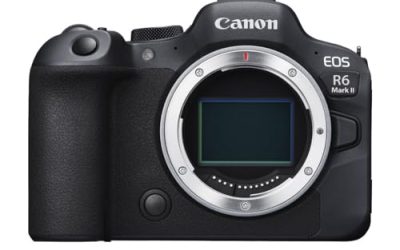
| Canon EOS R7 — best for fast-moving documentation and team workflows |
| Check price on Amazon |
 Ricoh GR IIIx HDF — best discreet pocket camera |
| Check price on Amazon |
 Sony a6700 — best hybrid stills and video for small teams |
| Check price on Amazon |
Our Top Picks
As an Amazon Associate we earn from qualifying purchases.
Affiliate disclosure: This article contains Amazon affiliate links. If you buy through them, PhotoSotto may earn a commission at no extra cost to you.
NGO photography is not studio work and it is not holiday travel photography either. The assignment might be a health clinic at dawn, a distribution point in the rain, a classroom with one window, or a long walk to a village where the road ended an hour ago. You need a camera that starts quickly, focuses reliably on people who are not posing for you, survives dust and damp, and does not draw more attention than the work itself. You also need files you can hand over, caption and archive without a complicated post-production pipeline waiting back at base.
The sweet spot is a compact interchangeable-lens camera, or one very capable fixed-lens compact, that balances durability, discretion and image quality. A flagship full-frame body is heavy, conspicuous and costly to replace; a basic entry-level camera may lack sealing, good low-light autofocus or all-day battery life.
This guide compares five cameras on size, weather resistance where the listing actually states it, autofocus, stills and video quality, battery practicality and lens-system logistics. Every product link points to an Amazon US listing checked at the search-listing level for this guide.
Quick picks
- Best overall for harsh field conditions: OM System OM-5 — the smallest weather-sealed system here, with an IP53 rating stated for the body, strong stabilisation and compact Micro Four Thirds lenses.
- Best image quality in a portable body: Fujifilm X-T5 — a 40.2-megapixel sensor, stated weather-sealed points and direct dials that keep working when a touchscreen does not.
- Best for fast-moving documentation and backup: Canon EOS R7 — fast bursts, deep subject detection and a familiar Canon workflow for teams already using Canon lenses.
- Best discreet pocket camera: Ricoh GR IIIx HDF — a true pocket camera with a large APS-C sensor and a 40mm-equivalent lens, ideal when a larger camera would change the room.
- Best hybrid stills and video for small teams: Sony a6700 — a compact APS-C body with AI-based subject recognition and strong 4K video for field reports and short films.
Read the individual sections before you choose. The right answer depends on whether your priority is surviving monsoon rain, staying unnoticed, delivering video as well as stills, or matching lenses your organisation already owns.
OM System OM-5 — best overall for harsh field conditions
- Best for: Field officers and documentary photographers who travel light, work in rain and dust, and need a camera that will still be on their shoulder at the end of a long walking day.
- Sensor: 20.4MP Micro Four Thirds Live MOS
- Processor: TruePic IX
- Stabilisation: 5-axis sensor-shift, up to 6.5 stops
- Autofocus: 121 phase-detection and 121 contrast-detection points
Field officers and documentary photographers who travel light, work in rain and dust, and need a camera that will still be on their shoulder at the end of a long walking day.
View the OM System OM-5 on Amazon
The OM-5 is the camera on this list that was most clearly designed to be carried everywhere and worried about least. Search listings and manufacturer-derived summaries describe a 20.4-megapixel Micro Four Thirds Live MOS sensor with a TruePic IX processor, 5-axis in-body image stabilisation rated for up to 6.5 stops, and continuous shooting up to 30 frames per second in its electronic modes. The body weighs about 414 grams including battery and card, which is noticeably less than the APS-C bodies below, and Micro Four Thirds lenses stay proportionally small as well.
For NGO work, the headline is the sealing. The OM-5 is described as having an IP53-rated weather-sealed body, with splashproof, dustproof and freezeproof construction for harsh weather. That is a specific, stated rating — and it only holds with a similarly sealed lens fitted. Stabilisation is the other advantage: in dim clinics, schools and homes where a tripod is impractical and flash intrusive, up to 6.5 stops of compensation keeps shutter speeds usable. It also records DCI and UHD 4K video for short field clips.
Key specs from the listing and manufacturer summaries
Pros
Cons
Fujifilm X-T5 — best image quality in a portable body
- Best for: Photographers producing report covers, campaign imagery and prints, and for organisations that value a traditional, dial-led control layout in difficult light and weather.
- Sensor: 40.2MP APS-C X-Trans CMOS 5 HR
- Processor: X-Processor 5
- Stabilisation: five-axis in-body, up to 7.0 stops
- Autofocus: 425-point intelligent hybrid system with subject detection
Photographers producing report covers, campaign imagery and prints, and for organisations that value a traditional, dial-led control layout in difficult light and weather.
View the Fujifilm X-T5 on Amazon
The X-T5 answers a different problem: photographs that must carry a campaign, a report cover or a large print. Its listing describes a body-only camera with a 40.2-megapixel APS-C X-Trans CMOS 5 HR sensor and X-Processor 5 — resolution that gives editors cropping room when consent boundaries or safety kept you at a distance.
Fujifilm states the X-T5 features 56 weather-sealed points for dust and moisture resistance and can operate down to minus 10 degrees Celsius, assuming a weather-resistant lens is fitted. Traditional top-plate dials for ISO, shutter speed and exposure compensation, plus a 3.69-million-dot viewfinder, keep it usable in gloves, rain and bright sun. Video runs up to 6.2K at 30p in 4:2:2 10-bit colour internally, and subject-detection autofocus tracks faces, eyes, animals and vehicles.
Key specs from the listing
Pros
Cons
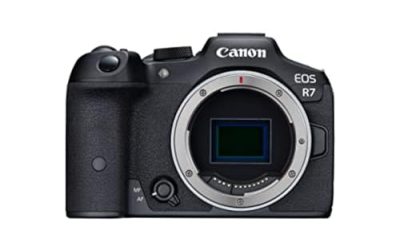
Canon EOS R7 — best for fast-moving documentation and team workflows
- Best for: Teams documenting fast-moving programmes and events, Canon shooters with existing lenses, and organisations that need stills and 4K video from one responsive body.
- Sensor: 32.5MP APS-C CMOS
- Processor: DIGIC X
- Autofocus: Dual Pixel CMOS AF, up to 651 AF zones
- Burst: 15 fps mechanical, higher rates available electronically in related descriptions
Teams documenting fast-moving programmes and events, Canon shooters with existing lenses, and organisations that need stills and 4K video from one responsive body.
View the Canon EOS R7 on Amazon
Distributions, emergency response and community events do not wait for a slow camera. The EOS R7 body-only listing describes a 32.5-megapixel APS-C CMOS sensor with DIGIC X, 15 frames per second with the mechanical shutter, Dual Pixel CMOS AF with up to 651 AF zones and 4K 60p video. A related kit listing adds 5-axis stabilisation with coordinated control for up to seven stops and the LP-E6NH battery pack — a family used across many Canon bodies for years, which simplifies spares and chargers. Adapters for EF and EF-S lenses also help teams that already own Canon glass.
On sealing: the listings consulted do not state a specific weather-sealing rating for this body, so this guide does not claim one. Plan on a rain cover in heavy rain. That is why the OM-5 and X-T5 rank above it for harsh weather, even though the R7 may be better for action and Canon-based teams.
Key specs from the listing
Pros
Cons
Ricoh GR IIIx HDF — best discreet pocket camera
- Best for: Experienced documentary photographers, field researchers and communications staff who need a quiet, unobtrusive second camera — or a primary camera for close, consent-based storytelling in calm conditions.
- Sensor: 24.2MP APS-C CMOS
- Lens: fixed 40mm f/2.8 equivalent GR lens
- Special feature: built-in Highlight Diffusion Filter, engaged at the press of a button as described
- Stabilisation: 3-axis Shake Reduction, up to 4 steps
Experienced documentary photographers, field researchers and communications staff who need a quiet, unobtrusive second camera — or a primary camera for close, consent-based storytelling in calm conditions.
View the Ricoh GR IIIx HDF on Amazon
Sometimes the most effective camera is the one nobody notices. The GR IIIx HDF is a fixed-lens compact with a 24.2-megapixel APS-C sensor and a 40mm f/2.8 lens in 35mm-equivalent terms, according to its listing. It slips into a jacket pocket and lets you document a conversation or home visit without the visual weight of a large lens.
HDF stands for Highlight Diffusion Filter, a built-in filter the listing says can be engaged with a single action to diffuse highlights. The camera also offers 3-axis, 4-step Shake Reduction, a 3-inch touchscreen, Bluetooth LE and Wi-Fi, USB-C and Full HD 1080/60p video.
The trade-offs are explicit in the listing: water resistance is listed as not water resistant. This is not a rain or dust camera. Battery life is short, the lens does not zoom and there is no built-in viewfinder. Carry it in a dry pouch with spare DB-110 batteries, as a specialist tool for discretion rather than as your only camera on a remote assignment.
Key specs from the listing
Pros
Cons
Sony a6700 — best hybrid stills and video for small teams
- Best for: One-person communications teams and multimedia producers who must deliver photographs and video from the same trip, and for organisations building a long-term Sony E-mount kit.
- Sensor: 26MP APS-C, as described for the a6700 model
- Autofocus: AI-based subject recognition for people and other subjects
- Video: 4K video, with log shooting and LUT handling described for the model family
- Lens: 16-50mm lens included in this kit listing
One-person communications teams and multimedia producers who must deliver photographs and video from the same trip, and for organisations building a long-term Sony E-mount kit.
View the Sony a6700 kit on Amazon
Many NGO communications roles are now one person doing photographs, video, interviews and social clips on the same trip. The listing for this kit describes a Sony a6700 supplied with a 16-50mm lens in a deluxe bundle, and model summaries describe a 26-megapixel APS-C sensor with an AI processing unit, AI-based subject recognition and 4K video — autofocus that holds people in a crowd, and video suited to field reports and fundraising films.
Sony E-mount is a logistical advantage: compact primes for dim interiors, versatile zooms and many third-party options let an organisation build a kit gradually, in a small shoulder bag. As with the Canon, the listings checked do not state a formal sealing rating for this bundle, so do not assume sealed performance. Verify the exact bundle contents too, since third-party kits vary widely.
Key specs from the listing and model summaries
Pros
Cons
Buying guide: choosing a camera for NGO and documentary fieldwork
Start with conditions, not megapixels. Rainy-season agriculture, desert dust, coastal humidity and cold clinics each punish gear differently. If weather is your main risk, prioritise a body and lens where sealing is explicitly stated, like the OM-5 or X-T5. If your main risk is theft or drawing attention, a smaller or pocketable camera may be the safer professional choice.
Plan the whole system. Budget for at least two spare batteries per body, a charger that works from the power you will actually have, fast memory cards, a rain cover even for a sealed body, a dry bag and a secure strap. Standardising on one mount and battery family across a team reduces spares, training and failure points.
Think about files and handover. High-resolution bodies are wonderful for print, but ask whether your workflow can store, back up and transmit those files over weak field connections. Back up to two separate devices every evening and never format a card until the backup is verified.
Consent and presence come before technique. A smaller camera can support a more respectful interaction, but it never replaces informed consent, safeguarding policies and local guidance. Explain why photographs are being made, where they may appear and how someone can decline or withdraw.
Buy for replacement and repair. Ask what happens when a camera is dropped, soaked or stolen mid-project. Can a replacement be bought in the region or borrowed locally? A wide dealer and rental network is a practical advantage no specification sheet shows.
FAQ
What is the best camera type for NGO photography?
A compact mirrorless camera is usually the best balance. It offers interchangeable lenses, good low-light performance and video in a package that is smaller, lighter and less conspicuous than a full-frame or DSLR kit, which helps during long field days and in sensitive settings.
Do I really need weather sealing for fieldwork?
If you work outdoors in rain, dust or humidity, stated sealing is worth prioritising, paired with a sealed lens. It is not waterproofing, and you should still use a rain cover in heavy rain, but a specific claim such as an IP53 rating or a stated number of sealed points is more meaningful than general rugged language.
Is a fixed-lens compact enough as an only camera?
For an experienced photographer working close to subjects in calm, dry conditions, the Ricoh GR IIIx can be enough. For most NGO assignments it works better as a discreet second body, because it has no zoom, no viewfinder, limited battery life and no water resistance according to its listing.
How many batteries and cards should a field photographer carry?
Carry at least two spare batteries per body per day of shooting away from power, and enough cards that you never need to delete images in the field to make space. Back up every evening to two separate drives or devices and keep them in different bags.
Which pick is best if our team already owns lenses?
Match the mount you already own. Canon users should start with the EOS R7, Sony E-mount users with the a6700, Fujifilm X users with the X-T5 and Micro Four Thirds users with the OM-5. Reusing trusted lenses is usually worth more than a small specification advantage elsewhere.
Conclusion
For most NGO photography, the OM System OM-5 is the safest all-round recommendation in this guide: it is light, stabilised and the only body here with a specific IP53 sealing description, which suits the rain, dust and long walks that define real fieldwork. Choose the Fujifilm X-T5 when image quality and cropping room for campaigns and print matter most, the Canon EOS R7 when speed and a Canon team workflow come first, the Ricoh GR IIIx HDF when discretion is the priority and conditions are dry, and the Sony a6700 when one person must deliver polished stills and video on every trip.
Spend as much thought on batteries, backup, consent and replacement planning as on the body itself. In NGO work, the best camera is the one that is present, working and trusted by the people in front of it.
More from Amazon
Programs that pair well with the guide above. Offers and eligibility are set by Amazon and may change.
Free shipping on eligible items, Prime Video and more. Eligible new members can start with a free trial.
Start a Prime free trialAudiobooks and podcasts to listen to on the go. Eligible new members can start with a free trial.
Try Audible freeAd-free music streaming. Eligible new subscribers can start with a free trial.
Try Music Unlimited freeA free business account with business pricing and bulk-buying tools for work, shop or home office.
Create a business accountAs an Amazon Associate we earn from qualifying purchases.