Our Top Picks
 NIKON NIKKOR Z 180-600mm f/5.6-6.3 VR1 Count ( Pack of 1)12.42 x 4.33 x 4.33 inches4.72 poundsCheck on Amazon

Wildlife rarely waits for you to get closer. A bird lifts off, a deer steps behind cover, or a striker breaks away down the far side of the pitch, and the moment is gone before you can move your feet. That is exactly why the best super telephoto lenses exist. They bring distant subjects close, fill the frame with detail, and let you photograph animals, birds, aircraft, and athletes without disturbing them or putting yourself at risk.

Choosing one of these lenses is a bigger decision than picking a standard zoom. Super telephoto lenses are long, heavy, and built around trade-offs between reach, aperture, weight, and mount compatibility. A lens that is perfect for a Sony shooter may not even fit a Canon or Nikon body. This guide compares four strong super telephoto zoom lenses for the major mirrorless systems, based on specifications, features, and user feedback, so you can match the right lens to your camera, your subjects, and the way you like to shoot.
Disclosure: As an Amazon Associate, we earn from qualifying purchases.
Quick Picks at a Glance
| Product | Key Spec | Best For |
|---|---|---|
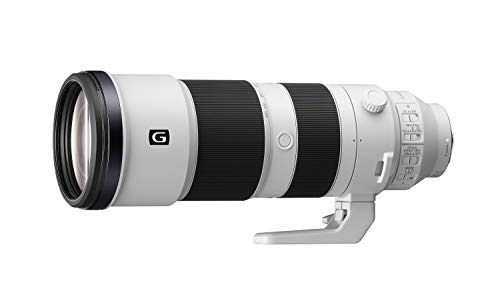
| Sony FE 200-600mm f/5.6-6.3 G OSS | 200-600mm, internal zoom, Sony E mount | All-around wildlife and bird photography on Sony |
| Nikon NIKKOR Z 180-600mm f/5.6-6.3 VR | 180-600mm, 1.3 m close focus, Nikon Z mount | Nikon Z wildlife shooters who want close focusing |
| Canon RF 100-500mm f/4.5-7.1L IS USM | 100-500mm, about 3.0 lb, Canon RF mount | Canon EOS R owners who want the lightest carry |
| Tamron 150-500mm f/5-6.7 Di III VC VXD | 150-500mm, compact design, Sony E mount | Sony shooters who want long reach in a smaller package |
How to Choose
1. Focal Length and Reach
Reach is the whole point of a super telephoto lens. A 600mm maximum focal length frames a distant bird or animal much larger than a 500mm lens does, and that difference matters when you cannot move closer. The wide end matters too. A lens that starts at 100mm or 150mm is far more flexible for larger animals and nearby subjects, while one that starts at 200mm can feel too tight when a subject suddenly approaches.
2. Maximum Aperture
Most super telephoto zooms in this class use a variable aperture around f/5.6 to f/6.3 at the long end, with a few reaching f/7.1 at 500mm. A wider aperture gathers more light, which helps autofocus lock on in dim forest light and at dawn and dusk, when wildlife is most active. If you shoot mostly in good daylight, the difference between f/6.3 and f/7.1 is modest. If you shoot owls, forest birds, or indoor sports, every fraction of a stop counts.
3. Autofocus Speed and Accuracy
Super telephoto photography is mostly about moving subjects, so autofocus performance is at least as important as sharpness. Look for a modern focus motor design, such as a linear motor or a direct-drive supersonic wave motor, which moves heavy glass elements quickly and quietly. Quiet operation matters for skittish wildlife. User feedback consistently highlights fast, silent autofocus as the feature that separates a lens you love from one that frustrates you in the field.
4. Image Stabilization
At 500mm or 600mm, even tiny hand movements are magnified, so built-in optical stabilization is essential for handheld shooting. The lenses in this guide offer around five stops of correction or more, which means sharper images at slower shutter speeds and a steadier viewfinder image for tracking birds in flight. If you mostly shoot from a tripod, stabilization matters less, but for handheld fieldwork it is one of the most valuable features a super telephoto lens can offer.
5. Weight, Size, and Handling
A super telephoto lens is something you carry for hours, so weight and balance deserve serious attention. The lenses here range from about 3.0 pounds to about 4.7 pounds, and that gap is very noticeable after a long morning in the field. Internal zoom designs keep the lens length constant while zooming, which improves balance on a tripod and reduces the dust and moisture drawn into the barrel.
6. Mount Compatibility
There is no universal super telephoto lens. Each lens in this guide is built for one specific mount, and adapting a lens across systems usually costs autofocus speed, stabilization coordination, or both. Confirm that a lens matches your camera mount exactly: Sony E, Nikon Z, or Canon RF. All four lenses here are designed for full-frame cameras, and they also work on crop-sensor bodies from the same system, where the effective focal length becomes even longer.
7. Weather Sealing and Build Quality
Wildlife and sports photography happens outdoors, in rain, dust, cold, and humidity. A lens with dust and moisture resistance, fluorine coatings on the front and rear elements, and solid construction will keep working when conditions turn rough. Fluorine coatings also make it easier to wipe away water, dirt, and fingerprints. These features determine whether your lens survives years of field use.
Top Picks
Sony FE 200-600mm f/5.6-6.3 G OSS
The Sony FE 200-600mm f/5.6-6.3 G OSS is the most versatile super telephoto zoom in this guide, and the natural first choice for Sony full-frame shooters who photograph wildlife, birds, and sports. Its 200-600mm range covers everything from larger mammals at the wide end to small, distant birds at full reach, and the internal zoom design means the lens never changes length while you zoom, keeping balance steady on a tripod and dust and moisture out of the barrel. Five ED glass elements and one aspherical element control chromatic aberration and keep corner-to-corner sharpness high, while Nano AR coating reduces flare when you shoot toward the light. The Direct Drive Supersonic Wave Motor delivers fast, precise, and quiet autofocus, and Optical SteadyShot steadies the frame for handheld shooting at 600mm. The lens also accepts optional 1.4x and 2.0x teleconverters, extending reach to 840mm and 1200mm.
Pros:
– Long 200-600mm range with an internal zoom that keeps balance constant
– Five ED elements and Nano AR coating for strong sharpness and low flare
– Fast, quiet DDSSM autofocus that tracks moving subjects well
– Compatible with 1.4x and 2.0x teleconverters for up to 1200mm reach
Cons:
– One of the heavier lenses here at around 4.7 pounds
– The 200mm wide end can feel tight when a subject comes close
– Variable f/5.6-6.3 aperture is limiting in very dim forest light
Best for: Sony shooters who want one do-everything wildlife and bird lens with maximum reach.
Nikon NIKKOR Z 180-600mm f/5.6-6.3 VR
The Nikon NIKKOR Z 180-600mm f/5.6-6.3 VR gives Nikon Z photographers 600mm of reach with an unusually useful close-focusing ability that sets it apart from most super telephoto zooms. Its minimum focus distance of 1.3 meters and maximum magnification of 0.25x let you photograph smaller subjects, such as dragonflies, frogs, and flowers, at a scale that most lenses in this class cannot match. The optical design uses 25 elements in 17 groups, including six ED elements, to control chromatic aberration and maintain sharpness across the zoom range. Vibration Reduction rated at 5.5 stops helps keep handheld images sharp at long focal lengths, and the stepping motor autofocus is fast and quiet enough for birds in flight. The internal zoom keeps the lens length constant, which improves balance and weather resistance.
Pros:
– Excellent 1.3 m minimum focus distance for near-macro versatility
– 5.5-stop Vibration Reduction for steady handheld shooting at 600mm
– Internal zoom design with dust and moisture resistance
– Six ED elements for clean, high-contrast images with little fringing
Cons:
– Heavy at about 4.7 pounds, so a monopod or tripod helps on long outings
– The f/6.3 aperture at the long end struggles in deep shade and at dusk
– Large 95mm filter thread means filters and caps cost more
Best for: Nikon Z owners who photograph wildlife and also want to shoot small subjects up close.
Canon RF 100-500mm f/4.5-7.1L IS USM
The Canon RF 100-500mm f/4.5-7.1L IS USM is the lightest lens in this roundup at approximately 3.0 pounds, and that lightness changes how you shoot. It is the easiest of these four lenses to carry all day, to handhold for extended periods, and to pack for travel, which means you are more likely to have it with you when a photo opportunity appears. The 100-500mm range is the most flexible at the wide end, making it well suited to larger animals, sports, and aviation, where subjects often come closer than expected. One Super UD element and six UD elements deliver the sharp, high-contrast rendering expected from Canon L-series glass, and the optical image stabilization system offers up to five stops of correction. Dual Nano USM motors provide fast, near-silent autofocus for stills and video, while fluorine coatings resist dirt, moisture, and oils.
Pros:
– Lightest option here at about 3.0 pounds, ideal for travel and long handheld sessions
– Flexible 100-500mm range that handles large and nearby subjects well
– Dual Nano USM autofocus is fast, accurate, and nearly silent
– L-series build with dust and weather resistance and fluorine coatings
Cons:
– Narrower f/7.1 maximum aperture at 500mm limits low-light performance
– Shorter 500mm maximum reach than the 600mm lenses in this guide
– No built-in teleconverter option, so extending reach needs an external converter
Best for: Canon EOS R photographers who prioritize light weight, travel, and handheld comfort.
Tamron 150-500mm f/5-6.7 Di III VC VXD
The Tamron 150-500mm f/5-6.7 Di III VC VXD is the compact alternative for Sony E-mount photographers who want serious super telephoto reach without the bulk of the largest lenses. Its maximum diameter is 3.7 inches and it measures 8.3 inches long at 150mm, extending to 11.1 inches at 500mm, which makes it noticeably smaller in the bag than the 200-600mm class. The VXD linear focus motor delivers fast, precise autofocus with the responsiveness needed for sports, wildlife, and aircraft, while Vibration Compensation steadies the image for handheld shooting. The lens is designed specifically for full-frame Sony mirrorless cameras, and its 150-500mm range covers a wide variety of subjects, from landscapes with distant detail to birds and field sports.
Pros:
– Compact design that packs smaller than most 600mm zooms
– Fast, precise VXD linear autofocus motor for moving subjects
– Built-in Vibration Compensation for handheld shooting at 500mm
– Versatile 150-500mm range that works for wildlife, sports, and travel
Cons:
– Maximum reach of 500mm is shorter than the 600mm options
– The f/6.7 aperture at the long end is the narrowest in this group
– Extending zoom design changes length and balance as you zoom in
Best for: Sony shooters who want a smaller, lighter super telephoto zoom for hiking and travel.
Comparison Table
| Lens | Focal Length | Max Aperture | Mount | Stabilization | Weight |
|---|---|---|---|---|---|
| Sony FE 200-600mm f/5.6-6.3 G OSS | 200-600mm | f/5.6-6.3 | Sony E | Optical SteadyShot | About 4.7 lb |
| Nikon NIKKOR Z 180-600mm f/5.6-6.3 VR | 180-600mm | f/5.6-6.3 | Nikon Z | 5.5-stop VR | About 4.7 lb |
| Canon RF 100-500mm f/4.5-7.1L IS USM | 100-500mm | f/4.5-7.1 | Canon RF | Up to 5-stop IS | About 3.0 lb |
| Tamron 150-500mm f/5-6.7 Di III VC VXD | 150-500mm | f/5-6.7 | Sony E | Vibration Compensation | About 4.1 lb |
Buying Guide
Start by choosing your mount, because that decision narrows the field immediately. Sony shooters can choose between the Sony 200-600mm and the Tamron 150-500mm, Nikon Z owners have the NIKKOR Z 180-600mm, and Canon EOS R owners have the RF 100-500mm. Do not buy a lens for a different mount hoping an adapter will fix it; adapted super telephoto lenses often lose autofocus speed and stabilization coordination, which are the two things that matter most at long focal lengths.
Next, think honestly about how you shoot. If you photograph birds and small wildlife from a hide or a fixed position, maximum reach matters most, and the 600mm lenses are the obvious picks. If you walk for miles, travel by air, or handhold for hours, weight becomes the deciding factor, and the Canon RF 100-500mm or the compact Tamron will serve you better than a heavier lens you leave at home. Dawn, dusk, and forest shooting reward the widest aperture you can afford, while bright open-country shooting is more forgiving.
Support is another practical question. Even a 3-pound lens benefits from a monopod during a long session, and the heavier lenses here are far more comfortable on a tripod or monopod with a gimbal head. Budget for a sturdy support system, a good protective filter if you shoot in harsh conditions, and a rain cover. A lens hood is included with these lenses and should stay on in the field, since it reduces flare and protects the front element.
Common mistakes are easy to avoid once you know them. The first is buying for maximum reach and ignoring minimum focus distance; the Nikon 180-600mm shows how valuable close focusing can be when a subject comes near. The second is underestimating weight: try holding a lens of similar size in a shop before ordering, or at least read user feedback about all-day carry comfort. The third is forgetting teleconverter compatibility. If you think you may want 840mm or more later, the Sony 200-600mm is the only lens here with clearly documented teleconverter support, reaching 840mm with a 1.4x converter and 1200mm with a 2.0x converter.
Frequently Asked Questions
What is a super telephoto lens?
A super telephoto lens is generally a lens with a focal length of 300mm or longer, and in practice most photographers use the term for lenses reaching 400mm, 500mm, or 600mm. These lenses magnify distant subjects so they fill the frame, which makes them the standard choice for wildlife, bird, sports, and aviation photography.
Is 500mm enough for bird photography?
For many birds, 500mm is enough, especially for larger species, waterfowl, and birds that tolerate a closer approach. For small, shy, or distant birds, 600mm gives a noticeably larger subject in the frame and more room to crop. If bird photography is your main subject, lean toward a 600mm lens.
Can I handhold a super telephoto lens?
Yes. Built-in stabilization, good technique, and a fast shutter speed make handheld shooting at 500mm or 600mm practical. The Canon RF 100-500mm at about 3.0 pounds is the easiest to handhold for long periods, while the heavier lenses benefit from a monopod or tripod during extended sessions. Brace your elbows, pan smoothly with moving subjects, and keep your shutter speed high when light allows.
Do I need a teleconverter with a super telephoto lens?
Not necessarily. A teleconverter extends reach, but it also narrows the maximum aperture and can slow autofocus, so it is a trade-off rather than a free upgrade. Many photographers shoot for years at 500mm or 600mm without one. The Sony FE 200-600mm is the lens in this guide with the clearest teleconverter support, reaching 840mm with a 1.4x converter and 1200mm with a 2.0x converter.
What is the difference between a telephoto lens and a super telephoto lens?
A telephoto lens is any lens with a focal length longer than a standard lens, typically starting around 70mm to 85mm. A super telephoto lens is the long end of that family, usually 300mm and above, designed for subjects that are far away. In practice, lenses described as super telephoto are built for wildlife, sports, and other distant-subject photography, while shorter telephoto lenses are used for portraits and general subjects.
Should I choose a zoom or a prime super telephoto lens?
A zoom, like the four lenses in this guide, is more flexible because you can reframe instantly as a subject moves closer or farther away, and you only carry one lens. A prime super telephoto lens is often sharper and faster, with a wider maximum aperture, but it is heavier, more expensive, and fixed at one focal length. For most photographers starting in wildlife or sports, a super telephoto zoom is the better first choice.
Conclusion
The best super telephoto lenses share the same job: bringing distant subjects close with sharpness, speed, and reliability. Sony photographers who want maximum versatility should start with the Sony FE 200-600mm f/5.6-6.3 G OSS. Nikon Z owners get an excellent all-rounder in the NIKKOR Z 180-600mm f/5.6-6.3 VR, especially if close focusing matters to you. Canon EOS R shooters who value light weight will appreciate the RF 100-500mm f/4.5-7.1L IS USM, and Sony photographers who want a smaller package should look at the Tamron 150-500mm f/5-6.7 Di III VC VXD.
Whichever lens you choose, match it to your mount first, then to your subjects, your light, and your willingness to carry it all day. Based on specifications, features, and user feedback, any of these four lenses is a capable tool for wildlife, birds, sports, and aviation. Pick the one that fits your system and your field habits, and you will spend less time wishing you were closer and more time making the photograph.
More from Amazon
Programs that pair well with the guide above. Offers and eligibility are set by Amazon and may change.
Free shipping on eligible items, Prime Video and more. Eligible new members can start with a free trial.
Start a Prime free trialAudiobooks and podcasts to listen to on the go. Eligible new members can start with a free trial.
Try Audible freeAd-free music streaming. Eligible new subscribers can start with a free trial.
Try Music Unlimited freeA free business account with business pricing and bulk-buying tools for work, shop or home office.
Create a business accountAs an Amazon Associate we earn from qualifying purchases.