Our Short List of 3

- Best for: Sony shooters who handhold on trails and want 500mm reach without a tripod-first setup.
- Brand: Tamron
- Model: A057 (item model number AFA057S700)
- Focal length: 150-500mm, f/5-6.7
- Mount: Sony E-mount, full-frame mirrorless
- Best for: Nikon DSLR photographers working from a hide who need the full 600mm end for distant, cautious subjects.
- Brand: Tamron
- Model: SP 150-600mm f/5-6.3 Di VC USD G2 (model A022, item model number AFA022N700)
- Focal length: 150-600mm
- Maximum aperture: f/5-6.3

- Best for: Nikon Z shooters who want one lens covering habitat context at 50mm and animal portraits at 400mm.
- Brand: Tamron
- Model: A067
- Focal length: 50-400mm
- Maximum aperture: f/4.5-6.3
All 3 Picks at a Glance
| Product | Specs | Action |
|---|---|---|
| Tamron 150-500mm f/5-6.7 Di III VC VXD Lens for Sony E |
| Check price on Amazon |
| Tamron SP 150-600mm f/5-6.3 Di VC USD G2 Lens for Nikon |
| Check price on Amazon |
| Tamron 50-400mm f/4.5-6.3 Di III VC VXD Lens for Nikon Z |
| Check price on Amazon |
Key takeaways
- Compare three Tamron telephoto zooms for wildlife, from a 600mm DSLR reach option to compact mirrorless zooms, matched by mount, weight and working distance.
The real decision with a wildlife lens is not reach on a spec sheet. It is whether the lens fits your camera mount, whether you can hold it steady through a long wait at dawn, and whether its longest focal length still leaves an animal large enough in the frame at the distance your location actually allows. A 600mm zoom that lives on a tripod solves a different problem from a compact 500mm zoom you carry on a trail all morning.
This guide is for Sony E-mount mirrorless shooters, Nikon Z shooters and Nikon DSLR owners who have already settled on Tamron and now need to pick within the brand. Every option below is a Tamron telephoto zoom, and the product details are taken from the name and specifications shown on each Amazon product page.
Quick Picks
As an Amazon Associate we earn from qualifying purchases.
| Product | Best for | Key spec from title |
|---|---|---|
| Tamron 150-500mm f/5-6.7 Di III VC VXD Lens for Sony E | Handheld bird walks on Sony full-frame bodies | 150-500mm f/5-6.7 |
| Tamron SP 150-600mm f/5-6.3 Di VC USD G2 Lens for Nikon | Maximum reach from a hide on a Nikon DSLR | 150-600mm f/5-6.3 |
| Tamron 50-400mm f/4.5-6.3 Di III VC VXD Lens for Nikon Z | One-lens days mixing habitat scenes and animals | 50-400mm f/4.5-6.3 |
How to Choose
Start With the Mount, Not the Focal Length
Tamron builds closely related zooms for different systems, and none of them interchange. A Sony E-mount lens will not mount on a Nikon Z body, and a Nikon F-mount DSLR lens belongs to a different system again, even though the focal lengths on the boxes look similar. Before comparing anything else, write down your exact camera body and confirm the mount named in the listing title matches it word for word. Shoppers who skip this step often end up comparing a lens they cannot use against one they can, which wastes the whole shortlist. Mount first, everything else second.
Match Reach to the Distance You Actually Shoot
A wary heron across a wide pond and a deer at the edge of a woodland clearing ask for very different focal lengths. If your subjects routinely sit far off and you cannot approach, the long end matters most, and a zoom reaching 600mm earns its extra size. If you mostly work from trails, hides near feeders or safari vehicles where animals come closer, a 400mm or 500mm top end combined with a useful shorter range may serve you better. Think about your last few outings and the distance involved, then buy for that pattern rather than for the longest number available.
Weigh the Lens Against Your Longest Wait
Wildlife photography involves long, still periods followed by short bursts of action, and a heavy lens changes how those waits feel. A zoom you plan to use on a tripod or monopod from a fixed position can be heavier without penalty. A zoom you intend to handhold while walking between sightings needs to stay comfortable for hours, not minutes. Check the listed weight of each candidate, add the weight of your camera body, and honestly picture carrying that total on your usual route. The right answer differs between a hide-based shooter and a roving one.
Check Stabilisation and Close Focus Details
At long focal lengths, small movements become large movements in the frame, so built-in Vibration Compensation matters for handheld work, especially in the low light around sunrise and sunset when animals are active. Look for VC in the lens name and note which modes the listing describes. Close focus is the quieter detail worth checking too. A lens with a short minimum object distance at its wide end can frame dragonflies, frogs and small mammals near your feet without a lens swap, which widens the range of subjects a single outing can cover.
The 3 Best Options
Tamron 150-500mm f/5-6.7 Di III VC VXD Lens for Sony E
- Best for: Sony shooters who handhold on trails and want 500mm reach without a tripod-first setup.
- Brand: Tamron
- Model: A057 (item model number AFA057S700)
- Focal length: 150-500mm, f/5-6.7
- Mount: Sony E-mount, full-frame mirrorless
Sony shooters who handhold on trails and want 500mm reach without a tripod-first setup.
Confirm your body is Sony E-mount before ordering, and note the aperture reaches f/6.7 at the long end for dawn and dusk light.
Sony full-frame mirrorless owners who walk to their wildlife get the most from this zoom. It reaches 500mm while staying compact enough for handheld shooting, and on an APS-C body the listing notes an approximate 225-750mm equivalent range, which suits bird photographers using crop-sensor Sony cameras. The VXD linear motor and VC stabilisation in the name speak directly to tracking moving animals. Its shorter end also focuses closely, so a morning that starts with wading birds can end with near subjects without changing lenses.
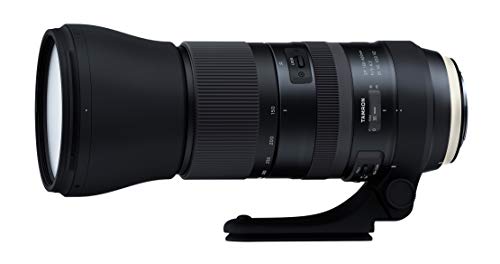
Tamron SP 150-600mm f/5-6.3 Di VC USD G2 Lens for Nikon
- Best for: Nikon DSLR photographers working from a hide who need the full 600mm end for distant, cautious subjects.
- Brand: Tamron
- Model: SP 150-600mm f/5-6.3 Di VC USD G2 (model A022, item model number AFA022N700)
- Focal length: 150-600mm
- Maximum aperture: f/5-6.3
Nikon DSLR photographers working from a hide who need the full 600mm end for distant, cautious subjects.
This is a DSLR-mount lens, so check it against your exact Nikon body, and plan on tripod or monopod support for long sessions.
Nikon DSLR owners who shoot from hides, blinds or a vehicle rest benefit most here, because this is the longest reach in the group and the working style suits a supported lens. The G2 generation pairs the 150-600mm range with VC stabilisation offering multiple modes, which helps when panning with birds in flight from a fixed position. Photographers covering shy subjects across open water, distant raptors or animals that keep to the far side of a field will value the extra 100mm at the top end over the mirrorless options listed alongside it.
Tamron 50-400mm f/4.5-6.3 Di III VC VXD Lens for Nikon Z
- Best for: Nikon Z shooters who want one lens covering habitat context at 50mm and animal portraits at 400mm.
- Brand: Tamron
- Model: A067
- Focal length: 50-400mm
- Maximum aperture: f/4.5-6.3
Nikon Z shooters who want one lens covering habitat context at 50mm and animal portraits at 400mm.
The range tops out at 400mm, so verify that is enough for your typical subject distance before choosing it over a longer zoom.
Nikon Z owners who dislike changing lenses outdoors will appreciate where this zoom starts. Beginning at 50mm means the same lens can record the marsh, the treeline and the group behaviour of a herd before zooming to 400mm for an individual animal, all without exposing the sensor to dust or drizzle mid-swap. VC stabilisation and the VXD focus drive named in the title support handheld work, and the lens stays relatively light for a full-frame ultra-telephoto zoom, which suits photographers covering ground on foot between sightings.
Which One Fits Your Situation
You Walk Trails With a Sony Body and Shoot Handheld
Choose the Tamron 150-500mm f/5-6.7. Its compact build for a 500mm zoom, VC stabilisation and fast VXD focusing are aimed at exactly this pattern of use, where the lens stays in your hands for hours and subjects appear without warning. The close focus at the wide end also covers the small creatures you pass on the way to larger ones.
You Sit in a Hide With a Nikon DSLR Waiting for Distant Birds
Choose the Tamron SP 150-600mm G2. When approaching is impossible and support is already part of your setup, the 600mm end is the deciding factor, and its stabilisation modes suit panning from a fixed position. The extra reach turns a cautious subject at the far shore into a frame-filling one.
You Shoot Nikon Z and Hate Swapping Lenses Outdoors
Choose the Tamron 50-400mm f/4.5-6.3. The 50mm starting point lets you document the setting and the group before isolating one animal, so a single mounted lens covers the whole story of an outing. That matters most in dust, rain or cold, where every lens change carries a cost.
You Use a Crop-Sensor Sony Body for Birds
Choose the Tamron 150-500mm f/5-6.7 and use the equivalent range the listing describes for APS-C cameras. The approximate 225-750mm equivalent gives small, distant birds more presence in the frame, while the lens remains the handheld-friendly option in this group. It is the natural pairing for crop-body bird work here.
Common Mistakes
- Comparing focal lengths across listings without first confirming the mount matches your exact camera body.
- Buying the longest zoom available when your usual subject distance would be better served by a wider starting range.
- Ignoring total carrying weight, then leaving the lens behind on the long walks where wildlife actually appears.
- Overlooking the maximum aperture at the long end, which decides how the lens copes with dawn and dusk activity.
- Skipping the minimum focus distance, then discovering the lens cannot frame the small subjects found close to the trail.
Frequently Asked Questions
Can I use one of these Tamron zooms on a different brand of camera?
No. Each listing is built for one mount, and the mount is part of the product name. The 150-500mm in this guide is for Sony E-mount, while the other two are for Nikon systems, one DSLR and one Z mirrorless. Match the mount in the title to your camera body exactly before ordering, because a lens for another system will not attach or communicate properly.
Is 400mm enough for wildlife, or do I need 500mm or 600mm?
It depends on subject size and distance rather than on a fixed rule. Large mammals at moderate range fill the frame comfortably at 400mm, while small birds at distance benefit from every extra millimetre a 500mm or 600mm end provides. Consider the animals you photograph most and how close you can realistically get, then choose the top end that covers that pattern.
Why does the aperture change across the zoom range?
These are variable-aperture zooms, so the maximum aperture narrows as you zoom toward the long end, moving from the first f-number in the name to the second. In practice that means less light at full reach, which matters at dawn and dusk. The listings state both figures in the lens name, so compare the second number when low-light work at maximum focal length is your priority.
Do I still need a tripod with a stabilised lens?
Not always, but support still helps in some situations. VC stabilisation makes handheld shooting at long focal lengths far more practical, and two of these zooms are designed around that use. A tripod or monopod remains worthwhile for long, stationary waits in a hide, where holding any lens steady for an extended period becomes tiring regardless of stabilisation.
More from Amazon
Programs that pair well with the guide above. Offers and eligibility are set by Amazon and may change.
Free shipping on eligible items, Prime Video and more. Eligible new members can start with a free trial.
Start a Prime free trialAudiobooks and podcasts to listen to on the go. Eligible new members can start with a free trial.
Try Audible freeAd-free music streaming. Eligible new subscribers can start with a free trial.
Try Music Unlimited freeA free business account with business pricing and bulk-buying tools for work, shop or home office.
Create a business accountAs an Amazon Associate we earn from qualifying purchases.