Our Short List of 3
All 3 Picks at a Glance
| Product | Specs | Action |
|---|---|---|
 1. SpeedTalk Mobile Data-Only 2GB IoT SIM | Check price on Amazon | |
 2. SpeedTalk Mobile IoT and GPS SIM Starter Kit | Check price on Amazon | |
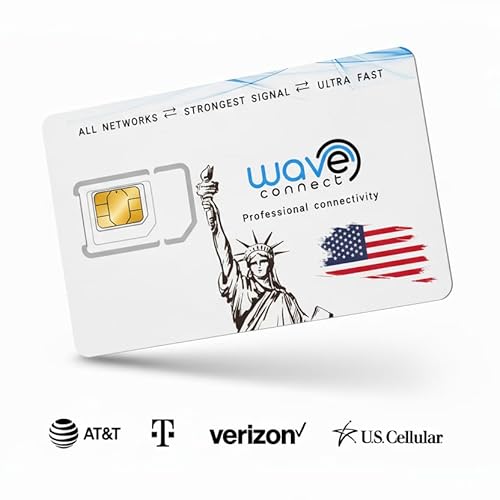 3. Wave Connect 24GB Data SIM Card for 360 Days | Check price on Amazon |
Key takeaways
- Find the best SIM card for trail camera use with data-only plans, triple-cut sizes, multi-network coverage, and simple setup for cellular trail cameras.
Disclosure: As an Amazon Associate, we earn from qualifying purchases.
A cellular trail camera can take a clear photo at dawn and store it on its memory card, but without a working data connection that image stays in the woods until the next visit. A SIM card for a trail camera supplies that connection. It gives an unlocked cellular trail camera access to a mobile network so it can send photos and short clips to a phone or companion app while the camera remains mounted on a tree, a fence post, or a field edge.
Choosing the right card is not the same as choosing a SIM card for a phone. A trail camera does not need voice calls or text messaging in most setups. It needs a small, steady amount of data, a SIM size that fits its tray, a network that reaches the exact spot where the camera is mounted, and a plan length that matches how often the camera is checked. A card that works well in a town may fail in a valley, a dense wood, or a remote field where only one network has usable signal. A card with a short validity window may run out before a seasonal camera is visited again.
This guide explains how a SIM card for a trail camera works, what to check before buying, and which data SIM cards sold on Amazon US are built for this kind of use. The three picks below are all data SIM cards for unlocked devices, and all three are described in their listings as suitable for trail cameras, hunting cameras, security cameras, or other Internet of Things devices. They differ in data allowance, validity length, and network coverage, so the best choice depends on how often images are sent and how long the camera will stay in the field between visits.
How a SIM Card Works in a Cellular Trail Camera
A cellular trail camera contains a modem that connects to a mobile network in much the same way a phone does, although the camera uses that connection for a narrower purpose. When motion triggers the camera, it captures an image or a short clip, stores a full-resolution copy on its memory card, and then uses the mobile connection to send a smaller version to a remote server or app. The owner can then view the image without walking to the camera, changing batteries, or removing a memory card.
The SIM card identifies the camera to the network and links it to a data plan. The card itself does not create signal. It allows the camera to use signal that is already present from a compatible network. If no compatible network reaches the camera location, no SIM card will fix that problem. If the camera is locked to a particular carrier, a SIM card from another network may not work at all. For that reason, the first check is always the camera manual: confirm that the camera is unlocked, confirm the SIM size it takes, and confirm which networks the camera model supports.
Most cellular trail cameras use a standard, micro, or nano SIM tray. Many data SIM cards sold for this purpose are triple-cut, which means the same card can be popped out in standard, micro, or nano size. That format reduces the risk of ordering the wrong size, although it is still worth confirming the tray type before ordering. A triple-cut card that is separated at the wrong size cannot be put back together, so match it to the tray before inserting it.
Activation also varies by product. Some data SIM cards arrive ready to use once inserted and powered on. Others require activation through a website or app, entry of an ICCID number printed on the card, or selection of a data plan before the first connection. Keep the card packaging until the camera has sent its first image, because the packaging often carries the ICCID and other details needed if support is required later.
What Matters Most
Network coverage is the single most important factor. A trail camera is often placed where phone signal is weak, intermittent, or limited to one network. A SIM card that can use more than one network gives the camera more chances to connect. Some cards in this guide list support for AT and T and T-Mobile networks, while others list support for AT and T, T-Mobile, US Cellular, and Verizon. A wider list does not guarantee signal at a specific location, but it does widen the set of towers the camera can try. Before buying, check coverage with a phone on each network if possible. A phone that shows no signal at all on a network is a useful warning sign. Mounting height also matters: a camera mounted higher, with a clearer line toward open ground, often connects more reliably than a camera mounted low behind dense brush.
A data-only SIM card supplies mobile data without voice service or text messaging. That design matches the way a trail camera works, because the camera sends images and clips over data and does not make calls. Data-only does not mean unlimited data. Every card has a data allowance and a validity period, and the camera stops sending images once the allowance is used or the period ends, whichever comes first. That limit is central to choosing a card, because a camera that sends many images a day will use data faster than a camera in a quiet location that sends only a handful of images a week.
Data allowance and validity period should be read together. A card with 2GB of data for 30 days suits a short deployment, a trial run, or a camera in a location with modest activity. A card with 24GB of data for 360 days suits a camera that stays in the field for a full season or a full year, or a camera in a busy location where animals pass often. A still image sent by a cellular trail camera is usually a compressed version of the full-resolution file stored on the memory card. A short video clip uses more data than a still image, and a camera set to send video on every trigger will use data far faster than a camera set to send still images only. Check the camera settings for image resolution, send frequency, and video length before choosing a card.
SIM size must match the tray. A triple-cut SIM card is supplied as a larger card with perforations that allow it to be separated into standard, micro, or nano size. Separate it only at the size needed, and keep the remaining frame in case the card needs to be moved to a different camera with a larger tray later. Insert it in the correct orientation, with the contacts facing the direction shown in the camera manual. Forcing a card into a tray can damage the tray or the card.
The cards in this guide are described as prepaid and without a contract. That structure suits trail camera use, because a camera may be used for a season, stored for several months, and then used again. A prepaid card gives a clear end date, and a new card can be fitted when the camera is next deployed. The validity period starts when the card is activated or first used, depending on the product, and the data allowance expires at the end of that period even if data remains.
The Three Picks at a Glance
| Pick | Data and validity | Networks listed | SIM format | Best for |
|---|---|---|---|---|
| SpeedTalk Mobile Data-Only 2GB IoT SIM | 2GB for 30 days | 5G and 4G LTE | Triple-cut | Short deployments and trial runs |
| SpeedTalk Mobile IoT and GPS SIM Starter Kit | Starter kit for IoT and GPS devices | Listed for IoT and GPS use | Triple-cut | Trackers and mixed IoT devices |
| Wave Connect 24GB Data SIM Card | 24GB for 360 days | AT and T, T-Mobile, US Cellular, Verizon | Triple-cut 3-in-1 | Long seasonal deployments |
1. SpeedTalk Mobile Data-Only 2GB IoT SIM
The SpeedTalk Mobile Data-Only 2GB IoT SIM is a prepaid data SIM card designed for devices that need mobile data without voice or text service. The listing describes it as a data-only card with 2GB of high-speed 5G and 4G LTE data for 30 days, with a triple-cut SIM that fits standard, micro, and nano device slots. It is listed for use with GPS trackers, hunting cameras, solar cameras, and LTE routers, which places trail cameras directly in its intended use case.
The data-only design is its main strength. A trail camera does not need talk or text, and a card that supplies data only keeps the plan focused on the single resource the camera actually uses. The 2GB allowance for 30 days is a modest amount, which makes this card a practical choice for a short deployment, a first test of a new camera location, or a camera in a quiet spot where triggers are infrequent. It is also useful for testing signal and camera settings at a location before committing to a longer-validity card. The triple-cut format allows the same card to be fitted to different trail camera models without ordering a different card for each tray size. The 30-day validity period is both a strength and a limit: it gives a clear, short window for a trial, but it is not suited to a camera left in the field for several months without a visit. Before fitting this card, confirm that the camera is unlocked, confirm the SIM size, and check the camera settings, because a camera set to send video on every trigger will use the 2GB allowance faster than a camera set to send still images only.
2. SpeedTalk Mobile IoT and GPS SIM Starter Kit
The SpeedTalk Mobile IoT and GPS SIM Starter Kit is a SIM starter kit designed for GPS trackers, IoT devices, and backup smartphone lines. The listing describes it as a triple-cut SIM designed for trackers, wearables, and unlocked phones, with a focus on IoT buyers who need a SIM profile matched to hardware rather than a generic phone kit. The provider site that lists SpeedTalk Mobile products on Amazon places this kit in its IoT and GPS category, alongside the data-only card above, and describes it as the tracker-oriented option in the range.
Its main strength is breadth of intended use. It is not limited to a single device type, which makes it a flexible choice for an owner who uses a trail camera alongside a GPS tracker, a solar camera, or another LTE device. The triple-cut format again allows the same kit to be adapted to standard, micro, or nano trays. As a starter kit, this product is best understood as a way to start service on an IoT device, rather than as a long-validity data card with a fixed large allowance stated in the same way as the other two picks. The exact data allowance and validity depend on the plan selected at activation, so the listing and the activation instructions should be read together before buying. For a trail camera, this kit suits an owner who already uses SpeedTalk Mobile for another device, who wants a single provider across several IoT devices, or who wants a starter kit to test a camera location before choosing a longer data plan. Before fitting it, confirm the camera is unlocked, confirm the SIM size, and confirm that the plan selected at activation provides enough data for the expected number of images and clips.
3. Wave Connect 24GB Data SIM Card for 360 Days
The Wave Connect 24GB Data SIM Card for 360 Days is a prepaid data-only SIM card with 24GB of high-speed data for 365 days, listed as a triple-cut 3-in-1 card. The listing states that it works with all major US networks, naming AT and T, T-Mobile, US Cellular, and Verizon, and that it is designed for unlocked security cameras, solar cameras, and trail cameras. The listing also describes it as a pay-as-you-go SIM card with no contract, with a US breakout point so data stays within the US.
The long validity period is its main strength. A 360-day window covers a full year of deployment, which suits a camera left in the field for a whole season, a camera checked only a few times a year, or a camera in a remote location where visits are infrequent. The 24GB allowance is also larger than the short-term card above, which gives more headroom for a busy location, for a camera that sends many images per day, or for a camera that occasionally sends short video clips. The multi-network listing is another strength. The card is described as a non-steered SIM that automatically connects to the first available network, with the option to switch networks manually to ensure the strongest signal. The listing also states that the card connects to 4G and 5G networks in the US. The triple-cut 3-in-1 format allows the card to fit standard, micro, or nano trays, and the listing states that the card is compatible with a wide range of devices that have a SIM card tray, including trail cameras, CCTV, and solar energy monitoring systems, provided the device is unlocked and has data roaming enabled. Before fitting this card, confirm that the camera is unlocked and that data roaming is enabled if the listing requires it, and test signal and image delivery during the first few days, while the camera is still easy to reach.
Mistakes to Avoid and Which Card Fits
One common mistake is buying a SIM card for a phone and assuming it will work in a trail camera without checking compatibility. A phone SIM may work in an unlocked trail camera, but a phone plan that includes voice and text may not be the best fit, and a carrier-locked phone SIM may not work at all. A data SIM card designed for IoT devices, trail cameras, or security cameras is a more direct match, because its listing states that use case explicitly. Another mistake is ignoring the SIM size. A nano SIM will not fill a standard tray without an adapter, and a standard SIM will not fit a nano tray at all. A triple-cut card reduces this risk, but only if it is separated at the correct size.
A third mistake is buying a short-validity card for a long deployment, or a long-validity card for a camera that will be collected in a few weeks. The validity period should match the planned deployment length, with a small margin for delays caused by weather, access, or battery changes. A card that expires before the camera is collected will stop sending images, even if data remains. A fourth mistake is placing the camera without checking signal. A camera mounted in a hollow, behind a ridge, or deep in dense cover may have far weaker signal than a camera mounted a short distance away on higher ground. Test signal at the exact mounting spot, rather than at the vehicle or at the edge of the property. A fifth mistake is enabling video sending on every trigger without checking data use first. Video clips use more data than still images and can exhaust a small allowance quickly. Start with still images, check data use for a week, and then enable video for a short period if data allows.
Final Choice
The best SIM card for a trail camera is the card that matches the camera, the location, and the deployment length. Network coverage comes first, because a card cannot create signal where none exists. Data allowance and validity come next, because they decide how long the camera can keep sending images without a visit. SIM size, activation steps, and APN settings come after that, because they decide whether the card fits and connects on the first attempt.
For a short trial, the SpeedTalk Mobile Data-Only 2GB IoT SIM gives a clear, data-only test with a 30-day window. For a mixed IoT setup, the SpeedTalk Mobile IoT and GPS SIM Starter Kit gives a flexible starter option across trackers and other devices. For a long seasonal deployment, the Wave Connect 24GB Data SIM Card for 360 Days gives a larger allowance, a full-year validity period, and multi-network coverage in a single triple-cut card. Whichever card is chosen, test it early. Fit the card, confirm signal at the exact mounting spot, send a test image, and check data use during the first week. That early test is the difference between a camera that sends images all season and a camera that goes silent after the first few days, with no way to know why until the next visit.
More from Amazon
Programs that pair well with the guide above. Offers and eligibility are set by Amazon and may change.
Free shipping on eligible items, Prime Video and more. Eligible new members can start with a free trial.
Start a Prime free trialAudiobooks and podcasts to listen to on the go. Eligible new members can start with a free trial.
Try Audible freeAd-free music streaming. Eligible new subscribers can start with a free trial.
Try Music Unlimited freeA free business account with business pricing and bulk-buying tools for work, shop or home office.
Create a business accountAs an Amazon Associate we earn from qualifying purchases.