Key takeaways
- Best overall: Instant Pot Pro 6-Quart
- Best value for everyday cooking: Instant Pot Duo Plus 6-Quart
- Best for experienced cooks: Breville Fast Slow Pro 6-Quart
- Best for batch cooking: Instant Pot Pro 8-Quart
- Best if you also want air frying: Ninja Foodi Deluxe XL 8-Quart
The best electric pressure cookers for most households are the 6-quart Instant Pot Pro and Instant Pot Duo Plus: they offer useful pressure-cooking programs, strong safety systems, removable stainless-steel cooking pots, and a manageable countertop footprint. Choose the Breville Fast Slow Pro for finer control, or an 8-quart multi-cooker when you regularly cook large batches.
Our top picks


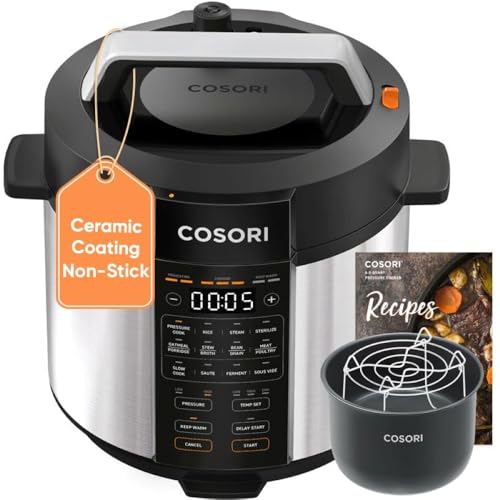
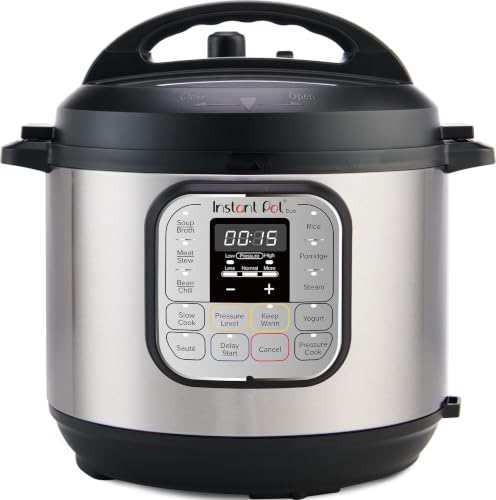
As an Amazon Associate we earn from qualifying purchases at no extra cost to you. Ratings are shown as listed on Amazon.
Best electric pressure cookers by household
- Best overall: Instant Pot Pro 6-Quart
- Best value for everyday cooking: Instant Pot Duo Plus 6-Quart
- Best for experienced cooks: Breville Fast Slow Pro 6-Quart
- Best for batch cooking: Instant Pot Pro 8-Quart
- Best if you also want air frying: Ninja Foodi Deluxe XL 8-Quart
A 6-quart cooker is the practical middle ground. It can prepare soup, beans, rice, stew, or a medium-sized roast without occupying the space or requiring the minimum liquid of a larger machine. Two people who cook modest portions may prefer a 3-quart cooker, while families, meal-preppers, and anyone cooking for six or more should consider 8 quarts.
Head-to-head comparison
| Model | Capacity | Power | Pressure options | Approx. size | Approx. weight | Typical market range |
|---|---|---|---|---|---|---|
| Instant Pot Pro | 6 qt | 1200 W | High and low pressure; 28 programs | 13.4 × 12.2 × 12.6 in | 10.4 lb | $120–$180 |
| Instant Pot Duo Plus | 6 qt | 1000 W | High and low pressure; 25 programs | 13.4 × 12.2 × 12.5 in | 11.8 lb | $90–$150 |
| Breville Fast Slow Pro | 6 qt | 1100 W | 11 pressure settings | 14.2 × 13.0 × 14.0 in | 14.0 lb | $200–$300 |
| Instant Pot Pro | 8 qt | 1400 W | High and low pressure; 28 programs | 15.4 × 14.0 × 15.4 in | 12.8 lb | $150–$220 |
| Ninja Foodi Deluxe XL | 8 qt | 1760 W | High and low pressure; pressure and air-crisp functions | 16.1 × 14.6 × 15.4 in | 26.0 lb | $200–$300 |
Dimensions and prices can vary by regional version, bundle, and promotion. The stated capacity is the size of the inner pot, not the amount of food that can safely be pressure-cooked. Most pressure-cooker recipes should not exceed two-thirds full, and foaming foods such as beans, grains, and pasta generally require a half-full limit.
Which cooker suits your situation?
| Your situation | Best fit | Why | Trade-off |
|---|---|---|---|
| One or two people, limited counter space | 3-quart cooker | Smaller footprint and sensible portions | Less room for roasts and leftovers |
| Two to four people, first pressure cooker | Instant Pot Duo Plus 6 qt | Good presets and a lower typical price | Less manual control than Breville |
| Frequent weekly use | Instant Pot Pro 6 qt | Stainless inner pot, stronger heating, useful controls | Costs more than the Duo Plus |
| Experienced cook who adjusts recipes | Breville Fast Slow Pro | More pressure levels and precise programming | Heavier, wider, and more expensive |
| Five or more people or batch cooking | Instant Pot Pro 8 qt | More practical capacity without a second appliance | Longer heat-up time and larger footprint |
| Want pressure cooking and air frying | Ninja Foodi Deluxe XL | Combines pressure cooking with crisping functions | Very heavy and requires storage for multiple lids |
Instant Pot Pro versus Duo Plus
The Instant Pot Pro is the better long-term choice for people who will use a cooker several times a week. Its inner pot has handles that stay cooler and make lifting easier, and its cooking programs and manual controls are more flexible. The stainless-steel pot is also preferable if you want to brown ingredients without relying on a separate pan.
The Duo Plus covers the core jobs—pressure cooking, slow cooking, steaming, sautéing, rice, yogurt, and warming—at a lower price. Its preset count should not be treated as a measure of capability: many programs are variations of temperature, timing, or pressure settings that can be selected manually. For a beginner who mainly wants beans, rice, soup, chicken, and pulled meat, the Duo Plus is usually enough.
Pressure performance and preset usefulness
Electric cookers do not reach pressure instantly. A pot of cold stock may need 10 to 20 minutes to heat and pressurize before the programmed cooking time begins. An 8-quart model can take longer because it contains more water and metal. This matters when comparing a “15-minute” recipe: the total time may be closer to 35 or 45 minutes after heating and release are included.
High pressure is useful for tough meat, dried beans, and dense vegetables. Low pressure is gentler for delicate foods, but it does not make every recipe better. Presets are most useful when they provide sensible default temperatures and timing for familiar tasks. They are less useful when they hide the actual pressure, release method, or temperature from the cook.
The Breville Fast Slow Pro stands out for its range of pressure settings and automatic adjustment of cooking time in some programs. That extra control benefits cooks adapting recipes. It is unnecessary if you mostly follow established pressure-cooker timings.
Safety features that matter
Look for a lid-locking mechanism that prevents opening while pressure remains, automatic pressure and temperature monitoring, overheat protection, and a controlled steam-release valve. A modern electric pressure cooker should also have a floating pressure indicator and protection against starting when the lid is incorrectly positioned.
Safety features reduce risk but do not eliminate the need for correct use. Keep the steam outlet clear, inspect the sealing ring, and never force the lid. Use natural release for foaming foods or liquid-heavy dishes when the recipe calls for it; a rapid release can spray hot liquid through the valve.
Cleanup, durability, and ownership costs
The removable inner pot and silicone sealing ring are the parts that matter most after purchase. Stainless steel is more resistant to staining and scratching than a coated pot, although food can stick if the pot is not deglazed after sautéing. The sealing ring gradually absorbs odors and loses elasticity. Replace it when it remains loose, cracked, stretched, or unable to maintain pressure—not merely because it has changed color.
Wash the inner pot, lid, sealing ring, steam shield, and condensation collector according to the manufacturer’s instructions. Wipe the cooker base rather than immersing it. After cooking, leave the lid ajar or store it upside down so trapped moisture does not create odors.
A useful ownership calculation is replacement cost per use. If a cooker costs $150 and a sealing ring and replacement inner pot add $35 over three years, using it twice weekly gives approximately 312 uses. That is about $0.59 per use before electricity and ingredients. A cooker used twice a month would cost roughly $3.08 per use over the same period, so frequent use matters more than buying the model with the most presets.
Countertop fit and ventilation
Measure the appliance with the lid open, not just the advertised base. Steam must be able to vent safely, and cabinets above the cooker can collect moisture or heat. Leave open space around the steam outlet and avoid placing the appliance directly beneath low cabinets. An 8-quart cooker can be several inches wider and substantially heavier than a 6-quart model; the Ninja Foodi Deluxe XL is particularly demanding because its additional air-crisping lid and accessories need storage.
Final recommendation
Choose the Instant Pot Duo Plus 6-Quart if price and simple everyday cooking are priorities. Choose the Instant Pot Pro 6-Quart if you want a more versatile cooker for frequent use and value its stainless-steel pot and improved controls. Buy the Breville Fast Slow Pro when pressure adjustment and cooking precision matter more than size or price. For families and batch cooking, move to the Instant Pot Pro 8-Quart; choose the Ninja Foodi Deluxe XL only if its air-frying function justifies the extra weight and storage space.