
Our Short List of 3

- 5.3K60 video; 27 megapixel still images; 1,900 mAh Enduro battery; waterproof to 10 metres; HyperSmooth 6.0 stabilization; HB-Series lens mod support; model CHDHX-131-TH; weight 157 grams.

- 8K 360 video; 5.7K60 360 video; 4K60 single-lens video; 72 megapixel 360 still images; 2,290 mAh battery; waterproof to 10 metres; FlowState stabilization; model CINSABMA-N; bundle includes lens guards and protective case.

- Extended length 114 cm; retracted length 23.3 cm; weight 118 grams; aluminium alloy body; quarter-inch thread mount; compatible with X4, X3, and GoPro cameras with a suitable adapter; invisible effect only in 360 footage.
All 5 Picks at a Glance
| Product | Specs | Action |
|---|---|---|
| 1. GoPro HERO13 Black |
| Check price on Amazon |
| 2. Insta360 X4 Standard Bundle |
| Check price on Amazon |
| 3. Insta360 114cm Invisible Selfie Stick |
| Check price on Amazon |
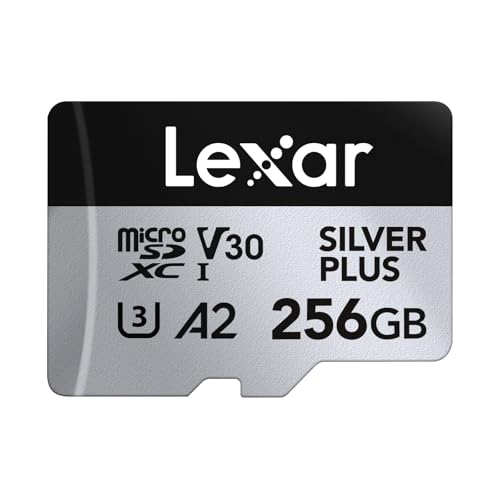 4. Lexar 256GB Silver Plus Micro SD Card |
| Check price on Amazon |
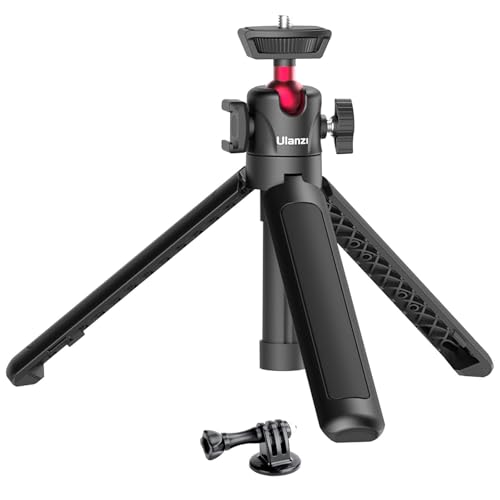 5. ULANZI MT-16 Extendable Mini Tripod |
| Check price on Amazon |
Our Top Picks
Two cameras, two very different ideas about what an action camera should do. The GoPro HERO 13 Black is the classic point-and-shoot action camera, refined into a tough, simple tool for first-person video. The Insta360 X4 is a 360 camera that records everything around it in 8K, then lets you choose the frame later in editing. Both shoot sharp video, both survive rough handling, and both suit travel, sport, and everyday adventure. The right choice depends on how you like to shoot, how much editing you enjoy, and whether you want a finished clip straight from the camera or a flexible file you can reframe again and again.
As an Amazon Associate, we earn from qualifying purchases.
The Short Answer
Choose the GoPro HERO 13 Black if you want a traditional action camera that is fast to use, easy to mount, and ready to share with little editing. Its 5.3K video looks clean and detailed, its stabilization is excellent, and its lens mod system adds creative options without changing cameras. Choose the Insta360 X4 if you want 360 capture, reframing freedom, and third-person views that look as if a drone followed you. Its 8K 360 video gives you room to crop into a sharp 4K view. If you enjoy editing, the X4 opens more creative doors. If you want to mount a camera, press record, and get on with the day, the HERO 13 is the simpler partner.
Resolution and Image Quality
On paper, the numbers look close, yet they describe different things. The HERO 13 records 5.3K video at up to 60 frames per second and captures 27 megapixel still images. That 5.3K frame is the full picture, so every pixel lands in the final clip. Detail holds up well in bright light, and 4K at up to 120 frames per second gives smooth slow motion for surf, snow, and fast action.
The X4 records 8K 360 video, which sounds higher, but that 8K sphere is spread across the whole scene. When you crop into a normal wide view for sharing, the result is close to 4K, with plenty of detail for phones, laptops, and social feeds. In single-lens mode, the X4 records 4K wide-angle video at up to 60 frames per second. Its still images reach 72 megapixels in 360 mode. Low light is the weak point for both cameras, as small sensors gather less light than a large mirrorless camera. For pure detail, the HERO 13 has a small edge. For flexibility, the X4 wins, because one 8K 360 file can become many different clips.
360 Capture Against Traditional Framing
This is the heart of the comparison. A traditional camera, such as the HERO 13, records what you aim it at. You choose the angle before you press record, and that choice is final. That discipline is a strength when you know the shot you want. Mount the camera on a helmet, a chest strap, or a handlebar, aim it well, and the footage needs little work later. The wide field of view forgives small aiming errors.
The X4 records in every direction at once. You do not need to aim, because the camera captures the whole scene and you choose the direction later. A moment behind you, a friend overtaking on the left, or a landscape that opened up on the right is still in the file. Reframing in the Insta360 app or desktop software lets you pan, tilt, and zoom after the fact, add smooth keyframe moves, and export a normal wide clip. You can also export a tiny planet view or a wide panorama from the same file. The trade-off is time. Reframing takes longer than trimming a GoPro clip. The X4 also works as a normal single-lens camera when you want a quick, simple clip.
Stabilization and Handling
Both cameras use electronic stabilization, and both deliver smooth footage without a gimbal in most situations. The HERO 13 uses HyperSmooth 6.0, which keeps walking, running, and riding footage steady, and adds horizon lock in supported modes, so the frame stays level even when the camera rolls. The HERO 13 feels like a small brick in the hand, with folding mounting fingers built into the base and screens front and rear for framing and vlogging.
The X4 uses FlowState stabilization, which is equally smooth for walking, cycling, and travel, and adds horizon lock across 360 footage. Because the camera records the full sphere, reframing can add camera moves that feel like a gimbal shot, even though no gimbal was used. The X4 is taller and slimmer than the HERO 13, with two large fisheye lenses that need care. It ships with removable lens guards, and using them is wise, because a scratched fisheye lens is harder to live with than a scratched flat lens. For handheld use, the HERO 13 feels more rugged. For creative moves, the X4 rewards a little extra care.
Battery Life and Endurance
Battery life matters on long days. The HERO 13 uses a 1,900 mAh Enduro battery, which GoPro lists at up to 79 minutes of continuous recording in typical conditions. In practice, expect less at 5.3K60, more at 4K30, and a clear benefit from carrying a spare battery. The Enduro battery also handles cold weather better than a standard battery. The camera charges over USB-C.
The X4 uses a 2,290 mAh battery, which Insta360 lists at up to 135 minutes of recording in 5.7K30 mode under test conditions. That figure is generous, and real runtimes fall with higher resolutions, cold weather, and heavy app use, yet the X4 still tends to last longer per charge than the HERO 13 in comparable 360 modes. Both cameras record to a single microSD card, so a fast, large card is essential, especially for 8K 360 files. Plan on one spare battery and one spare card for a full day of shooting.
Water, Durability, and Mounts
Both cameras are waterproof to 10 metres without a separate housing, which is a major benefit for surf, kayaking, and wet weather. Both handle swimming, snorkelling near the surface, and heavy rain. Rinse either camera in fresh water after salt water use, dry the lens before shooting, and check the battery door seal before entering the water.
Durability favours the HERO 13 in everyday knocks. Its flat lens, thick body, and replaceable lens cover handle drops and scrapes well, and the HB-Series lens mods add an ultra-wide view, a macro view for close focus, neutral density filters for motion blur, and an anamorphic option for a cinematic look. Those mods attach quickly, and the camera detects them and adjusts settings. The X4 is also well built, yet its bulging fisheye lenses are the vulnerable point, so lens guards and a protective case matter more. Mounting is easy on both, because both use a standard action camera mount pattern, so a shared kit is practical.
The 5 Picks
1. GoPro HERO13 Black
- 5.3K60 video; 27 megapixel still images; 1,900 mAh Enduro battery; waterproof to 10 metres; HyperSmooth 6.0 stabilization; HB-Series lens mod support; model CHDHX-131-TH; weight 157 grams.
The HERO 13 is the pick for creators who want a traditional action camera that is fast, tough, and easy to share from. Its 5.3K60 video is sharp and detailed, its stabilization keeps rough footage smooth, and its lens mod system adds creative range without a second camera. The front screen helps with vlogging, and the waterproof body means you can take it into surf, snow, and rain without a housing.
2. Insta360 X4 Standard Bundle
- 8K 360 video; 5.7K60 360 video; 4K60 single-lens video; 72 megapixel 360 still images; 2,290 mAh battery; waterproof to 10 metres; FlowState stabilization; model CINSABMA-N; bundle includes lens guards and protective case.
The X4 Standard Bundle is the pick for creators who want 360 freedom and reframing control. Its 8K 360 video captures the whole scene, its 4K single-lens mode covers normal vlogging, and its invisible selfie stick effect creates third-person views that look filmed by a separate camera. The bundle includes the camera, a protective case, standard lens guards, a lens cloth, and a USB-C cable.
3. Insta360 114cm Invisible Selfie Stick
- Extended length 114 cm; retracted length 23.3 cm; weight 118 grams; aluminium alloy body; quarter-inch thread mount; compatible with X4, X3, and GoPro cameras with a suitable adapter; invisible effect only in 360 footage.
This stick unlocks the best X4 shots, and it also works as a normal extension pole for the HERO 13 with a suitable mount. With the X4, the stick disappears from 360 footage, so a handheld shot looks like a drone following you. With the HERO 13, the stick gives reach for overhead views, crowd shots, and selfies, even though it stays visible in the frame. The aluminium build is light, and the retracted length fits a small bag.
4. Lexar 256GB Silver Plus Micro SD Card
- Capacity 256 GB; microSDXC UHS-I; U3 and V30 video speed classes; A2 app performance; read speed up to 205 MB per second; SD adapter included; model LMSSIPL256G-BNAAU.
Both cameras need a fast microSD card, and this Lexar card is a sensible shared choice. Its 256 GB capacity holds long 5.3K and 8K 360 sessions, its UHS-I U3 and V30 classes support sustained video recording, and its read speed of up to 205 MB per second makes offloading footage faster. Format the card in the camera before a big outing.
5. ULANZI MT-16 Extendable Mini Tripod
- Extendable mini tripod with 360-degree ball head; cold shoe mount; four-level height adjustment; lightweight portable build; quarter-inch camera thread; works as tripod, handle grip, and selfie pole; model MT-16.
The MT-16 is a small tripod, handle grip, and selfie pole in one, and it suits both cameras for vlogging, time-lapse, and tabletop shots. Its four-level extension reaches a useful height for selfies and group shots, its ball head adjusts the angle quickly, and its cold shoe holds a small light or microphone. Fold the legs in and it becomes a handle for walking shots. Fold them out and it stands on a table, a rock, or a ledge for a steady time-lapse.
Who Should Buy Which Camera
Buy the HERO 13 if you film sport, surf, snow, and family action, and you want clips that are ready to share with little editing. Buy it if you mount a camera and forget it, if you hand the camera to friends, or if you want lens mods for ultra-wide, macro, and anamorphic looks. Buy the X4 if you enjoy editing, if you want reframing freedom, or if you want third-person and drone-like views without a drone.
Many creators will be happy with either camera, and the shared accessories above make it easy to build one kit that serves both. A fast card, a selfie stick, and a mini tripod cover most outings. If you can only buy one camera, choose by workflow, not by headline resolution. The HERO 13 rewards a fast, simple workflow, and the X4 rewards a creative, editing-led workflow.
FAQ
Which camera is better for beginners?
The HERO 13 is easier for a beginner, because framing is direct, controls are simple, and clips need little editing. The X4 is easy to shoot with, yet reframing adds a learning curve, so allow time to learn the app before a big trip.
Can the Insta360 X4 replace a GoPro for normal video?
Yes, the X4 works well as a normal camera in single-lens mode, with 4K wide-angle video for vlogging and everyday clips. The HERO 13 still feels simpler for mounted sport footage, where a fixed angle and a rugged body matter more.
Is 8K 360 video sharper than 5.3K GoPro video?
Not in a finished wide clip. The 8K sphere is spread across the whole scene, so a cropped view is close to 4K, while the HERO 13 uses its full 5.3K frame for one view. The X4 wins on flexibility, because one file can become many views.
Do both cameras need the same accessories?
Mostly yes. Both use a microSD card, a standard action mount, a selfie stick or mini tripod, and a spare battery for long days. The X4 benefits more from lens guards, while the HERO 13 benefits more from lens mods, yet a shared card, stick, and tripod serve both well.
Final Thoughts
The GoPro HERO 13 vs Insta360 X4 choice is not a contest between a good camera and a bad one. It is a choice between two ways of filming. The HERO 13 is the direct camera: aim, record, share. The X4 is the flexible camera: record everything, choose the frame later, and create views that a single lens cannot match. If your days are fast and your editing time is short, take the HERO 13. If your days are creative and you enjoy shaping footage after the shoot, take the X4. Pair the camera with a fast card, a good stick, and a small tripod.
More from Amazon
Programs that pair well with the guide above. Offers and eligibility are set by Amazon and may change.
Free shipping on eligible items, Prime Video and more. Eligible new members can start with a free trial.
Start a Prime free trialAudiobooks and podcasts to listen to on the go. Eligible new members can start with a free trial.
Try Audible freeAd-free music streaming. Eligible new subscribers can start with a free trial.
Try Music Unlimited freeA free business account with business pricing and bulk-buying tools for work, shop or home office.
Create a business accountAs an Amazon Associate we earn from qualifying purchases.









