Key takeaways
- One lens for everyday use: A 35mm f/1.8 is a flexible starting point. It includes more surroundings than a 50mm, which helps indoors and on the street.
- Portraits and soft backgrounds: An 85mm f/1.8 gives comfortable working distance and strong subject separation, provided you have enough room to step back.
- Low light on a budget: A 50mm f/1.8 is usually light and affordable. Its wide aperture can help in dim conditions, though shallow focus makes precise focusing important.
- Landscapes, architecture, and interiors: A 24mm prime captures a broad view. Keep the camera level to reduce converging vertical lines, and watch for stretched faces near the frame edges.
- APS-C street photography: A 23mm lens gives a field of view roughly like a 35mm lens on full frame, making it a natural walk-around option.
Best Prime Lenses for Sharp, Creative Photography
The best prime lens for most photographers is a fast 50mm with autofocus for portraits, everyday scenes, and low light; choose a 35mm for tighter spaces and street photography, an 85mm for flattering portraits, or a 24mm for expansive landscapes and interiors. Before buying, check that the lens matches your camera’s mount and sensor size: the same focal length gives a narrower field of view on an APS-C camera than on full frame.
Prime lens picks by situation
- One lens for everyday use: A 35mm f/1.8 is a flexible starting point. It includes more surroundings than a 50mm, which helps indoors and on the street.
- Portraits and soft backgrounds: An 85mm f/1.8 gives comfortable working distance and strong subject separation, provided you have enough room to step back.
- Low light on a budget: A 50mm f/1.8 is usually light and affordable. Its wide aperture can help in dim conditions, though shallow focus makes precise focusing important.
- Landscapes, architecture, and interiors: A 24mm prime captures a broad view. Keep the camera level to reduce converging vertical lines, and watch for stretched faces near the frame edges.
- APS-C street photography: A 23mm lens gives a field of view roughly like a 35mm lens on full frame, making it a natural walk-around option.
Focal lengths and trade-offs at a glance
The figures below describe common full-frame lens designs, not one exact model. Weight varies considerably by mount and construction. For APS-C equivalents, multiply the focal length by about 1.5 on Nikon or Sony APS-C bodies, or 1.6 on Canon APS-C bodies, to estimate the full-frame-equivalent field of view.
Our top picks
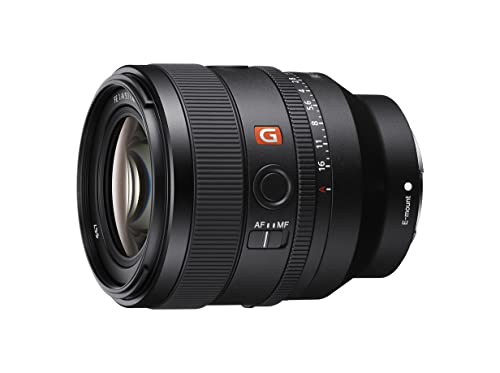

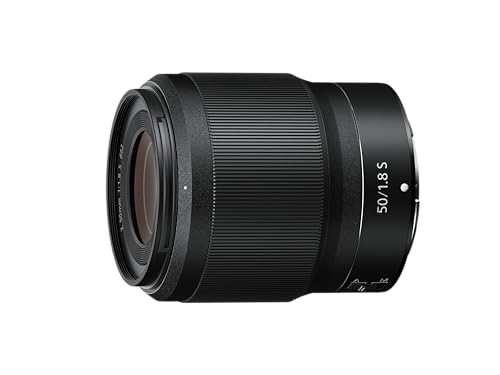

As an Amazon Associate we earn from qualifying purchases at no extra cost to you. Ratings are shown as listed on Amazon.
| Focal length and typical aperture | Best suited to | Typical weight range | Practical trade-off |
|---|---|---|---|
| 24mm f/1.8–f/2.8 | Landscapes, interiors, environmental portraits | 250–500 g | Broad coverage; edge stretching and perspective distortion are more noticeable up close. |
| 35mm f/1.4–f/2 | Street, travel, documentary, everyday use | 250–700 g | Versatile framing; f/1.4 versions are often larger and cost more than f/1.8 versions. |
| 50mm f/1.4–f/1.8 | Portraits, detail, low-light general use | 150–500 g | Natural-feeling perspective; can feel too tight in small rooms. |
| 85mm f/1.8–f/2 | Head-and-shoulders portraits, events, indoor sports from nearby positions | 300–700 g | Strong subject separation; needs working distance and may be restrictive indoors. |
These are approximate ranges for common modern lenses; actual specifications differ by product and mount. Maximum aperture is written as an f-number: a lower number admits more light and can create shallower depth of field. The difference between f/1.8 and f/1.4 is about two-thirds of a stop, but it may come with a substantial increase in size, weight, and price.
How to choose for sharpness, autofocus, and bokeh
Sharpness depends on more than the lens
A prime lens cannot guarantee a sharp photo. At very wide apertures, many lenses are less crisp toward the corners, and depth of field can be thin enough that an eye is in focus while an ear is not. For portraits, try f/2 or f/2.8 when you want more of the face sharp; for landscapes, stopping down to around f/5.6–f/8 often improves edge-to-edge detail. Very small apertures such as f/16 can reduce fine detail through diffraction.
For moving subjects, shutter speed and focus tracking matter as much as optical resolution. Image stabilization helps counter camera shake but does not freeze a walking person. If your camera has in-body stabilization, confirm how the lens and body work together; many small primes omit optical stabilization.
Autofocus is a system decision
Look for a lens built for your exact mount, such as Sony E, Nikon Z, Canon RF, Fujifilm X, or Micro Four Thirds. Autofocus performance depends on the lens motor, camera body, and firmware combination. For children, pets, or candid street scenes, prioritize reliable subject tracking and quiet focusing. For landscapes or still life, manual focus and a focus-distance scale may matter more than tracking speed.
Third-party options from manufacturers such as Sigma and Tamron exist for selected camera mounts, but availability and autofocus features vary. Check the maker’s current compatibility listing for your specific body, particularly if you use an older camera or need eye detection and continuous autofocus.
Bokeh and distortion have different causes
Bokeh describes the appearance of out-of-focus areas; it is influenced by optical design, aperture shape, focus distance, and the background. A faster aperture can blur the background more, but an 85mm lens may produce stronger separation than a 35mm at the same f-number because it frames the subject differently. Look for distracting rings or harsh outlines in sample images if bokeh quality is a priority.
Wide-angle lenses can make nearby objects look disproportionately large, a perspective effect caused by camera position rather than a defect that software can fully undo. Barrel distortion is a separate optical effect, often corrected in-camera or in editing. If you photograph architecture, check whether your workflow reads the lens’s correction profile and whether straight lines remain acceptable near the edges.
Choose by kit, not just by headline aperture
| Your situation | Good starting choice | Why it fits |
|---|---|---|
| First prime; unsure what focal length you prefer | 35mm f/1.8 or 50mm f/1.8 | Both are practical, comparatively light options. Pick 35mm for more context or 50mm for tighter framing. |
| Frequent portraits, plenty of room | 85mm f/1.8 | Offers portrait-friendly framing without the size and cost often associated with faster professional lenses. |
| Small bag or daily commuting | Compact 35mm or 50mm, often f/1.8 or f/2 | A lens you are willing to carry is more useful than a faster, heavier lens left at home. |
| Travel landscapes and interiors | 24mm f/1.8–f/2.8 | Wide framing is useful in confined spaces; prioritize low distortion and manageable filters if those matter to your work. |
| Frequent indoor events or dim venues | 35mm or 50mm f/1.4–f/1.8 | More light can help maintain faster shutter speeds. Choose the framing you can use without repeatedly backing into a wall. |
Ownership details that affect the choice
Prime lenses have fewer moving parts than zooms in some designs, but they still need care. Dust on the front element rarely ruins an image; aggressive cleaning is more likely to cause scratches. Use a blower first, then a clean lens cloth when needed, and keep the rear element capped while changing lenses. A lens hood helps reduce flare and offers some protection against bumps.
Check filter diameter before buying filters, since different focal lengths—or even different versions of the same lens—may use different sizes. If you want one polarizer or neutral-density filter across several lenses, a larger filter with step-up rings can be more economical, though the rings add setup time. In damp or dusty conditions, weather sealing is useful only when paired with a suitably protected camera body; it is not a guarantee against water or grit.
For a first purchase, compare the total kit cost, not just the lens: include any adapter, filter, and hood you actually need. General market pricing varies by mount and region, but basic f/1.8 primes are commonly the lower-cost tier, while f/1.4 models and specialist wide or portrait lenses tend to cost more. If you are unsure of your preferred framing, use your kit zoom at 24mm, 35mm, 50mm, and 85mm for a few outings and note which view you reach for most. That simple check can prevent buying a technically impressive focal length that does not suit how you photograph.