Our Short List of 3

- 24.2MP APS-C CMOS sensor; DIGIC X processor; Dual Pixel CMOS AF II; 15 fps mechanical shutter; 4K 60p video; 429 g with battery and card; model 5331C002; body only; no in-body stabilisation

- 45.7MP full-frame BSI CMOS sensor; dual EXPEED 6 processors; 493-point AF; 10 fps; 4K 60p video; 5.5-stop in-body stabilisation; model 1653; body only

- 20.4MP Micro Four Thirds Live MOS sensor; TruePic IX processor; 30 fps; 5-axis stabilisation; IP53 weather sealing; 414 g; M.Zuiko 12-45mm f/4 PRO kit lens; model V210022BU000; original OM-5, not the Mark II
All 5 Picks at a Glance
| Product | Specs | Action |
|---|---|---|
| 1. Canon EOS R10 |
| Check price on Amazon |
| 2. Nikon Z7 II |
| Check price on Amazon |
| 3. OM System OM-5 Kit |
| Check price on Amazon |
 4. Canon EOS R50 Kit |
| Check price on Amazon |
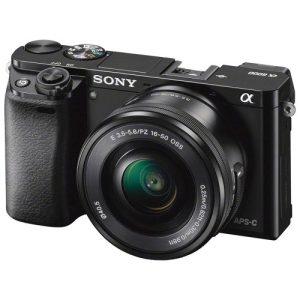
 5. Sony A6700 |
| Check price on Amazon |
Our Top Picks
- Canon EOS R50 Mirrorless Camera RF-S18-45mm F4.5-6.3 is2.71 x 4.58 x 3.37 Inches1 poundsCheck on Amazon
Golden-saxifrage grows where the light thins out. Along shaded stream banks and damp woodland paths, Chrysosplenium oppositifolium forms low mats of rounded leaves, and in spring its tiny yellow-green flowers open close to the ground. The plant is small, the light is soft, and the ground is often wet, so a camera for it needs close focus, steady low-light handling, and a body that does not mind damp air. This guide picks five cameras that fit that work, from a light APS-C body to a high-resolution full-frame flagship.
As an Amazon Associate, we earn from qualifying purchases.
Meet Golden-Saxifrage
Golden-saxifrage, Chrysosplenium oppositifolium, belongs to the family Saxifragaceae. It grows in damp shade beside streams, springs and wet woodland paths, often in places where the ground stays soft underfoot for most of the year. The plant creeps along the soil, and its pairs of rounded, lightly toothed leaves sit close to the ground. In spring, small yellow-green flowers appear in loose clusters at the tips of the stems. The flowers have no petals. Their colour comes from the sepals, which form a shallow cup around the centre of the bloom. The whole flower measures only a few millimetres across, so a photograph that shows its shape needs a lens that focuses close and a camera that holds detail at short range.
The plant asks for care from the photographer. It grows in fragile damp ground, and the banks where it thrives are easily damaged by feet. Stay on the path, work from the edge of the stand, and never pick a stem. A camera with a tilting screen helps here, because it lets you frame a low plant without lying on wet ground. Weather sealing matters too, since the air beside a stream is humid and the light often comes with drizzle. The five cameras below cover that ground in different ways.
Golden-Saxifrage Is Not Burnet-Saxifrage
The names sound alike, and that is the whole trap. Golden-saxifrage is not burnet-saxifrage. The two plants share only a common word in their English names, and the similarity ends there. Golden-saxifrage, Chrysosplenium oppositifolium, sits in the family Saxifragaceae. Burnet-saxifrage, Pimpinella saxifraga, sits in the family Apiaceae, the carrot family. They belong to different families and different genera, and they grow in different places. The distinction is by similar name, not by close relation.
Burnet-saxifrage is an upright grassland plant with white flowers held in open umbels, the flat-topped clusters that mark the carrot family. It stands tall in dry meadows and on sunny banks. Golden-saxifrage is a low creeping plant of damp shade, with yellow-green flowers and opposite leaves, hugging wet ground beside a stream. One likes dry sun, the other likes wet shade. One holds its flowers high, the other keeps them near the soil.
The difference matters for the camera too. Burnet-saxifrage can be photographed standing up, at arm’s length, in open light. Golden-saxifrage asks you to get low, focus close, and work in shade, and the five picks below are chosen for that low, close, damp work.
What a Golden-Saxifrage Camera Needs
Three things decide whether a camera works for golden-saxifrage. The first is close focus. The flowers are a few millimetres across, so the kit lens or the lens you pair with the body must focus close enough to fill the frame with a small subject. Every interchangeable-lens body here needs a close-focusing lens for tight golden-saxifrage work. The OM-5 kit is the exception, because its included 12-45mm lens already focuses close.
The second is steadiness in low light. Damp shade gives soft light, and soft light means slow shutter speeds. In-body stabilisation helps a great deal, and so does a lens with its own stabilisation. A camera without stabilisation can still work, but it needs a higher ISO or a support.
The third is weather sealing. The air beside a stream is damp, and a shower can arrive without warning. Sealed bodies and sealed lenses cope better, and they let you keep working when the light turns.
1. Canon EOS R10
- 24.2MP APS-C CMOS sensor; DIGIC X processor; Dual Pixel CMOS AF II; 15 fps mechanical shutter; 4K 60p video; 429 g with battery and card; model 5331C002; body only; no in-body stabilisation
The EOS R10 is the lightest full-featured body in this guide, and that matters on a long walk along a stream. Its 24.2MP APS-C sensor and DIGIC X processor give clean files with plenty of detail for a small flower, and the Dual Pixel CMOS AF II system locks onto a subject quickly, even when the light is dim. The camera shoots at 15 frames per second with the mechanical shutter, which is far more speed than a still plant needs.
The weakness is the lack of in-body stabilisation. In damp shade, the R10 leans on the lens for steadiness, and the body alone cannot steady a slow shutter speed. The RF-S 18-45mm kit lens has stabilisation, but a dedicated close-focusing lens is still the right buy for tight golden-saxifrage work. The vari-angle screen lets you frame a low mat of leaves without kneeling in mud. At 429 g with battery and card, the R10 is easy to carry all morning, and its simple controls suit a photographer who wants to think about the plant, not the menu.
2. Nikon Z7 II
- 45.7MP full-frame BSI CMOS sensor; dual EXPEED 6 processors; 493-point AF; 10 fps; 4K 60p video; 5.5-stop in-body stabilisation; model 1653; body only
The Z7 II is the resolution king of this guide, and for a flower a few millimetres across, resolution is not a luxury. Its 45.7MP full-frame BSI sensor captures fine veins in the leaves and the texture of the sepals, and the files take heavy cropping without falling apart. That cropping headroom matters, because it lets you frame a little loose and still end up with a tight image of a single bloom. The dual EXPEED 6 processors keep the camera responsive, and the 493-point autofocus system finds a small subject in a busy tangle of leaves.
The Z7 II has 5.5-stop in-body stabilisation, which is a real help in the slow light of a shaded bank. The trade-offs are weight and bulk. This is the heaviest body here, and it needs a close-focusing macro lens to do its best work on golden-saxifrage, which adds more weight still. For a photographer who prints large, none of that matters. For a walker who counts every gram, it does.
3. OM System OM-5 Kit
- 20.4MP Micro Four Thirds Live MOS sensor; TruePic IX processor; 30 fps; 5-axis stabilisation; IP53 weather sealing; 414 g; M.Zuiko 12-45mm f/4 PRO kit lens; model V210022BU000; original OM-5, not the Mark II
The OM-5 kit is the only camera here that arrives ready for golden-saxifrage with no extra lens to buy. This is the original OM-5, not the Mark II, and its included M.Zuiko 12-45mm f/4 PRO lens focuses close, to 0.23 m at the wide end, which is close enough to fill the frame with a small cluster of flowers. The 20.4MP Micro Four Thirds sensor is smaller than the APS-C and full-frame sensors in this guide, so it gives up some low-light cleanliness, but the camera makes up for it with 5-axis stabilisation and a body that weighs only 414 g.
The OM-5 is also the toughest body here, with IP53 weather sealing that shrugs off drizzle and damp air. High Res Shot and Focus Stacking are a bonus here, the second combining frames at different focus distances into one image with deep focus. The trade-off is the smaller sensor, which shows more noise at high ISO than the larger sensors do. For a photographer who walks far and shoots in all weather, the OM-5 kit is the easiest companion of the five.
4. Canon EOS R50 Kit
- 24.2MP APS-C CMOS sensor; DIGIC X processor; Dual Pixel CMOS AF II; 12 fps mechanical shutter; 4K 30p oversampled from 6K; RF-S 18-45mm f/4.5-6.3 IS STM kit lens; 375 g; model 5811C012, not 5811C011; no in-body stabilisation
The EOS R50 kit is the simplest camera in this guide, and for golden-saxifrage that simplicity is a strength. Its 24.2MP APS-C sensor and DIGIC X processor deliver clean, detailed files, and the Dual Pixel CMOS AF II system tracks a subject with little fuss. The included RF-S 18-45mm f/4.5-6.3 IS STM lens has stabilisation, which helps in shade, and the vari-angle touchscreen makes low-angle framing easy. It weighs only 375 g and shoots 4K 30p video oversampled from 6K.
The R50 kit is model 5811C012, not 5811C011, and buyers should check that model number on the listing before ordering. The camera has no in-body stabilisation, so in deep shade it leans on the lens, and the kit lens cannot focus as close as a dedicated macro lens, so a single tiny flower may need extra glass. The guided modes suit a photographer who is new to this work. For a first camera for damp-shade flower work, the R50 kit is the friendliest pick here.
5. Sony A6700
- 26MP APS-C Exmor R CMOS sensor; BIONZ XR processor with AI unit; 11 fps; 4K 60p oversampled from 6K; 5-axis stabilisation; NP-FZ100 battery; model ILCE6700/B; body only
The A6700 is the most capable all-rounder in this guide. Its 26MP APS-C Exmor R sensor and BIONZ XR processor give excellent image quality, and the dedicated AI processor drives subject recognition that locks onto a small flower and holds it, even when the wind moves the stem. Its 5-axis stabilisation steadies a slow shutter speed in damp shade, and it records 4K 60p video oversampled from 6K. The NP-FZ100 battery lasts longer than the smaller batteries in this guide, which matters on a long morning away from a charger.
The A6700 is a body-only camera, so it needs a close-focusing lens for tight golden-saxifrage work, and that lens is an extra buy on top of the body. The body is heavier than the R10 and the R50 kit, though still easy to carry. For a photographer who wants strong autofocus, good stabilisation and long battery life in one body, the A6700 is the most complete camera of the five.
How the Five Compare
If resolution is the priority, the Z7 II leads by a wide margin. If light weight and damp weather matter most, the OM-5 kit is the easiest to carry and the only one here with a kit lens that already focuses close. The R10 and the R50 kit are the lightest options for a walker, and the R50 kit is the simplest to use. The A6700 sits between them, with the strongest autofocus and the best battery life of the group. Every body here needs a close-focusing lens for tight golden-saxifrage work except the OM-5 kit, so allow for glass as well as the body when you choose.
Field Tips for a Damp Bank
Work in the morning, when the light is soft and the wind is low. A small sheet of white card can lift shadow detail without disturbing the plant. Keep the camera low and use the tilting screen rather than kneeling on wet ground. Shoot the flowers from the side as well as from above, since the cup shape reads best in profile. And when you leave, check the bank behind you. If the ground shows your footprints, you stood too close.
Can I photograph golden-saxifrage with the kit lens?
Yes, for a small cluster, but not for a single tiny flower. The R50 kit lens and the OM-5 kit lens both focus close enough to fill the frame with a group of blooms. A single flower a few millimetres across needs a macro lens, and the R10, Z7 II and A6700 all need a close-focusing lens for that work.
Is golden-saxifrage the same plant as burnet-saxifrage?
No. Golden-saxifrage, Chrysosplenium oppositifolium, belongs to the family Saxifragaceae, while burnet-saxifrage, Pimpinella saxifraga, belongs to the family Apiaceae. They share only a word in their English names. Golden-saxifrage is a low creeping plant of damp shade with yellow-green flowers, while burnet-saxifrage is an upright grassland plant with white flowers in open umbels.
Which camera here handles wet weather best?
The OM-5 kit, thanks to its IP53 weather sealing and freezeproof design. The other four bodies cope with damp air, but they need more care in drizzle, and a sealed lens helps any of them.
Do I need a tripod for golden-saxifrage?
Not always. In soft morning light, the stabilisation in the Z7 II, OM-5 and A6700 is often enough for a sharp handheld shot. In deep shade, a small tripod or a beanbag steadies the camera and lets you use a lower ISO, which keeps the files clean.
Golden-saxifrage rewards a slow morning and a camera that focuses close. Pick the body that fits your walk, add the right lens, and stay on the path.
More from Amazon
Programs that pair well with the guide above. Offers and eligibility are set by Amazon and may change.
Free shipping on eligible items, Prime Video and more. Eligible new members can start with a free trial.
Start a Prime free trialAudiobooks and podcasts to listen to on the go. Eligible new members can start with a free trial.
Try Audible freeAd-free music streaming. Eligible new subscribers can start with a free trial.
Try Music Unlimited freeA free business account with business pricing and bulk-buying tools for work, shop or home office.
Create a business accountAs an Amazon Associate we earn from qualifying purchases.