Our Short List of 3
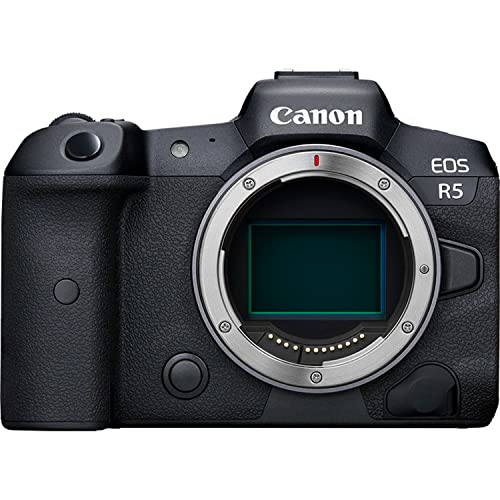
- 45MP full-frame CMOS sensor, DIGIC X processor, 20 fps electronic shutter, 8K 30p video, 8-stop in-body stabilisation, model 4147C002, body only.

- 50.1MP full-frame stacked CMOS sensor, BIONZ XR processor with AI unit, 30 fps electronic shutter, 8K video, 8.5-stop in-body stabilisation, model ILCE-1M2, body only.

- 45.7MP full-frame stacked CMOS sensor, EXPEED 7 processor, 8.3K 60p N-RAW video, 120 fps burst, blackout-free electronic viewfinder, body only.
All 5 Picks at a Glance
| Product | Specs | Action |
|---|---|---|
| 1. Canon EOS R5 |
| Check price on Amazon |
| 2. Sony A1 II |
| Check price on Amazon |
| 3. Nikon Z8 |
| Check price on Amazon |
 4. OM System OM-1 Mark II Kit |
| Check price on Amazon |
 5. Fujifilm X-H2S |
| Check price on Amazon |
Our Top Picks
Bush-vetch is a quiet hedgerow plant that rewards a slow walk and a patient eye. It scrambles through woodland edges and hedges on thin stems, holding itself up with tendrils and opening dull purple pea flowers through the summer months. The flowers are small, the stems are tangled, and the best pictures usually come from a low angle with the hedge behind the plant rather than in front of it. This guide covers five cameras that handle that kind of work well, from a full-frame flagship to a compact kit that is ready to shoot the moment it comes out of the bag.
Bush-vetch, or Vicia sepium, belongs to the pea family, Fabaceae. It grows along woodland edges, hedge banks, and the margins of fields, often mixed in with grasses and brambles. It is not a plant to pick or to pull out of a hedge for a better angle. Stay on the path, work with the light you have, and let the plant keep its place in the hedge.
As an Amazon Associate, we earn from qualifying purchases.
What Bush-Vetch Looks Like
Bush-vetch is a scrambling perennial that climbs through hedges on branched tendrils. The leaves are made up of pairs of oval leaflets with a small point at the tip, and the stems are weak, so the plant leans on whatever grows beside it. The flowers sit in short clusters where the leaves meet the stem, and each one is a small pea flower in a muted purple shade, sometimes with a hint of lilac or blue.
The plant is easy to walk past. Its colours are subdued, and it hides among taller grasses and bramble stems. A tight frame on a single flower cluster, with the hedge falling soft behind it, gives a calm, natural image that shows the plant as it really grows. Early morning light along a hedgerow brings out the purple in the flowers and keeps the shadows soft, while midday light from above flattens the plant and washes the colour out.
Bush-Vetch Is Not Meadow Vetchling
Bush-vetch and meadow vetchling are both pea family plants, and both scramble through grass and hedge banks, so they are easy to confuse at a glance. They are not the same plant. Bush-vetch is Vicia sepium, while meadow vetchling is Lathyrus pratensis, a different genus in the same family.
Bush-vetch has dull purple pea flowers in short clusters, with tendrils that grip the stems around it. Meadow vetchling has bright yellow pea flowers, usually in looser clusters, and its stems are winged rather than round. The yellow flowers of meadow vetchling catch the eye from several paces away, while bush-vetch takes a closer look to find. Tufted-vetch, another close relation in the pea family, is also different, with dense heads of purple-blue flowers on scrambling stems.
There is no single delivered generic called vetch to confuse the issue. Each of these plants stands on its own name, and this guide is about bush-vetch alone. If the flowers in front of you are yellow, you are looking at meadow vetchling, not bush-vetch.
What a Bush-Vetch Camera Needs
A bush-vetch camera needs three things above all else. First, it needs autofocus that can lock onto a small flower in a tangle of stems without hunting back and forth. Second, it needs a lens that focuses close enough to fill the frame with a flower cluster a few centimetres across. Third, it needs to be light enough to carry along a hedge bank for an hour without becoming a burden. Every interchangeable-lens body here needs a close-focusing lens for tight bush-vetch work, apart from the OM-1 Mark II kit, whose included zoom already focuses close. A tilting screen helps too, because bush-vetch often grows at knee height or lower.
1. Canon EOS R5
- 45MP full-frame CMOS sensor, DIGIC X processor, 20 fps electronic shutter, 8K 30p video, 8-stop in-body stabilisation, model 4147C002, body only.
The Canon EOS R5 is the most capable camera in this guide, and the one that asks the most of its owner. Its 45 megapixel full-frame sensor records fine detail in the veins of a bush-vetch leaflet, and its autofocus locks onto small subjects with confidence, even when the flower is half hidden by grass. The electronic shutter runs at up to 20 frames per second, which is far more than bush-vetch work needs, but it means the camera never holds you back when a breeze moves the plant.
The R5 is a heavy, costly body, and it deserves an honest note about that. Its files are large, so storage and processing take longer than with a smaller sensor. Like the other interchangeable-lens bodies here, it needs a close-focusing lens for tight bush-vetch work. The model to look for is 4147C002, and it is worth checking the listing carefully, because this is not 4147C005. The R5 rewards a photographer who already owns Canon RF glass and wants the finest detail a hedgerow can offer.
2. Sony A1 II
- 50.1MP full-frame stacked CMOS sensor, BIONZ XR processor with AI unit, 30 fps electronic shutter, 8K video, 8.5-stop in-body stabilisation, model ILCE-1M2, body only.
The Sony A1 II pairs a 50.1 megapixel stacked sensor with an AI processing unit that recognises subjects and holds focus on them with remarkable tenacity. For bush-vetch, that means the camera can stay locked on a flower cluster while the stems sway in the wind, and the high resolution lets you crop in tight on a single bloom without losing the detail that makes the picture work.
The A1 II is the most expensive body here, and its menus are deep enough to swallow an afternoon. Its resolution is a gift for cropping, but it also demands good technique, because every small shake shows up at 50 megapixels. Like the other interchangeable-lens bodies in this guide, it needs a close-focusing lens for tight bush-vetch work. This is a camera for a photographer who wants the best autofocus and the most cropping room available, and who is happy to pay for it.
3. Nikon Z8
- 45.7MP full-frame stacked CMOS sensor, EXPEED 7 processor, 8.3K 60p N-RAW video, 120 fps burst, blackout-free electronic viewfinder, body only.
The Nikon Z8 brings the sensor and processor of the flagship Z9 into a smaller body, and it is a superb hedgerow camera. Its 45.7 megapixel stacked sensor reads out fast enough to keep rolling shutter under control, and its blackout-free viewfinder makes it easy to follow a flower as the wind moves it. The autofocus is confident on small subjects, and the 8.3K video is there if you want to record a hedgerow in motion as well as in stills.
The Z8 is not a small camera, and it is not a light one, though it is easier to carry than the Z9 it borrows from. Its battery life is shorter than a photographer might hope for on a long walk, so a spare battery is a sensible companion. It needs a close-focusing lens for tight bush-vetch work.
4. OM System OM-1 Mark II Kit
- 20.4MP Micro Four Thirds stacked sensor, TruePic X processor, M.Zuiko 12-40mm f/2.8 PRO II lens included, IP53 weather sealing, 5.76m-dot electronic viewfinder, kit.
The OM System OM-1 Mark II is the most practical bush-vetch camera in this guide, and the only one that arrives ready to shoot close-ups. Its kit lens, the M.Zuiko 12-40mm f/2.8 PRO II, focuses close enough to fill the frame with a bush-vetch flower cluster without any extra glass. The Micro Four Thirds sensor gives extra depth of field at the same aperture, so more of a tangled flower cluster stays sharp, and the body is small, light, and sealed against damp.
The trade-off is sensor size. At 20.4 megapixels, the OM-1 Mark II cannot crop as far as the full-frame bodies here, and its files show more noise in deep shade. For bush-vetch, that rarely matters, because the kit lens already gets you close and the depth of field works in your favour. This is the camera to choose if you want the lightest kit, the closest focusing out of the box, and the least fuss on a damp morning.
5. Fujifilm X-H2S
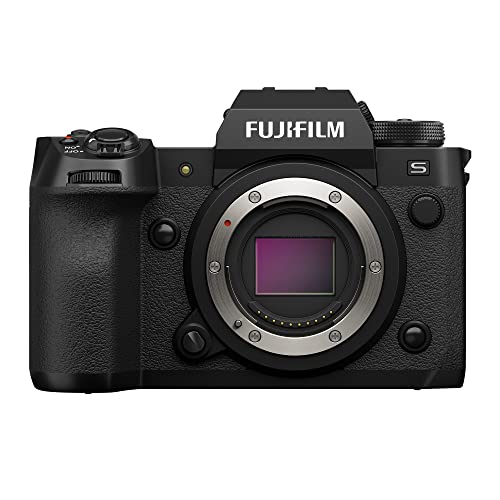
- 26.1MP APS-C X-Trans 5 stacked sensor, X-Processor 5, 6.2K 30p video, 7-stop in-body stabilisation, model 16756924, body only.
The Fujifilm X-H2S is a fast APS-C body with a stacked sensor, and it is a strong choice for a photographer who likes Fujifilm colour and a smaller kit. Its autofocus is quick and sure on small subjects, and its 26.1 megapixel sensor gives enough room to crop while keeping files manageable. The film simulations are a pleasure for hedgerow work, giving the muted purple of bush-vetch a gentle, natural rendering straight out of the camera.
The X-H2S needs a close-focusing lens for tight bush-vetch work, and Fujifilm macro options are good, though the best ones add weight and bulk. Battery life is decent rather than generous, and the body is not as deeply sealed as the OM-1 Mark II. Its strength is balance: enough speed and resolution for serious work, a compact body, and colours that flatter a hedgerow without heavy editing.
How the Five Compare
The five cameras split into two groups. The R5, A1 II, and Z8 are full-frame flagships that offer the finest detail and the most cropping room, at the cost of weight, bulk, and a bigger spend on lenses. The OM-1 Mark II and the X-H2S are smaller, lighter bodies that are easier to carry along a hedge bank, with the OM-1 kit holding the clear edge for close focusing straight out of the box. For pure image quality on a still morning, the A1 II leads, with the R5 and Z8 close behind. For weight and ease of use, the OM-1 Mark II wins outright. No single camera here is the right answer for every photographer, and the differences between them matter less than the lens in front of them and the light on the hedge.
Field Tips for a Hedgerow Walk
Walk the hedge bank once without the camera to your eye, and look for the plants first. Bush-vetch grows in patches, and a patch with several flower clusters gives you choices without moving far. Work from the path, and keep your feet on firm ground. The hedge is damp, the bank is uneven, and a twisted ankle ends the walk sooner than a dead battery does.
Shoot low. Bush-vetch flowers face outward from the hedge, and a low angle with a soft hedge behind them gives a clean background. A tilting screen lets you frame from waist height without kneeling. Use a wide aperture to melt the stems behind the flower.
Watch the wind. A light breeze moves bush-vetch constantly, and a shutter speed of 1/250th of a second or faster will freeze the flower in most conditions. If the light is too dim for that, raise the sensitivity rather than opening the aperture further, because depth of field is already thin at close range.
Is bush-vetch the same as meadow vetchling?
No. Bush-vetch is Vicia sepium, a scrambling hedgerow plant with dull purple pea flowers, while meadow vetchling is Lathyrus pratensis, a different genus in the same pea family, with bright yellow pea flowers and winged stems. The flower colour and the stem shape tell them apart at a glance. There is no delivered generic called vetch that covers both of them.
Which lens should I pair with a bush-vetch camera?
A macro lens in the 90mm to 100mm range on a full-frame body, or a 50mm to 60mm macro on a crop-sensor body, is the best match for tight bush-vetch work. A short telephoto with a close minimum focus distance is a good second choice. The OM-1 Mark II kit is the exception in this guide, because its included 12-40mm zoom already focuses close enough for a flower cluster.
Can I photograph bush-vetch without leaving the path?
Yes. Bush-vetch grows along the edges of paths and hedge banks, and its flowers face outward where they can be seen from the path. A close-focusing lens and a tilting screen let you frame a flower cluster without stepping off the path or pushing into the hedge. Stay on firm ground, and do not pick the plant or pull it out of the hedge for a better angle.
Which of the five cameras is best for a first hedgerow walk?
The OM System OM-1 Mark II kit is the easiest choice for a first hedgerow walk, because it is light, sealed against damp, and its kit lens already focuses close enough for bush-vetch. If you already own lenses for another system, the best choice is the body that fits the glass you have.
Bush-vetch is not a showy plant, and that is exactly why it is worth photographing. A small purple flower in a tangled hedge, caught in soft morning light, makes a quiet picture that rewards a slow walk and a careful eye.
More from Amazon
Programs that pair well with the guide above. Offers and eligibility are set by Amazon and may change.
Free shipping on eligible items, Prime Video and more. Eligible new members can start with a free trial.
Start a Prime free trialAudiobooks and podcasts to listen to on the go. Eligible new members can start with a free trial.
Try Audible freeAd-free music streaming. Eligible new subscribers can start with a free trial.
Try Music Unlimited freeA free business account with business pricing and bulk-buying tools for work, shop or home office.
Create a business accountAs an Amazon Associate we earn from qualifying purchases.