Key takeaways
- The best cameras for wallcreeper photography pair long reach with fast autofocus. Compare five bodies built for grey cliffs and flashes of crimson wing.
The wallcreeper is one of the hardest birds in Europe to photograph well. It lives on sheer rock faces, high on mountain cliffs and in deep gorges, where it creeps across grey stone with slow, deliberate steps and sudden flicks of crimson wing.
This guide compares five cameras for wallcreeper photography, from a flagship pro body to a light travel body. Every one of them is a body-only purchase except where noted, so budget for a long lens on top. Every interchangeable-lens body here needs a long lens for distant wallcreeper work: a 100-400mm zoom is the floor, and a 200-600mm or 100-500mm lens is better. A short lens will leave you with a grey speck on a grey cliff.
As an Amazon Associate, we earn from qualifying purchases.
The Wallcreeper on the Rock Face
The wallcreeper (Tichodroma muraria) belongs to the family Tichodromidae. It is a bird of mountain cliffs, rock faces, quarries, and gorges, with soft grey plumage, a long slender downcurved bill, and wings that hide vivid patches of crimson. In flight it looks almost butterfly-like, with broad rounded wings and a fluttering, uneven rhythm. On the rock it moves in short hops and sideways shuffles, probing cracks and crevices with its bill for insects and spiders.
Wallcreepers breed on high alpine cliffs and spend the winter lower down, sometimes turning up on lowland cliffs, old quarries, and even castle walls and dams. That winter wandering is when most photographers get their chance. Even so, the bird is shy and easily put off by noise and movement. The right approach is to arrive early, settle in at a distance, and let the bird come to you. Stay on marked paths, keep your voice down, and never approach a nest site or a bird that is clearly agitated.
Wallcreeper Is Not a Treecreeper
The two names sound alike, and both birds climb, but a wallcreeper is not a treecreeper. The wallcreeper is Tichodroma muraria, in the family Tichodromidae. The treecreeper is Certhia familiaris, in the family Certhiidae. They sit in different families and different genera, and the likeness ends at the name and the climbing habit. Say so plainly, because the confusion is common: a treecreeper is a small brown woodland bird that spirals up tree trunks in a wood, while a wallcreeper is a grey rock-climbing bird with crimson wings on a cliff face.
A treecreeper works bark, moving upward in a spiral with its stiff tail braced against the trunk, then dropping to the base of the next tree to begin again. A wallcreeper works stone, moving sideways and downward as easily as upward, with no tree in sight.
What a Camera Needs on a Rock Face
Reach comes first. A wallcreeper on a cliff face is usually far away, and even a 400mm lens can leave the bird small in the frame. A 100-400mm zoom is the minimum that makes sense, and a 200-600mm or 100-500mm lens is a better match. An APS-C body adds a crop factor that turns a 400mm lens into the equivalent of a 600mm or 640mm lens, which is a genuine advantage on a cliff. Resolution matters too, because a heavy crop is often the only way to fill the frame with the bird.
Autofocus comes second. A wallcreeper is small, grey, and constantly moving across a textured background. Bird-detection autofocus that can pick a small subject out of a busy scene is a real help, and a high burst rate raises the odds of catching the moment the wings open.
High-ISO performance comes third. Cliff faces are often in shade, and the best wallcreeper light is the soft light of early morning or late afternoon. A camera that keeps noise under control at ISO 3200 and beyond will give you usable frames where a weaker sensor gives you mush.
Weight comes last, but it matters on a mountain path. A flagship body with a long lens is a heavy load to carry up a steep trail, and a lighter body that you can carry all day may be the better choice in practice, even if it gives up some speed or resolution. Weather sealing matters on a cliff too: mountain weather turns fast, and a body that shrugs off drizzle and dust is worth having.
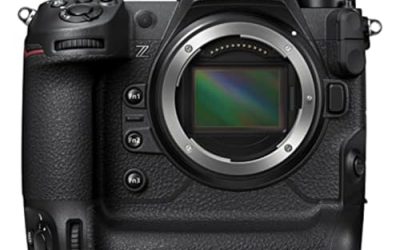
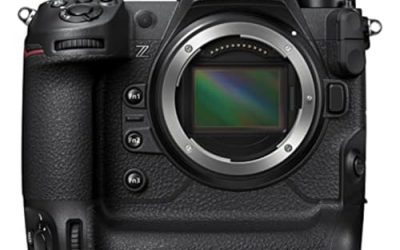
1. Nikon Z9

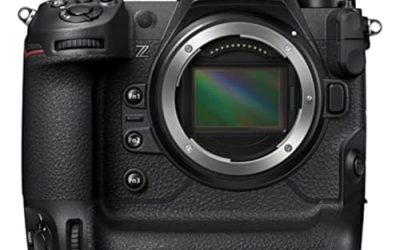
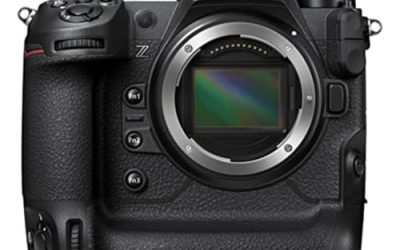
The Nikon Z9 is the flagship of this group, and the most capable camera here for wallcreeper work. Its stacked sensor reads out fast enough for a genuinely blackout-free viewfinder, so you can follow a wallcreeper through a burst without the image dropping out at the moment the wings open. Its subject detection is among the best in this group, and it holds onto a small bird against a busy rock face with a confidence the lighter bodies cannot match.
Specs
- 45.7MP stacked full-frame sensor, EXPEED 7 processor, 20 fps RAW burst, 8K 30p video, blackout-free electronic viewfinder, model 1669, around 1,340 g with battery and card, body only.
The Z9 has clear trade-offs. It is heavy and large, and with a long lens attached it is a serious load on a steep mountain path. Its 45.7MP files are large, so you will fill cards and hard drives quickly on a long day. For a wallcreeper on a distant cliff, though, nothing else here matches its combination of resolution, autofocus, and viewfinder, and if you can carry it, it is the strongest choice in this group.
2. Sony A7R V

The Sony A7R V is the resolution king of this group. Its 61MP sensor gives you more room to crop than any other camera here, and a wallcreeper that fills only a quarter of the frame can still become a strong image after a heavy crop. Its AI processing unit drives subject recognition that is quick to find a bird and stubborn about holding onto it, even when the bird slips behind a ridge of stone.
Specs
- 61.0MP full-frame back-illuminated Exmor R sensor, BIONZ XR processor with AI unit, 10 fps burst, 8K 24p video, 8-stop in-body stabilisation, dual CFexpress Type A and SD card slots, model ILCE7RM5/B, body only.
The A7R V has clear trade-offs. Its 10 fps burst is the slowest in this group, so it gives you fewer chances to catch the wing-open moment than the Z9 or the R7. Its 61MP files are the largest here, and they demand fast cards and a fast computer. For a photographer who crops hard and values detail above burst speed, the A7R V is a superb wallcreeper camera.
3. Canon EOS R7

The Canon EOS R7 is the reach king of this group. Its APS-C sensor turns a 100-400mm lens into the equivalent of a 160-640mm lens, which is exactly the kind of extra reach a wallcreeper demands. It is also fast, with a 30 fps electronic burst that gives you a deep sequence to choose from when the wings open, and its Dual Pixel CMOS AF II system tracks birds with a tenacity that belies its size.
Specs
- 32.5MP APS-C CMOS sensor, DIGIC X processor, model 5137C002, 15 fps mechanical and 30 fps electronic burst, 4K 60p video oversampled from 7K, 7-stop in-body stabilisation, around 611 g, body only.
The R7 has clear trade-offs. Its smaller sensor is noisier at high ISO than the full-frame bodies here, so a shaded cliff face will test it sooner. Its 32.5MP files crop well, but not as well as the 45.7MP Z9 or the 61MP A7R V. For a photographer who walks a long way to a cliff and wants the most reach for the least weight, the R7 is the most practical choice in this group.
4. Canon EOS R6 Mark II

The Canon EOS R6 Mark II is the all-rounder of this group. Its 24.2MP full-frame sensor is the lowest resolution here, but it is also the cleanest at high ISO among the Canon bodies, and its 40 fps electronic burst is the fastest in this group. Its Dual Pixel CMOS AF II system is quick and confident, and it finds a wallcreeper against a rock face with little hesitation.
Specs
- 24.2MP full-frame CMOS sensor, DIGIC X processor, model 5666C002, 12 fps mechanical and 40 fps electronic burst, 4K 60p video oversampled from 6K uncropped, 8-stop in-body stabilisation, body only.
The R6 Mark II has clear trade-offs. Its 24.2MP sensor leaves the least room to crop, so a distant wallcreeper will stay small unless your lens is long enough to fill the frame. Its files are smaller and easier to handle than the high-megapixel bodies, which is a real advantage on a long trip. For a photographer who values speed, clean high-ISO files, and a body that is easy to carry, the R6 Mark II is a strong wallcreeper camera.
5. Fujifilm X-S20

The Fujifilm X-S20 is the lightest camera in this group, and the easiest to carry up a mountain path. At 491 g it is less than half the weight of the Z9, and with a compact telephoto zoom it disappears into a small bag. Its 26.1MP APS-C sensor gives you the same crop-factor reach advantage as the R7, and its 20 fps electronic burst is fast enough to catch the wing-open moment.
Specs
- 26.1MP APS-C X-Trans CMOS 4 sensor, X-Processor 5, model 16781852, 20 fps electronic burst, 6.2K 30p video, 7-stop in-body stabilisation, 491 g, NP-W235 battery with up to 750 frames per charge, body only.
The X-S20 has clear trade-offs. Its autofocus is good, but it is less sticky on a small bird against a busy background than the autofocus in the Z9, the A7R V, or the Canon bodies. Its small grip can feel cramped with a long lens, and its viewfinder is smaller than the ones on the bigger bodies. For a photographer who walks far and climbs high, though, its weight advantage is hard to ignore.
How the Five Compare
The Z9 is the strongest all-round wallcreeper camera here: the best autofocus, the best viewfinder, and 45.7MP of crop room, at the cost of weight and bulk. The A7R V is the best for heavy cropping, with 61MP and an AI unit that finds birds fast, at the cost of a slower burst and very large files. The R7 is the best for reach per gram, with an APS-C crop factor and a 30 fps burst in a 611 g body, at the cost of noisier high-ISO files. The R6 Mark II is the best for speed and clean files, with a 40 fps burst and strong high-ISO performance, at the cost of the least crop room. The X-S20 is the best for carrying, at 491 g with a 20 fps burst, at the cost of less sticky autofocus and a smaller viewfinder.
Frequently Asked Questions
Is a wallcreeper the same as a treecreeper?
No. A wallcreeper is Tichodroma muraria, in the family Tichodromidae, and a treecreeper is Certhia familiaris, in the family Certhiidae. They are in different families and different genera. The likeness is in the name and the climbing habit, not in close relation.
What lens length do I need for a wallcreeper?
A 100-400mm zoom is the floor, and a 200-600mm or 100-500mm lens is better. A wallcreeper on a cliff face is usually far away, and a short lens will leave the bird as a grey speck on grey rock. An APS-C body helps, because its crop factor turns a 400mm lens into the equivalent of a 600mm or 640mm lens. A high-megapixel sensor also helps, because it lets you crop hard without losing detail.
Can I photograph a wallcreeper with an APS-C camera?
Yes, and in some ways an APS-C camera is the better choice. The crop factor gives you extra reach with the same lens, and the lighter bodies are easier to carry up a mountain path. The trade-off is noisier high-ISO files and less room to crop than a high-megapixel full-frame body. The Canon EOS R7 and the Fujifilm X-S20 in this guide are both APS-C bodies, and both are strong wallcreeper cameras.
Where should I look for a wallcreeper without disturbing it?
Look on mountain cliffs, rock faces, deep gorges, and old quarries, and in winter on lowland cliffs, castle walls, and dams. Arrive early, settle in at a distance, and scan the face slowly with binoculars. Stay on marked paths, keep your voice down, and never approach a nest site or a bird that is clearly agitated. If the bird moves away, let it go and wait for it to return.
The wallcreeper rewards patience more than gear. A long lens and a fast camera help, but the bird itself decides whether you get the frame. Pick the body that fits your walk and your tolerance for weight, pair it with the longest lens you can carry, and give the cliff a quiet morning.
More from Amazon
Programs that pair well with the guide above. Offers and eligibility are set by Amazon and may change.
Free shipping on eligible items, Prime Video and more. Eligible new members can start with a free trial.
Start a Prime free trialAudiobooks and podcasts to listen to on the go. Eligible new members can start with a free trial.
Try Audible freeAd-free music streaming. Eligible new subscribers can start with a free trial.
Try Music Unlimited freeA free business account with business pricing and bulk-buying tools for work, shop or home office.
Create a business accountAs an Amazon Associate we earn from qualifying purchases.