Key takeaways
- Scentless mayweed lines field edges and lanes with white daisy heads. These five cameras frame it well, with close focus, quick autofocus and light bodies.
Mayweed grows where fields meet the lane, a scentless arable weed with white daisy heads that open through the warm months. It asks for nothing fancy from a photographer: a path to walk, a low angle, and a camera that can focus close enough to hold a small flower head sharp while the green field behind it melts away. This guide looks at five cameras that do that job well, from a flagship full-frame body to a fast crop-sensor camera built for speed. Each one brings a different balance of resolution, autofocus, weight and handling, and each one has a clear trade-off you should know before you choose.
As an Amazon Associate, we earn from qualifying purchases.
Where Mayweed Grows and How to Photograph It
Mayweed, Tripleurospermum inodorum, is a plant of field margins, gateways and roadside verges. It grows in loose, branching clumps, with finely divided leaves and white ray flowers around a yellow centre, each head roughly the width of a thumbnail. The plant stands on thin stems that sway in the lightest breeze, so a calm morning gives you the steadiest subjects. Stay on the path or the field edge, and do not pick the plant. Mayweed is common, but the field edge is also home to insects and other small plants, and a photograph taken from the path is just as good as one taken from inside the crop margin.
The best light comes early, when the sun is low and the white petals glow without harsh shadows. A low angle works well: kneel at the path edge and let the flower heads sit against a soft green or blue background. A close-focusing lens matters more than a long one here, because mayweed heads are small and you want to fill the frame without trampling the verge. Wind is the main enemy, so watch the stems for a still moment and take a short burst of frames when the air calms. A camera with a fast burst and a quiet shutter helps, because the stems move again within seconds.
What a Mayweed Camera Needs
A mayweed camera needs three things above all else. First, close focus. The flower heads are small, so the lens must focus near enough to make one head fill a good part of the frame. Every interchangeable-lens body in this guide needs a close-focusing lens before it is ready for tight mayweed work, except the OM-1 Mark II kit, which arrives with a zoom that focuses close. Second, autofocus that can hold a small, moving target. Mayweed stems sway, and the camera must lock onto a white petal edge rather than hunting across the background. Third, a body light enough to carry along a lane and hold at knee height for an hour. A heavy body tires the arms, and tired arms make soft pictures.
Mayweed Is Not Chamomile
Mayweed and chamomile look alike at a glance, and both belong to the daisy family, Asteraceae, but they are different plants in different genera. Mayweed is Tripleurospermum inodorum. Chamomile is Matricaria. The easiest way to tell them apart is scent: chamomile smells sweet and apple-like when you crush a flower head, while mayweed is scentless, which is why its Latin name ends in inodorum, meaning without scent. Do not crush flower heads to test this, though. You can tell them apart by sight with a little practice. Mayweed heads are larger, and the plant grows taller and more branching, often reaching knee height along a field edge. Chamomile is lower and more compact, with smaller heads and a stronger, sweeter smell that you can notice simply by walking past a patch on a warm day.
The distinction matters for a photographer because the two plants grow in different places and ask for different pictures. Chamomile grows in gardens and lawns, where you can work close and low with a short lens. Mayweed grows on field margins, where you work from a path with a longer lens and a steadier hand. If you set out to photograph mayweed, look for the taller, scentless plant with larger daisy heads at the edge of an arable field, and leave the garden chamomile for another day.
The Five Cameras
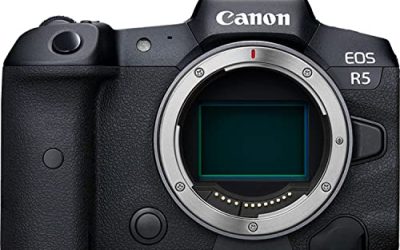
1. Canon EOS R5
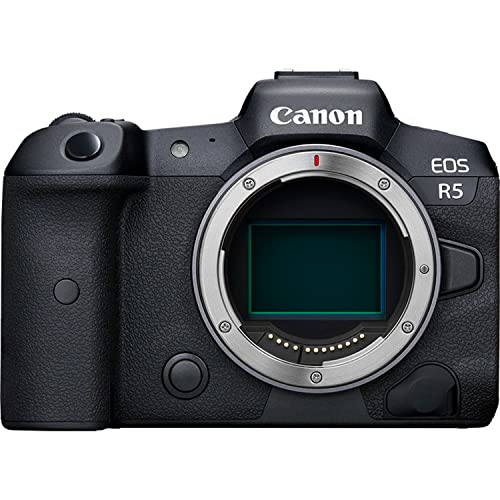
The Canon EOS R5 is the most capable camera in this guide, and the one that gives you the most room to crop when the wind keeps you at a distance. Its 45 megapixel full-frame sensor holds fine detail in the white petals and the yellow centre, and its in-body stabilisation is rated to eight stops, which helps when you shoot handheld at a slow shutter speed in the shade. The autofocus tracks small subjects well, and the electronic shutter fires at 20 frames per second, so you can catch the one still moment in a swaying stem. The body is weather sealed, which matters on a damp field edge.
The trade-off is weight and bulk. At around 738 g with battery and card, the R5 is the heaviest body here, and it needs a close-focusing lens before it is ready for tight mayweed work. It is also the most demanding camera to use well, with deep menus and a long list of settings. For a photographer who already owns Canon RF lenses and wants the best image quality in the group, it is the clear pick. For a walker who wants the lightest kit, it is more camera than the subject needs.
Specs
- 45MP full-frame sensor, 20 fps electronic shutter, 8K video, 8-stop in-body stabilisation, model 4147C002, not 4147C005, body only, around 738 g.
2. Sony A1 II

The Sony A1 II is a flagship camera built for speed and resolution in equal measure. Its 50.1 megapixel stacked sensor reads out fast, which keeps rolling shutter under control when you pan across a field edge, and its dedicated AI processing unit recognises subjects with remarkable accuracy. The autofocus holds a small flower head even as the stem sways, and the camera fires at 30 frames per second with full autofocus tracking. The body is weather sealed and well balanced, and the electronic viewfinder is large and bright, which helps when you compose against a bright sky.
The trade-off is size of the investment and the learning curve. This is a professional camera with professional controls, and it needs a close-focusing lens before it is ready for tight mayweed work. It is also heavy for a walk along a lane, at around 743 g with battery and card. For a photographer who shoots mayweed alongside birds and insects and wants one body for everything, the A1 II is superb. For mayweed alone, its speed is more than the subject needs, and a lighter body would serve just as well.
Specs
- 50.1MP full-frame stacked sensor, AI processing unit, 30 fps with full autofocus tracking, 8K video, model ILCE-1M2, body only, around 743 g with battery and card.
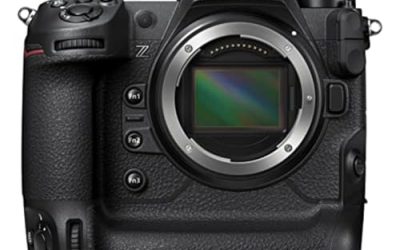
3. Nikon Z8

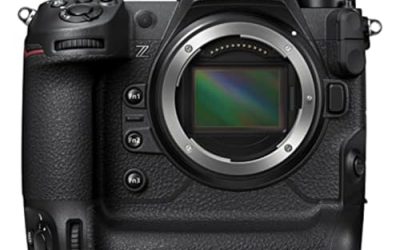
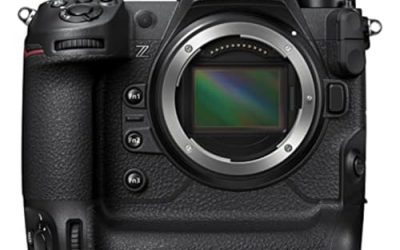
The Nikon Z8 brings most of the flagship Z9 into a smaller body, and it is the most comfortable high-resolution camera to carry along a field edge. Its 45.7 megapixel stacked sensor gives you generous room to crop, and its electronic shutter is completely silent, which is a pleasure when you work near nesting birds at a field margin. The autofocus is confident on small subjects, and the camera shoots 20 frames per second in RAW. Dual card slots take CFexpress Type B and SD cards, so you can keep a backup of every frame as you shoot.
The trade-off is battery life and the need for fast cards. The Z8 uses its battery quickly, so carry a spare for a long morning, and the best burst speeds need CFexpress Type B cards. It also needs a close-focusing lens before it is ready for tight mayweed work. The body is lighter than the Z9 and well balanced, but it is still a serious full-frame camera. For a photographer who wants flagship image quality in a body that fits a small bag, the Z8 is an excellent choice.
Specs
- 45.7MP full-frame stacked sensor, EXPEED 7 processor, silent electronic shutter only, 20 fps RAW, 8K/60p video, body only.
4. OM System OM-1 Mark II Kit

The OM System OM-1 Mark II kit is the only pick in this guide that arrives ready for mayweed work straight from the box. The kit includes the M.Zuiko Digital ED 12-40mm f/2.8 PRO II lens, a constant-aperture zoom that focuses close enough for a mayweed head to fill the frame, with a 24-80mm equivalent range. The 20.4 megapixel stacked Micro Four Thirds sensor is smaller than the full-frame sensors here, but it reads out fast, firing at 50 frames per second, and the in-body stabilisation is rated to eight stops. The body is weather sealed to IP53, which is the best sealing in this group, and the whole kit is light enough to carry all morning.
The trade-off is sensor size. A Micro Four Thirds sensor gathers less light than a full-frame sensor, so the files are noisier in deep shade, and the depth of field is deeper at the same aperture, which makes it harder to melt the background away. The 20.4 megapixel resolution is enough for a mayweed head, but it gives you less room to crop than the 45 and 50 megapixel bodies. For a photographer who wants a light, sealed, ready-to-shoot kit, this is the most practical pick in the guide.
Specs
- 20.4MP stacked Micro Four Thirds sensor, 50 fps, 8-stop in-body stabilisation, IP53 weather sealing, kit with M.Zuiko 12-40mm f/2.8 PRO II lens, model V210041BU000.
5. Fujifilm X-H2S
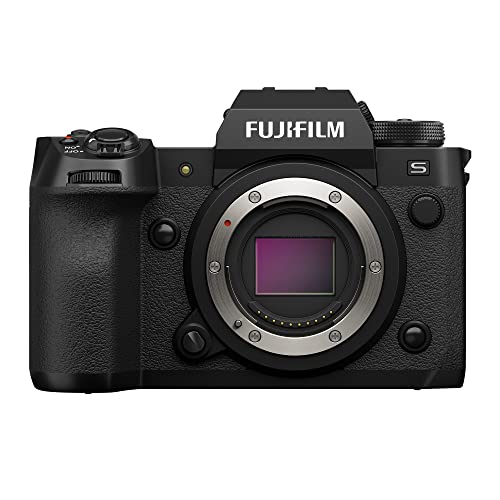
The Fujifilm X-H2S is the fastest crop-sensor camera in this guide, and a fine choice for a photographer who values speed and handling over sheer resolution. Its 26.1 megapixel stacked APS-C sensor fires at 40 frames per second with the electronic shutter, and the autofocus tracks small subjects well. The body is compact and well balanced, at around 660 g, and the in-body stabilisation is rated to seven stops. The film simulations give the white petals and green leaves a pleasing tone straight from the camera, which suits a photographer who likes to share pictures quickly.
The trade-off is that the X-H2S needs a close-focusing lens before it is ready for tight mayweed work, and the APS-C sensor gives you less room to crop than the full-frame bodies here. The battery life is modest when you use the electronic shutter heavily, so carry a spare for a long walk. For a photographer who already owns Fujifilm X lenses and wants a fast, light body for field-edge work, the X-H2S is a strong pick.
Specs
- 26.1MP APS-C stacked sensor, 40 fps electronic shutter, 6.2K video, 7-stop in-body stabilisation, model 16756924, body only, around 660 g.
Frequently Asked Questions
Is mayweed the same plant as chamomile?
No. Mayweed is Tripleurospermum inodorum, and chamomile is Matricaria. Both belong to the daisy family, Asteraceae, but they are different genera. Mayweed is scentless with larger daisy heads, while chamomile smells sweet and apple-like with smaller heads. Mayweed grows on field margins, and chamomile grows in gardens and lawns.
Do I need a macro lens for mayweed photography?
A dedicated macro lens helps, but it is not required. A close-focusing zoom or a standard lens with a short minimum focus distance can fill the frame with a mayweed head. The OM-1 Mark II kit lens in this guide focuses close enough on its own. For the other four bodies, plan on a close-focusing lens before you head for the field edge.
What is the best time of day to photograph mayweed?
Early morning is best, when the light is low and soft and the air is calm. The white petals glow without harsh shadows, and the stems sway less than they do in the heat of the day. Late afternoon gives similar light, but the wind is often stronger by then.
Can I photograph mayweed with a phone?
Yes, a phone with a close-focus mode can make a pleasing mayweed picture, especially in good light. A dedicated camera gives you more control over focus, depth of field and burst speed, and a larger sensor holds more detail when you crop. For a casual picture on a walk, a phone is enough. For a print or a careful study of the flower, a camera from this guide will serve you better.
Mayweed is an unassuming subject, and that is part of its charm. It grows at the edge of the field, asks for little, and rewards a patient photographer with clean white heads against soft green. Choose the camera that fits your hands and your lenses, learn its close-focus limits, and spend a quiet morning on the lane. The pictures will follow.
More from Amazon
Programs that pair well with the guide above. Offers and eligibility are set by Amazon and may change.
Free shipping on eligible items, Prime Video and more. Eligible new members can start with a free trial.
Start a Prime free trialAudiobooks and podcasts to listen to on the go. Eligible new members can start with a free trial.
Try Audible freeAd-free music streaming. Eligible new subscribers can start with a free trial.
Try Music Unlimited freeA free business account with business pricing and bulk-buying tools for work, shop or home office.
Create a business accountAs an Amazon Associate we earn from qualifying purchases.