Key takeaways
- Sports, kids, and birds in flight: Mirrorless maintains focus across the entire frame while tracking an eye, even at 20 fps. A DSLR requires you to keep the subject under the central AF cluster and recompose, which leads to more missed frames at high speed.
- Portrait and event work: Mirrorless eye-AF lets you compose freely and shoot wide open at f/1.4-f/1.8 with a high hit rate. On a DSLR, calibrating lenses for front/back focus via AF micro-adjustment is often needed to get the same consistency.
- Low light: Flagship mirrorless bodies focus down to -6 to -8 EV, often two stops better than DSLRs, which matters for dim receptions or astrophotography.
What's inside
- Mirrorless vs DSLR: How They Actually Differ
- Viewfinder: Optical Reality vs Electronic Preview
- Autofocus Tracking: Where Mirrorless Has Pulled Ahead
- Video Performance: Not Close
- Lens Availability: New vs Used Ecosystem
- Decision Matrix: Which System Fits Your Situation
- Cost Per Use and Ownership Realities
- Practical Shooting Scenarios
- Bottom Line for 2026 Buyers
Choose a mirrorless camera if you want better video, lighter travel kits, and the latest autofocus tracking; stick with a DSLR if you want an optical viewfinder, longer battery life per charge, and access to a large pool of affordable used lenses.
- Mirrorless vs DSLR: How They Actually Differ
- Viewfinder: Optical Reality vs Electronic Preview
- Autofocus Tracking: Where Mirrorless Has Pulled Ahead
- Video Performance: Not Close
- Lens Availability: New vs Used Ecosystem
- Decision Matrix: Which System Fits Your Situation
- Cost Per Use and Ownership Realities
- Practical Shooting Scenarios
- Bottom Line for 2026 Buyers
As an Amazon Associate we earn from qualifying purchases at no extra cost to you.


Mirrorless vs DSLR: How They Actually Differ
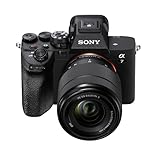
The fundamental difference is mechanical. A DSLR uses a mirror and prism to reflect light from the lens up into an optical viewfinder. When you press the shutter, the mirror flips up, light hits the sensor, and the image is captured. A mirrorless camera removes that entire assembly and feeds a live digital feed from the sensor directly to an electronic viewfinder (EVF) and rear screen. That one change affects size, viewfinder behavior, autofocus, video, and battery life.
| Feature | Mirrorless Example: Canon EOS R6 Mark III / Nikon Z6 III / Sony A7 IV | DSLR Example: Canon EOS 5D Mark IV / Nikon D850 / Nikon D780 |
|---|---|---|
| Viewfinder Type | Electronic (EVF) 3.69M – 5.76M dots, 100% coverage, real-time exposure preview | Optical (OVF) pentaprism, 100% coverage, 0.71x – 0.75x magnification |
| Body Weight (body only) | 580g – 680g | 840g – 1005g |
| Body Dimensions | ~138 x 98 x 88 mm | ~151 x 116 x 76 mm to 146 x 124 x 79 mm |
| Battery Life (CIPA rating) | 380 – 580 shots per charge with EVF (e.g., 340 shots for Sony A7 IV via EVF, 580 for Nikon Z6 III) | 1,200 – 1,840 shots per charge (e.g., 1,200 for Canon 5D Mark IV, 1,840 for Nikon D850) |
| Mechanical Shutter Life | 200,000 – 400,000 actuations (electronic shutter option with no wear) | 150,000 – 300,000 actuations |
| Continuous Shooting | 12 – 30 fps with full AF/AE (up to 40 fps with electronic shutter on stacked-sensor models) | 7 – 12 fps (7 fps for 5D Mark IV, 12 fps for D850 with battery grip) |
| Video (mid-range full-frame) | 4K 60p internal 10-bit, 6K/4K 120p on newer models, no 29:59 record limit on most 2023+ models | 4K 30p with 1.5x-1.7x crop, 1080p 60p, 29:59 limit, contrast-detect or limited Dual Pixel AF in video |
| In-Body Stabilization | Standard: 5-axis IBIS 5.5 – 8.5 stops | Not available (lens stabilization only, except Pentax K-1 series) |
Viewfinder: Optical Reality vs Electronic Preview
This is the most personal difference and the one buyers notice first.
DSLR Optical Viewfinder (OVF)
An OVF shows the scene through the lens with no lag, no power draw, and true-to-eye dynamic range. In bright daylight, fast panning, or low-light concert work, it feels immediate. The downside is what you see is not what you get. Exposure, white balance, and depth of field at wide apertures are not accurately previewed unless you use preview buttons, and you get no shooting overlays beyond basic focus points and levels.
Mirrorless Electronic Viewfinder (EVF)
An EVF is a tiny high-resolution OLED screen. It shows exposure, white balance, histogram, focus peaking, and zebras in real time, so beginners make fewer exposure mistakes and manual-focus users can nail focus without guessing. Newer 5.76M-dot EVFs at 120Hz are sharp and fluid, but they still consume battery, can show slight lag in very low light with visible noise/grain, and can cause eye fatigue for some users during long sessions.
Buying takeaway: If you shoot for hours through the viewfinder without access to charging, like wildlife hides or all-day weddings, the OVF’s zero-lag and low power use is a real advantage. If you want to see exactly how the final file will look before you press the shutter, especially for stills in changing light, the EVF saves time in post.
Autofocus Tracking: Where Mirrorless Has Pulled Ahead
DSLRs focus with a dedicated phase-detect module that only works when the mirror is down. It is excellent for single-point accuracy through the viewfinder but limited to a cluster of points in the center of the frame (eov. 61-153 points) and has no subject recognition. In live view, DSLRs fall back to slower contrast-detect AF.
Mirrorless cameras use on-sensor phase detection with 300 to 900+ points covering 90-100% of the frame. All recent full-frame and APS-C models from Canon, Sony, Nikon, and Fujifilm include trained subject detection for humans, animals, birds, and vehicles with eye-AF that sticks to the eye even if the subject turns or is partially obscured.
In practice:
- Sports, kids, and birds in flight: Mirrorless maintains focus across the entire frame while tracking an eye, even at 20 fps. A DSLR requires you to keep the subject under the central AF cluster and recompose, which leads to more missed frames at high speed.
- Portrait and event work: Mirrorless eye-AF lets you compose freely and shoot wide open at f/1.4-f/1.8 with a high hit rate. On a DSLR, calibrating lenses for front/back focus via AF micro-adjustment is often needed to get the same consistency.
- Low light: Flagship mirrorless bodies focus down to -6 to -8 EV, often two stops better than DSLRs, which matters for dim receptions or astrophotography.
Video Performance: Not Close
If video is more than 20% of your use, mirrorless is the clear choice. The removal of the mirror allows full-time on-sensor AF, silent operation, and continuous eye-tracking in video.
DSLR video, even on capable models like the Nikon D780 or Canon 5D Mark IV, is limited by older processors: 4K is often cropped (1.64x-1.74x), lacks 10-bit color or 4K 60p, focuses with audible hunting, and overheats less but also offers fewer tools like focus breathing compensation or active stabilization. Mirrorless mid-range bodies now offer 4K 60p downsampled from 6K, 10-bit 4:2:2 internal, log profiles (S-Log3, N-Log, Canon Log 3), and unlimited recording times without the legacy 29:59 cap.
For hybrid shooters who need to pull stills from video or vlog with autofocus that does not pulse, the difference is decisive. A DSLR still shoots perfectly usable 1080p for family archives, but it is not a competitive video tool in 2026.
Lens Availability: New vs Used Ecosystem
This is where DSLRs fight back.
DSLR lenses (F-mount, EF-mount, A-mount): Production of new DSLR lenses has largely stopped, but the used market is enormous. Decades of Canon EF and Nikon F lenses are available at 30-60% below original retail. A used Canon EF 50mm f/1.8 STM or Nikon AF-S 70-300mm f/4.5-5.6 can be found for $90-$180 in general market ranges, and professional f/2.8 zooms are far cheaper used than their mirrorless equivalents.
Mirrorless lenses (RF, Z, E, X-mount): The current R&D is here. New mirrorless lenses are sharper wide open, lighter, and designed for video with linear motors and minimal breathing. Adapters like the Canon EF-EOS R or Nikon FTZ II let you use almost any DSLR lens on a mirrorless body with full autofocus and no light loss, but the reverse is not true — you cannot adapt mirrorless lenses to DSLRs.
Practical implication: If you already own EF or F glass, buying a mirrorless body with an adapter protects your investment and gives you the better AF system. If you are starting from zero on a tight budget and plan to buy only used, a DSLR kit with two or three used lenses will cost significantly less than an equivalent new mirrorless kit.
Decision Matrix: Which System Fits Your Situation
| Your Situation | Better Pick | Why |
|---|---|---|
| Beginner, $600-$900 total budget, stills only, wants to learn fundamentals | Used DSLR (e.g., Nikon D3500 / Canon EOS Rebel SL3) + 2 used lenses | Lowest cost per kit, excellent battery life, simple controls, huge cheap lens pool |
| Travel and everyday family use, wants small kit | APS-C Mirrorless (e.g., Sony A6400 / Fujifilm X-T30 II / Canon EOS R10) | Body + 16-50mm kit weighs 600-750g vs 1100g+ for DSLR equivalent |
| Parent shooting kids’ sports indoors, birds/wildlife | Full-frame or APS-C Mirrorless with stacked sensor | Wide-area eye/bird tracking and 15-30 fps increase keeper rate |
| Wedding, portrait, or event professional | Mirrorless full-frame | Reliable eye-AF at f/1.4, dual card slots, IBIS, silent electronic shutter |
| Video + stills hybrid, YouTube, interviews | Mirrorless | 4K 60p 10-bit, real-time AF, mic/headphone jacks with usable monitoring |
| Already own 3+ DSLR lenses, shoot mostly landscape/studio on tripod | Either; DSLR still viable | Optical finder not needed on tripod, but DSLR image quality remains excellent if you do not need tracking/video |
Cost Per Use and Ownership Realities
The purchase price tells only part of the story. Work through a quick calculation:
Worked example: A new APS-C mirrorless body in the $800-$1000 range with an 80,000-200,000 shutter rating used 8,000 shots per year lasts 10-25 years mechanically, but the battery will degrade after 300-500 full cycles. Expect $45-$75 for each spare battery and 2-3 batteries to cover a full wedding day (1,200 shots) versus one DSLR battery for the same day. Over three years at 10,000 shots per year, mirrorless consumable cost is roughly $90-$150 in extra batteries, while a DSLR shooter often buys one additional used lens from savings on the body.
Durability notes that listings rarely mention:
- What wears first: On DSLRs, it is the mirror mechanism and shutter. On mirrorless, it is the shutter if you use it, but many shooters use electronic shutter 80% of the time, which has no wear. The EVF and sensor are always powered, so sensor dust is more visible.
- Cleaning: DSLR sensors are protected by the mirror when you change lenses. Mirrorless sensors are exposed every time you swap lenses and attract dust more readily. Learn proper air-blower technique and avoid touch cleaning unless needed. Budget a $75-$150 professional cleaning every 12-18 months if you change lenses outdoors frequently.
- Common mistakes: Leaving IBIS in when on a tripod can introduce micro-blur on some systems, shooting mechanical shutter at 1/8000s under flickering light causes banding (use electronic with flicker reduction), and leaving EVF brightness on auto can mislead exposure — set it to manual and rely on the histogram.
- Weather and longevity: Both systems offer weather sealing on mid to pro bodies, but no system is waterproof. Mirrorless bodies have more electronics and heat to manage for video, so they are more likely to show a temperature warning in 35C+ direct sun than a DSLR shooting stills only.
Practical Shooting Scenarios
Scenario 1: Weekend travel with one lens
Mirrorless APS-C with a 18-50mm f/2.8 equivalent weighs under 700g total and fits in a small bag, and the EVF gives you immediate feedback in harsh midday sun. The DSLR equivalent with a 18-55mm is 30-40% heavier and needs exposure chimping after each shot.
Scenario 2: Youth soccer at dusk
A mirrorless body tracking the player’s face at 15 fps with a 70-350mm equivalent will keep the subject sharp even as they move from edge to edge. A DSLR in 3D tracking can do it, but you must keep the AF point on target, and the yield will be lower once light drops below EV 2-3.
Scenario 3: Interview and product video from home
Mirrorless gives you continuous eye-AF, zebras for exposure, and 10-bit log for grading. A DSLR would require manual focus pulls or deal with hunting, and 4K crop makes wide room shots difficult.
Bottom Line for 2026 Buyers
Mirrorless is the forward-looking investment and the better tool for video, action tracking, and compact carry. Prices for mirrorless bodies and native lenses remain higher than used DSLR kits. DSLRs are not obsolete for stills — a used Nikon D850, D780, Canon 5D Mark IV or 90D still delivers professional image quality — but they are an end-of-line system with no new lens or body development. If your budget is very limited and you shoot stills only, a used DSLR plus quality used glass gives the best value today. If you plan to grow, shoot video, or prioritize autofocus ease, put your money into a mirrorless body and adapt older lenses while you build a native kit.