Key takeaways
- APS-C kit example: Sony A6700 ($1,400) + 16-50mm and 70-350mm lenses ($850) = $2,250 total. Cost per outing = $2,250 / 156 = $14.42. Weight carried: ~980g.
- Full-frame kit example: Sony A7 IV ($2,500) + 28-70mm and 70-200mm f/4 lenses ($1,700) = $4,200 total. Cost per outing = $4,200 / 156 = $26.92. Weight carried: ~1,650g.
What's inside
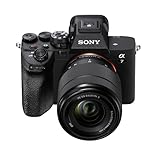
The best camera for photography in 2026 is the Sony A7 IV for most enthusiasts who want full-frame quality without a flagship price, the Fujifilm X-T5 for APS-C shooters who prioritize color and portability, and the OM System OM-5 for beginners and travelers on a tight budget.
Choosing between them comes down to sensor size, autofocus behavior, dynamic range and how well each handles low light. The comparison below maps those specs to real shooting situations, so you can match a camera to your budget and style without paying for features you will not use.
As an Amazon Associate we earn from qualifying purchases at no extra cost to you.



How sensor size, autofocus and low light actually affect your photos
Sensor size determines depth of field, dynamic range and high-ISO noise. Full-frame sensors (36x24mm) gather roughly 2.3x more light than APS-C (23.5×15.6mm) and 4x more than Micro Four Thirds (17.3x13mm). That translates to cleaner files at ISO 3200-6400 and about 1 to 1.5 stops more dynamic range before highlights clip.
Autofocus accuracy in 2026 is less about total points and more about subject recognition and stickiness. All current mirrorless models from Sony, Canon, Nikon and Fujifilm offer eye-AF for humans, animals and birds, but tracking speed and low-light AF limits (-3 EV vs -6 EV) decide whether the camera locks in a dim reception hall or loses focus behind foreground clutter.
For low light, look at two numbers: the native ISO range and the measured usable ceiling where noise reduction does not destroy detail. Most modern full-frame cameras produce clean prints to ISO 6400, APS-C to ISO 3200, and Micro Four Thirds to ISO 1600-2000. In-body image stabilization (IBIS) also matters, adding 5 to 8 stops of compensation so you can shoot at 1/15s instead of 1/250s without a tripod.
Top 8 picks for 2026 compared
| Camera | Sensor / MP | Weight (body only) | IBIS | AF Points / Low-Light Limit | Battery Life (CIPA) | Video Max | General Price Range |
|---|---|---|---|---|---|---|---|
| Sony A7 IV | Full-Frame 33MP | 658g | 5.5 stops | 759 pts / -4 EV | 580 shots | 4K 60p 10-bit | $2,300 – $2,600 |
| Canon EOS R6 Mark II | Full-Frame 24.2MP | 588g | 8 stops | 1053 pts / -6.5 EV | 760 shots | 4K 60p oversampled | $2,200 – $2,500 |
| Nikon Zf | Full-Frame 24.5MP | 710g | 8 stops | 273 pts / -4.5 EV | 380 shots | 4K 30p | $1,900 – $2,100 |
| Fujifilm X-T5 | APS-C 40.2MP | 557g | 7 stops | 425 pts / -7 EV | 740 shots | 6.2K 30p | $1,600 – $1,800 |
| Sony A6700 | APS-C 26MP | 493g | 5 stops | 759 pts / -3 EV | 570 shots | 4K 60p | $1,300 – $1,500 |
| Canon EOS R7 | APS-C 32.5MP | 612g | 7 stops | 651 pts / -5 EV | 770 shots | 4K 60p cropped | $1,300 – $1,500 |
| OM System OM-5 | Micro Four Thirds 20.4MP | 414g | 7.5 stops | 121 pts / -2 EV | 310 shots | 4K 30p | $1,000 – $1,200 |
| Fujifilm X100VI | APS-C 40.2MP (fixed 23mm f/2) | 521g | 6 stops | 425 pts / -5 EV | 450 shots | 6.2K 30p | $1,500 – $1,700 |
1. Sony A7 IV – Best all-rounder for enthusiasts
The reference point for the best camera for photography if you want one body for portraits, landscapes and low-light events. The 33MP full-frame sensor delivers about 14.7 stops of dynamic range in lab tests at base ISO, flexible enough to recover 3 stops of shadow detail. Autofocus covers 94% of the frame with real-time eye tracking that holds on subjects even when they turn away. Weakness: menus are dense and the body is heavier than APS-C rivals.
2. Canon EOS R6 Mark II – Best for action and low light
Built around speed and sensitivity. Its 24.2MP sensor prioritizes readout speed and high-ISO cleanliness over resolution, with usable results to ISO 8000 and an AF limit of -6.5 EV for near-dark venues. Burst rate of 12 fps mechanical / 40 fps electronic and deep buffer make it the budget-friendly choice for sports, wildlife and wedding receptions. 8-stop IBIS allows handholding a 50mm lens at 1/20s in most conditions.
3. Nikon Zf – Best full-frame for tactile shooters
Pairs a 24.5MP full-frame sensor from the Z6 II generation with retro dials and modern AF. Image quality and color science excel for skin tones and high-contrast scenes. Stabilization and focus are strong, though battery life is lower than competitors and the brass-and-magnesium body adds weight. Ideal if you learned on film and want direct shutter/ISO control.
4. Fujifilm X-T5 – Best APS-C for detail and color
The 40.2MP X-Trans sensor is the highest resolution in APS-C, resolving fine texture for landscapes while keeping files manageable. Film simulations reduce editing time, and -7 EV autofocus sensitivity is class-leading for an APS-C body. Dynamic range is about 13.5 stops at ISO 125, slightly behind full-frame but excellent given the 557g weight. Better for deliberate shooters than 30 fps action.
5. Sony A6700 – Best hybrid APS-C for photo and video
Uses the same AI subject recognition as Sony’s full-frame flagships in a compact 493g body. The 26MP sensor balances resolution and noise, with strong rolling shutter control for 4K 60p. Battery life is solid for its size, and the E-mount gives access to both affordable APS-C lenses and full-frame glass you can carry forward if you upgrade.
6. Canon EOS R7 – Best reach on a budget for wildlife
Its 32.5MP APS-C sensor gives a 1.6x crop advantage, turning a 400mm lens into an effective 640mm field of view without teleconverters. Autofocus tracks birds in flight reliably and the large grip suits long lenses. 4K 60p is cropped 1.8x, so wide-angle video is less compelling than on the R6 Mark II.
7. OM System OM-5 – Best compact travel and outdoor camera
Micro Four Thirds makes the system remarkably light: the 414g body with a 12-45mm f/4 lens weighs less than a single full-frame zoom. The 20.4MP sensor is smaller, so expect about 12.5 stops of dynamic range and earlier noise at high ISO, but computational modes like Live ND and high-res handheld shot offset that for landscapes. Fully weather-sealed to IP53, a rare feature under $1,200.
8. Fujifilm X100VI – Best fixed-lens for everyday photography
Not an interchangeable-lens camera, but the most popular everyday stills camera for 2025-2026. The fixed 23mm f/2 (35mm equivalent) lens keeps the package pocketable and forces composition discipline. Same 40.2MP sensor as the X-T5 with built-in ND filter and leaf shutter for silent shooting. Limitation: you cannot change focal length, so it is a second camera or a minimalist primary, not a do-everything system.
Decision matrix: Which sensor and body fits your situation
| Your Situation | Priority Feature | Best Match | Why |
|---|---|---|---|
| Budget under $1,300, new to interchangeable lenses | Light weight, stabilization, simple lenses | OM System OM-5 or Sony A6700 | Lowest system weight and cost; strong auto modes and IBIS forgive handshake |
| Shoot family, travel, street, 3-4 times per week | Versatility, battery life, low light | Sony A7 IV or Nikon Zf | Full-frame dynamic range and eye-AF work indoors and outdoors without lens swapping |
| Landscape and portrait where detail matters | Resolution, color, dynamic range | Fujifilm X-T5 | 40MP gives crop flexibility; 14-bit RAW and film profiles reduce post-processing |
| Sports, birds, kids in motion | Burst speed, AF tracking, reach | Canon EOS R6 Mark II or Canon EOS R7 | Highest frame rates and -6.5 EV tracking; APS-C R7 gives extra reach per dollar |
| Want one camera to carry daily, no lens bag | Portability, silence, design | Fujifilm X100VI | Fixed lens keeps size down and image quality matches larger bodies |
Cost per use: How to justify full-frame vs APS-C
Price is body only. System cost depends on lenses you will actually carry. A worked example for 3 years of weekly shooting (156 outings):
- APS-C kit example: Sony A6700 ($1,400) + 16-50mm and 70-350mm lenses ($850) = $2,250 total. Cost per outing = $2,250 / 156 = $14.42. Weight carried: ~980g.
- Full-frame kit example: Sony A7 IV ($2,500) + 28-70mm and 70-200mm f/4 lenses ($1,700) = $4,200 total. Cost per outing = $4,200 / 156 = $26.92. Weight carried: ~1,650g.
If you shoot twice weekly, cost per use halves and full-frame becomes easier to justify. If you shoot twice per month (72 outings), APS-C costs $31.25 per outing versus $58.33 for full-frame. Use this math with your real frequency before choosing sensor size.
Durability and ownership realities
Mirrorless shutters are rated for 200,000 to 400,000 actuations, but the shutter rarely fails first. What wears first is the battery, lens mount contacts and weather sealing. Batteries lose 15-20% capacity after 400-500 full charge cycles, so budget for a spare ($65-$85) if you shoot in cold weather. IBIS units can develop play after hard knocks; avoid hanging a heavy 70-200mm lens from the body without supporting the lens.
Sensor dust is the most common image-quality issue. Change lenses with the camera off and pointed down, use a blower, not canned air, and run the sensor cleaning cycle before manual cleaning. Avoid touching the sensor stack with swabs unless you have practiced; micro-scratches are permanent.
Consumables to plan for: SD cards (V60 or faster for 4K 60p, replace every 2-3 years with heavy use), lens front-element cleaning fluid and microfiber cloths, and for weather-sealed bodies, annual gasket inspection if you shoot in rain or dust. Common mistake: buying the highest megapixel body and then using a soft kit zoom that out-resolves the sensor. A sharp prime on a 24MP body will out-resolve a mediocre zoom on a 40MP body.
Quick setup for better results from any camera above
To get reliable autofocus and exposure from day one:
- Set AF to continuous with subject detection (Human/Bird/Auto) and assign eye-AF to a back button. This keeps tracking active without refocusing on every half-press.
- Set IBIS to auto and shutter to electronic first curtain to reduce shutter shock below 1/250s.
- Use Auto ISO with a minimum shutter speed of 1/(focal length x 2) and a cap at ISO 6400 (full-frame) or ISO 3200 (APS-C). Raise the cap only when you need the shot.
- Shoot RAW+JPEG. RAW preserves 2-3 stops of highlight recovery that JPEG discards.
FAQ
Do I need full-frame to get professional results?
No. Clients and prints cannot tell sensor size if light and lens quality are equal. Full-frame helps most at high ISO and for very shallow depth of field. APS-C and Micro Four Thirds deliver professional files when you control light and use sharp lenses.
Is 40MP too much for a beginner?
Files are larger (approx. 65-75MB RAW vs 30-35MB for 24MP) and demand faster cards and more storage, but you can shoot in medium or compressed RAW. High resolution helps you crop, but it also shows camera shake more clearly, so good stabilization and technique matter.
How important is battery life in practice?
CIPA ratings understate real use. In bursts and with the EVF, expect 20-30% more shots than rated; with heavy chimping, Wi-Fi and video, expect 20% less. One spare battery covers a full day for most shooters.