Key takeaways
- Larger sensor area than Micro Four Thirds, which gives about 1 to 1.3 stops better low-light performance and shallower depth of field at the same aperture.
- Native focal lengths feel familiar: a 16-50mm kit lens covers a 24-75mm full-frame equivalent view, good for travel and general use.
- Bodies and lenses are slightly larger and heavier, but still far lighter than budget full-frame.
What's inside
- How sensor size changes your photos and video in practice
- Autofocus generations matter more than megapixels
- Spec and feature comparison with real numbers
- The hidden cost: lens ecosystem
- Decision matrix: Which budget mirrorless fits your situation
- Weight, battery, and video trade-offs beginners feel first
- Ownership realities: What wears, what costs, and common mistakes
- FAQ
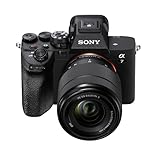
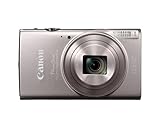
The best budget mirrorless cameras for photos and video without overspending in 2026 are the Sony ZV-E10, Sony a6400, Canon EOS R50, Nikon Z50, and OM System OM-5, with the Canon EOS R50 and Nikon Z50 being the easiest all-rounders for beginners, the Sony options offering the cheapest path to a large lens ecosystem, and the OM System OM-5 winning for stabilization and portability on a Micro Four Thirds sensor.
- How sensor size changes your photos and video in practice
- Autofocus generations matter more than megapixels
- Spec and feature comparison with real numbers
- The hidden cost: lens ecosystem
- Decision matrix: Which budget mirrorless fits your situation
- Weight, battery, and video trade-offs beginners feel first
- Ownership realities: What wears, what costs, and common mistakes
- FAQ
If you want good stills and usable 4K video under a tight budget, you do not need a full-frame body. The real cost differences come from sensor size, autofocus generation, and how much the lenses you will actually want cost over the next two years.
As an Amazon Associate we earn from qualifying purchases at no extra cost to you.


How sensor size changes your photos and video in practice
Budget mirrorless cameras use two sensor sizes, and the trade-off is not just image quality.
APS-C (Sony, Canon, Fujifilm, Nikon)
- Larger sensor area than Micro Four Thirds, which gives about 1 to 1.3 stops better low-light performance and shallower depth of field at the same aperture.
- Native focal lengths feel familiar: a 16-50mm kit lens covers a 24-75mm full-frame equivalent view, good for travel and general use.
- Bodies and lenses are slightly larger and heavier, but still far lighter than budget full-frame.
Micro Four Thirds (OM System, Panasonic Lumix G series)
- Sensor is about half the area of APS-C. You gain smaller, lighter lenses and excellent in-body stabilization at this price, but lose some high-ISO headroom.
- A 2x crop factor means a 12-45mm lens gives a 24-90mm equivalent view, so telephoto reach is cheaper and lighter. A 75-300mm Micro Four Thirds lens that weighs 400g would require a much heavier 150-600mm on APS-C to match the reach.
- Depth of field is deeper at the same aperture and framing, which is helpful for video vlogging and keeping subjects in focus, but less ideal if you want heavily blurred backgrounds in portraits without a fast prime.
For beginners who shoot mostly outdoors, travel, and family photos, either sensor is more than sharp enough at 20-26MP. Choose APS-C if low light and background blur matter most, Micro Four Thirds if compact size, stabilization, and affordable telephoto matter most.
Autofocus generations matter more than megapixels
On a budget, autofocus is where older and newer models diverge significantly.
- Latest hybrid AF with subject detection (Canon EOS R50, Nikon Z50, Sony ZV-E10): 400+ phase-detect points, real-time eye-AF for humans and animals in both photos and video, and reliable tracking during 4K. For video, this means the camera holds focus on a face even if you move.
- Previous generation hybrid AF (Sony a6400, Fujifilm X-T30 II, Panasonic Lumix G85): Excellent for stills with eye-AF and fast lock-on, but less sticky tracking in video and no dedicated AI subject detection for animals, cars, or birds.
- Contrast-detect heavy systems (older Panasonic G series before G9 II): Can pulse or hunt in video, especially in low light. Fine for photos, frustrating for continuous video AF.
If you plan to shoot video of people, kids, or pets more than 30% of the time, prioritize a model released from 2021 onward with phase-detect AF and eye-tracking in video. For stills-first beginners, any of the models above will focus fast enough for everyday use.
Spec and feature comparison with real numbers
Weight, battery life, and video limits are what beginners notice after the first month, not lab specs. The table below uses manufacturer CIPA ratings and body-only weights without lens.
| Model | Sensor / MP | Body Weight | Battery (CIPA Shots) | Video (Max) | Stabilization | Card Slot |
|---|---|---|---|---|---|---|
| Sony ZV-E10 | APS-C / 24.2MP | 343g | ~440 shots (NP-FW50) | 4K 30p (no crop), 1080p 120p | No IBIS, electronic only | 1x SD UHS-I |
| Sony a6400 | APS-C / 24.2MP | 403g | ~360 shots (NP-FW50) | 4K 30p, 1080p 120p | No IBIS | 1x SD UHS-I |
| Canon EOS R50 | APS-C / 24.2MP | 375g | ~310 shots (LP-E17) | 4K 30p (1.56x crop), 4K 25p uncropped, 1080p 120p | No IBIS | 1x SD UHS-I |
| Nikon Z50 | APS-C / 20.9MP | 395g | ~320 shots (EN-EL25) | 4K 30p (1.5x crop), 1080p 120p | No IBIS | 1x SD UHS-I |
| OM System OM-5 | Micro Four Thirds / 20.4MP | 414g | ~310 shots (BLS-50), ~520 in power-save | 4K 30p, 1080p 120p | Yes, 7.5 stops IBIS | 1x SD UHS-II |
| Fujifilm X-T30 II | APS-C / 26.1MP | 378g | ~380 shots (NP-W126S) | 4K 30p, 1080p 240p | No IBIS | 1x SD UHS-I |
Takeaways from the numbers: No budget model here offers 4K 60p without heavy crop or overheating limits, and none except the OM-5 offers true mechanical sensor stabilization. Battery life is universally modest at 310-440 shots, which means a second battery is not optional if you shoot a full day of travel or events. UHS-I slots cap burst and video bitrates but keep card costs low.
The hidden cost: lens ecosystem
The body is usually 45-60% of what you will spend in the first two years. The rest is lenses, and ecosystems are not priced equally.
- Sony E-mount (APS-C): Largest choice of affordable primes and zooms from Sony, Sigma, and Tamron. A 35mm equivalent prime (Sony E 35mm f/1.8 or Sigma 30mm f/1.4) typically falls in the low-to-mid budget prime range, and a 18-50mm f/2.8 standard zoom from a third party costs substantially less than first-party stabilized options on other mounts.
- Canon RF-S: Very good kit lenses (18-45mm, 55-210mm) that are compact and light, but affordable third-party APS-C primes only started appearing widely in 2023-2024. Native fast primes cost more on average than Sony E equivalents.
- Nikon Z DX: Excellent compact kit lenses and a growing prime lineup (16-50mm, 50-250mm are both unusually small). Third-party support is improving but still narrower than Sony E, so telephoto and fast prime choices are fewer at the lowest price tier.
- Micro Four Thirds (OM System/Panasonic): Most affordable way to get lightweight telephoto and stabilized zooms. A 12-45mm f/4 and 40-150mm f/4-5.6 together weigh less than a single APS-C 70-350mm equivalent, and used market prices are generally lower due to the long system history.
- Fujifilm X-mount: Strong image quality and compact primes, but Fujifilm lenses trend toward higher mid-range pricing with less budget third-party competition than Sony.
Worked calculation: Total ownership cost over 2 years
Consider a beginner who wants a kit zoom plus one fast prime for portraits/low light and one telephoto for travel. Using general market ranges for new entry-level lenses in 2026:
- Sony APS-C example: Body (general budget range) + 16-50mm kit + Sigma 30mm f/1.4 + 55-210mm telephoto. Third-party prime and telephoto keep the add-on lens total to roughly the same price as the body itself.
- Canon/Nikon APS-C example: Body + kit zoom + first-party 32mm/24mm f/1.8 + 55-210mm/50-250mm telephoto. Expect the prime to add 20-35% more than the Sony Sigma equivalent, making the two-lens add-on about 1.2x the body cost.
- Micro Four Thirds example: Body + 12-45mm + 25mm f/1.8 + 40-150mm. Total lens weight is about 450-550g combined, versus 650-850g for APS-C equivalents, and combined lens cost is often slightly lower, but you trade high-ISO performance.
If you know you will want three lenses within two years, Sony E-mount and Micro Four Thirds usually produce the lowest total system cost and weight. If you plan to stay with just the kit lens and one prime, Canon EOS R50 and Nikon Z50 are equally economical.
Decision matrix: Which budget mirrorless fits your situation
| Your Situation | Best Fit | Why |
|---|---|---|
| Mostly photos + occasional video, want lightest kit for travel | OM System OM-5 | IBIS for sharp handheld stills at 1/15s, smallest telephoto options, weather-sealed body at this price |
| Vlogging, YouTube, or family video with continuous AF | Sony ZV-E10 or Canon EOS R50 | Reliable eye-AF in video, flip screen, strong face tracking; ZV-E10 has no crop in 4K, R50 has better color and auto modes for beginners |
| Stills-first, want best value lens expansion over time | Sony a6400 or Sony ZV-E10 | Access to low-cost Sigma/Tamron primes and zooms keeps per-lens costs down |
| One camera for school, hobby, simple menus | Canon EOS R50 or Nikon Z50 | Guided UI, auto subject detection, lightweight 16-50mm kit lenses that collapse small |
| Want tactile dials and film-like colors out of camera | Fujifilm X-T30 II | 26.1MP sensor with good color science, 240p slow motion, but no stabilization and pricier lenses |
Weight, battery, and video trade-offs beginners feel first
Weight
A 350-400g body sounds light until you add a lens. A typical budget kit (body + 16-50mm + battery + card) totals 520-620g, which is comfortable for all-day carry. Adding a metal f/1.4 prime adds 180-260g, and a telephoto adds 300-400g. Micro Four Thirds keeps the full three-lens kit under 1,000g more easily than APS-C.
Battery life
CIPA ratings of 310-440 shots translate to 70-120 minutes of mixed photo/video in real use, less in cold weather or with heavy 4K recording. Video alone drains a NP-FW50 or LP-E17 in about 80-95 minutes of 4K 30p. Plan for two batteries minimum, three if you travel without nightly charging. USB-C charging in-camera (R50, Z30, OM-5, ZV-E10) lets you top up from a power bank, but does not charge while recording on most models.
Video features
At this price you get 4K 30p with good detail but real limits: 30-minute clip limits on older models like the a6400, noticeable rolling shutter when panning quickly, and crops on some bodies (Canon R50 applies a 1.56x crop in 4K 30p for highest quality). No budget model offers 10-bit 4K 60p internally with reliable continuous AF. If you need 4K 60p, log profiles, or longer recording without overheating warnings, you need to step up to a mid-range body. For beginner video, focus instead on whether the camera offers eye-AF during 4K, a fully articulating screen, and a 3.5mm mic input, all present on the ZV-E10, R50, and OM-5.
Ownership realities: What wears, what costs, and common mistakes
- Shutter and IBIS units: Budget bodies are rated for 100,000-200,000 actuations, but the first failure point is usually the kit zoom’s ribbon cable or zoom barrel after dust and pocket lint, not the shutter. Store with the lens retracted and capped.
- Sensor dust: Mirrorless sensors are exposed when changing lenses. Use the automatic sensor cleaning on shutdown, hold the body face-down during lens swaps outdoors, and learn to use a blower before resorting to a wet swab. Dust shows most at f/11-f/16 in video skies.
- Heat and recording limits: Shooting 4K in direct sun can trigger temperature warnings in 15-25 minutes on compact bodies. Keep spare batteries out of the sun, use 1080p for long interviews, and give the camera 5 minutes with the screen open to cool.
- Consumables to budget for: A second battery, a 64GB or 128GB UHS-I SD card with V30 speed for 4K, a basic blower and microfiber cloth, and a small camera insert for a backpack. These four items typically cost less than a single budget prime but prevent most beginner issues.
- Common mistake: Buying the cheapest body and the most expensive first lens. At this level, a mid-range body with two affordable, light lenses will produce more keepers than a slightly better body with one heavy lens you leave at home.
FAQ
Is full-frame worth stretching the budget for?
For beginners on a tight budget, no. Budget full-frame bodies cost more and the lenses cost significantly more and weigh more. An APS-C or Micro Four Thirds camera with a fast prime will give you better low-light and depth-of-field control than a full-frame body stuck with a slow kit zoom.
Do I need in-body stabilization (IBIS) as a beginner?
It helps a lot for stills in museums, interiors, and evening streets, where IBIS can save you two to three stops of ISO. For video, IBIS smooths micro-jitters but does not replace a tripod or gimbal for walking shots. If you shoot mostly handheld stills in low light without a tripod, prioritize the OM-5. Otherwise, lens stabilization or electronic stabilization is adequate.
Which is better for learning: Sony, Canon, or Nikon?
All three are capable, but Canon EOS R50 and Nikon Z50 offer the most beginner-friendly auto and guided modes, Sony ZV-E10 and a6400 offer the broadest affordable lens choice, and OM System OM-5 offers the most portable weather-sealed package. Choose based on whether easy menus, lens costs, or compactness matters most to you.