Key takeaways
- Lens protection: retractable lenses can jam if sand or grit gets in. Keep the camera in a soft pouch and avoid pocketing it loose with keys or coins.
- Batteries: compact bodies carry small batteries. Plan for spares and for USB charging if the maker supports it.
- Storage: follow the maker’s card-speed recommendations, especially for 4K video modes.
- Weather: these cameras are generally not sealed. Avoid rain, spray and sudden temperature swings that cause condensation.
- Screens: flip-out screens are handy for selfies but exposed; use a screen protector if the maker allows.
For most people, a one-inch-sensor compact such as the Sony RX100 VII or Canon PowerShot G7 X Mark III is the safest pocket camera, the Ricoh GR III or GR IIIx suits street photographers who want a large sensor, and the DJI Osmo Pocket 3 suits anyone whose priority is smooth video. The right pick depends on whether you value zoom range, sensor size, video features or sheer pocketability, because no single model leads in all four.
Pocket cameras occupy a narrow niche in 2026. Phones now handle snapshots well, so the remaining reasons to carry a dedicated compact are a larger sensor, a real optical zoom or a fast lens, physical controls and better battery and storage handling. Availability of fixed-lens compacts has been uneven in recent years, so some models below may be sold in limited batches or through specific regions; that is a purchasing reality rather than a reflection on quality. Where a model is a previous generation, this guide says so.
Our top picks



As an Amazon Associate we earn from qualifying purchases at no extra cost to you.
Pocket Cameras at a Glance
| Model | Best for | Key stated specs (per the maker) | Limits |
|---|---|---|---|
| Sony RX100 VII | Travel with long zoom | 1-inch stacked sensor, about 20 MP, 24-200 mm equivalent zoom, pop-up viewfinder, 4K video | Dim at the long end; menus are dense; older design |
| Sony ZV-1 II | Vlogging and wide-angle video | 1-inch sensor, 18-50 mm equivalent lens, flip-out screen, directional microphone | Short zoom range; no viewfinder |
| Canon PowerShot G7 X Mark III | Casual video and stills with a bright lens | 1-inch sensor, about 20 MP, 24-100 mm equivalent, wide aperture at the short end, 4K video, live streaming support | Video crop and heat management are commonly noted by reviewers; no viewfinder |
| Ricoh GR III | Street and documentary photography | APS-C sensor, about 24 MP, 28 mm equivalent lens, in-body stabilization, very small body | Fixed wide lens; limited video; small battery |
| Ricoh GR IIIx | Portraits and tighter framing on the street | Same body and sensor with a 40 mm equivalent lens | Narrower view; same battery limits |
| Panasonic Lumix LX100 II | Enthusiasts who want a bigger sensor and viewfinder | Four Thirds sensor, 24-75 mm equivalent zoom, bright lens, built-in viewfinder, manual control rings | Larger than the others; older design |
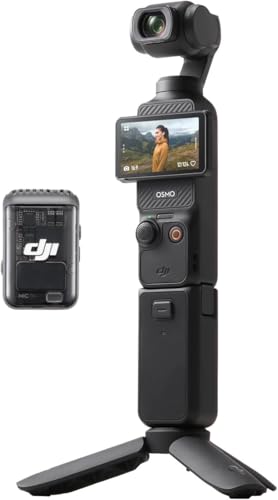
| DJI Osmo Pocket 3 | Gimbal-smooth video | 1-inch sensor, three-axis gimbal, rotating touchscreen, 4K high-frame-rate modes listed by the maker | Not a stills camera first; fixed lens; limited physical controls |
What “Pocket” Really Means
Marketing uses the word loosely. A truly jacket-pocket camera such as the Ricoh GR series is thin and has no protruding zoom lens. A one-inch zoom compact like the RX100 VII still slips into a coat or small bag pocket but is thicker. The Lumix LX100 II is closer to a small-bag camera. Before choosing, decide where it will actually live: a trouser pocket demands a slim body and a retractable or fixed lens, while a bag or coat pocket allows more.
Sensor Size and Lens Trade-offs
Sensor size drives low-light performance and background blur. The one-inch class (RX100 VII, ZV-1 II, G7 X III, Osmo Pocket 3) is the common compromise: noticeably better than a phone in dim rooms and with zoom lenses that remain small. APS-C compacts (Ricoh GR) and Four Thirds compacts (LX100 II) give cleaner files and more flexibility in editing, but with fixed or limited zoom ranges.
Lens aperture matters as much as sensor size. The G7 X Mark III and LX100 II are known for bright lenses at their wide ends, which helps indoors. The RX100 VII trades brightness for reach: a 24-200 mm equivalent range in a body that fits a pocket is its main selling point, but reviewers note the lens gets slower as you zoom.
Budget Tiers
Budget tier
Older one-inch compacts and previous-generation models often sit in the lower tiers when stock is available. They typically offer good daylight quality, but autofocus, video limits and battery life may trail newer designs. If you are buying previous-generation gear, confirm that accessories and batteries are still readily sold in your region.
Mid-range tier
The Canon G7 X Mark III, Sony ZV-1 II and DJI Osmo Pocket 3 generally sit here. They suit hobbyists and creators who want clean video straight out of the camera with minimal setup.
Premium tier
The RX100 VII, Ricoh GR III/IIIx and Lumix LX100 II usually occupy the upper tiers in 2026 because of limited supply and enthusiast demand. You are paying for either optical reach, a large sensor or a tactile shooting experience, not for headline video specs.
Model Notes
Sony RX100 VII
The maker lists a stacked one-inch sensor with fast autofocus, real-time tracking and eye detection, plus a pop-up electronic viewfinder. Reviewers consistently describe it as the most capable all-round pocket zoom, with the usual caveats: small controls, a menu system that rewards patience and a lens that darkens when extended. It is the strongest choice if you want one camera for family events, travel and occasional video.
Sony ZV-1 II
Aimed at vloggers, it pairs a wider lens (listed by the maker as 18-50 mm equivalent) with a flip-out screen and a directional microphone with a windscreen. Reviewers see it as better for selfie framing and group shots at arm’s length than for distant subjects. If your priority is talking-head video or tight interiors, it is more useful than the longer-zoom RX100 VII.
Canon PowerShot G7 X Mark III
Canon lists a one-inch sensor, a 24-100 mm equivalent lens, 4K video and support for vertical video and live streaming. It is popular with creators who like Canon colors and a lighter body. Some reviewers note that extended 4K recording can be limited by heat, so it suits short clips better than long takes.
Ricoh GR III and GR IIIx
Both use a roughly 24 MP APS-C sensor, a sharp fixed lens and in-body stabilization in a body that is among the smallest APS-C cameras available. The GR III has a 28 mm equivalent lens, while the GR IIIx has a 40 mm equivalent. Reviewers praise snap focus and the quick, discreet shooting style, but caution that the battery is small and the sensor can attract dust. Carry a spare battery and avoid changing conditions that invite dust ingress.
Panasonic Lumix LX100 II
The LX100 II offers a Four Thirds sensor, a bright 24-75 mm equivalent lens and physical aperture and shutter controls. It is bigger than the others, so it fits better in a coat or small bag. It suits photographers who want an enthusiast experience with a built-in viewfinder.
DJI Osmo Pocket 3
Not a conventional compact, but widely discussed as a pocket camera for video. DJI lists a one-inch sensor, a three-axis gimbal and a rotating touchscreen. It excels at walking shots and travel clips; it is less suited to still photography, long zoom reach and low-profile street use where a gimbal looks conspicuous.
Fit, Size and Care Notes
- Lens protection: retractable lenses can jam if sand or grit gets in. Keep the camera in a soft pouch and avoid pocketing it loose with keys or coins.
- Batteries: compact bodies carry small batteries. Plan for spares and for USB charging if the maker supports it.
- Storage: follow the maker’s card-speed recommendations, especially for 4K video modes.
- Weather: these cameras are generally not sealed. Avoid rain, spray and sudden temperature swings that cause condensation.
- Screens: flip-out screens are handy for selfies but exposed; use a screen protector if the maker allows.
Pick X If…
| Pick this | If you want |
|---|---|
| Sony RX100 VII | The longest zoom range in a pocketable body, with a built-in viewfinder |
| Sony ZV-1 II | A wide lens for vlogs, interiors and group shots |
| Canon G7 X Mark III | A bright lens and simple creator-friendly video |
| Ricoh GR III | The smallest APS-C camera for street and everyday scenes |
| Ricoh GR IIIx | The same camera with a tighter, portrait-friendly view |
| Lumix LX100 II | Manual rings, a viewfinder and a larger sensor |
| DJI Osmo Pocket 3 | Stabilized video with no extra gear |
Alternatives to Consider
- Fujifilm X100VI: an APS-C fixed-lens camera with a 23 mm f/2 lens, in-body stabilization and a hybrid viewfinder. It is larger than pocket cameras but loved by enthusiasts; demand has often exceeded supply.
- Sony ZV-E10 II or a small mirrorless body with a pancake lens: more flexible and better image quality, but bulkier.
- A recent flagship phone: for casual use, it may already cover most needs without another device to carry.
Frequently Asked Questions
Is a pocket camera better than a phone?
It depends on the scene. A one-inch or larger sensor and a real optical zoom can give better low-light results and more natural subject separation than a phone’s small sensors. Phones win on convenience, computational processing and sharing speed. A pocket camera makes sense if you value physical controls, zoom reach or a dedicated device for travel.
Which pocket camera is best for video?
The Sony ZV-1 II and the DJI Osmo Pocket 3 are the most video-focused models here, with the ZV-1 II offering a wide lens and a directional microphone and the Osmo Pocket 3 offering a built-in gimbal. The Canon G7 X Mark III is a capable alternative for short clips. Always consult the maker’s page for recording limits and frame-rate modes.
What does one-inch sensor mean?
It refers to a sensor type that is larger than most phone sensors and smaller than APS-C or full-frame sensors. In practice it offers a good balance between image quality and a compact lens. The number describes a category, not the actual diagonal measurement.
Can a pocket camera shoot RAW files?
Most of the still-focused models listed here, including the RX100 VII, G7 X Mark III, Ricoh GR series and LX100 II, offer RAW capture according to the makers. RAW files give more editing flexibility but need more storage and processing. The Osmo Pocket 3 is oriented toward video and has a different workflow.
How do I protect a pocket camera from damage?
Use a padded pouch, keep the lens retracted when it is not in use and avoid sand, salt spray and moisture. Do not store it with keys or loose coins. If the lens makes grinding noises or fails to extend, stop using it and contact the maker’s service rather than forcing it.
Are older pocket cameras still worth buying?
Yes, if you accept older autofocus and video features. Previous-generation models can still deliver strong still images in good light. Before buying, consider battery availability, firmware support and whether the lens or sensor shows wear on used examples.
More from Amazon
Programs that pair well with the guide above. Offers and eligibility are set by Amazon and may change.
Free shipping on eligible items, Prime Video and more. Eligible new members can start with a free trial.
Start a Prime free trialAudiobooks and podcasts to listen to on the go. Eligible new members can start with a free trial.
Try Audible freeAd-free music streaming. Eligible new subscribers can start with a free trial.
Try Music Unlimited freeA free business account with business pricing and bulk-buying tools for work, shop or home office.
Create a business accountAs an Amazon Associate we earn from qualifying purchases.