Key takeaways
- Budget: X-M5 or a used older X-series body, plus a kit lens or a small prime.
- Mid-range: X-S20, X-T50 or an older X-T-series body.
- Premium: X-T5, X-H2, X100VI and the GFX line.
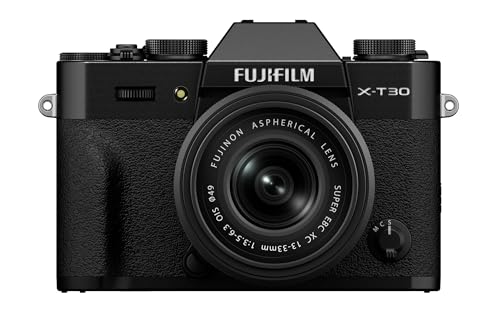
The best Fujifilm camera for most photographers is the X-T5 if you want a classic dial-driven body with a 40-megapixel sensor, the X100VI if you want a pocketable fixed-lens camera for street and travel, and the X-S20 or a similar 26-megapixel body if you want an affordable all-rounder with strong video features. Fujifilm’s line is split by sensor size and personality, so the right pick depends on how you shoot rather than which model is newest.
Our top picks



As an Amazon Associate we earn from qualifying purchases at no extra cost to you.
At a Glance: Fujifilm Cameras Compared
| Camera | Best for | Key stated specs (maker) | Limits |
|---|---|---|---|
| X100VI | Street, travel, everyday carry (premium tier) | Fixed 23 mm f/2 lens; 40 MP APS-C sensor; in-body stabilization | Fixed focal length; demand has been high, so supply varies |
| X-T5 | Stills, landscape, portraits (upper mid tier) | 40.2 MP APS-C; in-body stabilization; dedicated dials; interchangeable lenses | Video is capable but not the main focus; no fully articulating screen |
| X-T50 | Travel with film simulation dial (mid tier) | 40 MP APS-C; in-body stabilization; film simulation dial | Smaller grip; fewer controls than X-T5 |
| X-S20 | Hybrid stills and video (mid tier) | 26 MP APS-C; in-body stabilization; vari-angle screen; larger battery | Less pronounced retro dial layout |
| X-H2 | High resolution, serious video (upper tier) | 40 MP APS-C; in-body stabilization; high-end video options | Larger and heavier than the X-T line |
| X-M5 | Compact vlogging and beginners (budget tier) | 26 MP APS-C; compact body; vari-angle screen | No viewfinder-centric controls; smaller grip |
| GFX100RF | Large-format enthusiasts (premium tier) | Medium-format sensor; fixed lens; compact body | Fixed lens; the highest cost tier |
Fujifilm releases new bodies regularly, so a specific model may have been refreshed. The descriptions above reflect what the maker lists for each camera family.
Understanding Fujifilm’s Sensor Tiers
Most Fujifilm cameras use an APS-C sensor, which is smaller than full frame and lets lenses and bodies stay compact. The company offers 26-megapixel and 40-megapixel APS-C options, and a separate GFX line with larger medium-format sensors. For printing large or cropping heavily, 40 megapixels offers more detail. For video, low light and file sizes that are easy to manage, 26 megapixels remains attractive. Reviewers often point out that the smaller 26-megapixel files are easier on storage and computers.
X100VI: The Pocketable Favorite
The X100VI keeps the series’ fixed 23-millimeter f/2 lens, which gives a field of view similar to a 35-millimeter lens on full frame. The maker lists a 40-megapixel sensor and in-body stabilization, a notable change from earlier versions. It is built for street, documentary and travel shooting, and it includes a built-in neutral density filter and a leaf shutter that allows flash sync at fast speeds. The trade-off is that you cannot swap lenses; the maker sells wide and tele conversion lenses as accessories. Reviewers report that demand has often outpaced supply, so availability can vary by region.
X-T5: Stills First, Dials First
The X-T5 uses a 40.2-megapixel sensor and has in-body stabilization. Its top plate carries separate dials for shutter speed, ISO and exposure compensation, which many photographers prefer because settings are visible even with the camera off. It is lighter than the X-H2, which suits landscape, travel and portrait work. The screen tilts rather than fully articulating, which some video shooters dislike. Reviewers generally treat it as the benchmark for enthusiast stills shooters in the line-up.
X-T50 and X-E-Series: Smaller Bodies With Film Looks
The X-T50 brings the 40-megapixel sensor into a more compact body and adds a dial for film simulations, which are Fujifilm’s in-camera looks. The X-E series is a rangefinder-styled line aimed at street photographers who want a smaller body with a viewfinder in the corner. Both lean on the brand’s color science, so shooters who like straight-from-camera JPEGs are the target audience.
X-S20 and X-M5: Hybrid and Beginner Options
The X-S20 uses a 26-megapixel sensor with in-body stabilization, a fully articulating screen and a larger battery than many peers. The maker positions it for people who mix stills and video. The X-M5 is a smaller, lighter camera that targets beginners and vloggers. Both are good first Fujifilm bodies; the differences come down to grip size, viewfinder behavior and how many physical dials you want.
X-H2 and X-H2S: Serious Video and Speed
The X-H2 offers 40 megapixels and a larger body with a top display and more video features. The X-H2S uses a stacked 26-megapixel sensor, which the maker positions for faster readout and sports or video use. If you shoot action, wildlife or professional video, these are worth a look. For general travel and street photography, they may be larger than necessary.
GFX: When Full Frame Is Not Enough
Fujifilm’s GFX line uses larger medium-format sensors for extremely detailed images. The GFX100RF pairs a large sensor with a fixed lens in a compact body. These cameras are aimed at landscape, studio and fine-art work. They cost far more than APS-C bodies, and the lenses are larger, so they suit buyers who truly need maximum image quality.
Lenses, Weather Sealing and Care
Fujifilm’s X-mount lenses are a major reason to choose the system. Many maker-listed lenses carry weather-resistant (WR) designations, but not every body and lens combination is sealed, so read the specification sheet before shooting in rain. Keep the sensor clean, use a rocket blower first, and take cameras to a service center for deep cleaning rather than poking the sensor. Wipe salt spray from gear after beach use, and let equipment reach room temperature before opening a battery door in humid conditions.
Budget Tiers
- Budget: X-M5 or a used older X-series body, plus a kit lens or a small prime.
- Mid-range: X-S20, X-T50 or an older X-T-series body.
- Premium: X-T5, X-H2, X100VI and the GFX line.
Pick X If… Decision Table
| Pick this | If you… |
|---|---|
| X100VI | want one lens, a small body and street photography |
| X-T5 | shoot mostly stills and like dedicated dials and high resolution |
| X-T50 | want a lighter body, film simulation dial and 40 megapixels |
| X-S20 | mix stills and video and want a vari-angle screen |
| X-H2 | need resolution plus stronger video tools |
| X-M5 | want the smallest, cheapest way into the system |
| GFX100RF | want medium-format image quality in a compact body |
Alternatives to Fujifilm
- Sony Alpha APS-C and full-frame bodies: stronger autofocus tracking for action and video.
- Ricoh GR series: a pocketable fixed-lens alternative to the X100 line.
- Nikon Z and Canon RF mirrorless: broader lens families and full-frame options.
Frequently Asked Questions
Which Fujifilm camera is best for beginners?
The X-M5 and X-S20 are the usual starting points because they are easy to carry and offer helpful automatic modes. If you want dials from day one, an X-T-series body teaches exposure fundamentals. Choose by body feel, since lenses carry over between them.
Is the X100VI worth the hype?
It offers a fixed 23 mm f/2 lens, a 40-megapixel sensor and in-body stabilization in a small body, which reviewers praise for street and travel work. If you need to change lenses, a different model fits better. Availability has been inconsistent, so buy from reputable sellers.
Does 40 megapixels matter on APS-C?
It helps with cropping and large prints, but it demands sharper lenses and steadier technique. Many everyday photographers do fine with 26 megapixels. Pick 40 megapixels if you print big or crop often.
Are Fujifilm cameras good for video?
The X-S20, X-H2 and X-H2S are the most video-oriented bodies, with features such as vari-angle screens and advanced recording formats. The X-T5 can record video but prioritizes stills. Read the maker’s spec sheet for codecs and recording limits before buying.
Do all Fujifilm lenses work on every body?
X-mount lenses fit X-series cameras, and GFX lenses fit GFX bodies, but the two systems are not interchangeable. Some lenses offer optical stabilization that works with or without in-body stabilization. Always match the mount before you buy.
Are Fujifilm cameras weather sealed?
Several bodies and lenses carry the maker’s weather-resistance marking, but this is not a guarantee against all water and dust exposure. Follow the manual’s guidance and avoid changing lenses in harsh conditions. Rain covers add extra protection for heavy use.
More from Amazon
Programs that pair well with the guide above. Offers and eligibility are set by Amazon and may change.
Free shipping on eligible items, Prime Video and more. Eligible new members can start with a free trial.
Start a Prime free trialAudiobooks and podcasts to listen to on the go. Eligible new members can start with a free trial.
Try Audible freeAd-free music streaming. Eligible new subscribers can start with a free trial.
Try Music Unlimited freeA free business account with business pricing and bulk-buying tools for work, shop or home office.
Create a business accountAs an Amazon Associate we earn from qualifying purchases.