Our Top Picks
- Top Pick: DJI Mini 4K
- Runner-up: DJI Mini 2 SE
- Also consider: DJI Neo with RC-N3 Remote Controller
As an Amazon Associate, we earn from qualifying purchases.
The best drone for beginners is the DJI Mini 4K, because it pairs a stabilized 4K camera with one-tap takeoff and landing, GPS return to home, and a weight under 249 grams. The DJI Mini 2 SE covers the same flight basics with a lower-resolution camera at a budget tier, while the palm-sized DJI Neo launches from a hand and follows a subject with no controller in the way. The Potensic ATOM SE Expansion Kit Bundle adds extra batteries and a charging hub, and the DJI Mini 3 adds a larger sensor, vertical shooting, and the longest flight time here. Every drone here weighs under 249 grams and includes GPS return to home, so the choice comes down to camera quality and flight time.
Table of Contents
- How to Choose a Beginner Drone
- 1. DJI Mini 4K
- 2. DJI Mini 2 SE
- 3. DJI Neo with RC-N3 Remote Controller
- 4. Potensic ATOM SE Expansion Kit Bundle
- 5. DJI Mini 3
- Which Beginner Drone Fits You
- Frequently Asked Questions
- Conclusion
- Product and ASIN Reference
How to Choose a Beginner Drone
A first drone should forgive mistakes, and that starts with weight. Every model here stays under 249 grams, which means recreational flyers in the United States generally do not need FAA registration or Remote ID for hobby flights, although local rules still apply. A sub-249-gram drone also folds small enough to ride in a camera bag beside a mirrorless body.
GPS return to home is the next feature to insist on. When the signal drops or the battery runs low, the drone flies itself back to its takeoff point instead of drifting away. One-tap takeoff and landing, stable hovering, and a low-battery warning round out the safety net, and all five drones here include them.
Camera quality is where the models separate. A 3-axis mechanical gimbal keeps footage level when the drone tilts in wind. The Mini 4K, Mini 2 SE, and Mini 3 all carry a 3-axis gimbal, while the Neo and the ATOM SE rely on electronic stabilization. Resolution runs from 2.7K on the Mini 2 SE to 4K on the other four. Flight time runs from 18 to 38 minutes on one battery, and bundles with extra batteries multiply practice time.
1. DJI Mini 4K
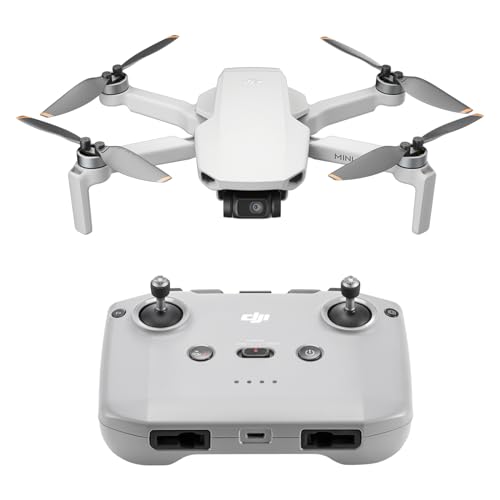
The DJI Mini 4K is the most complete beginner drone in this roundup, combining a stabilized 4K camera with the longest feature list at a mid-range tier. It records 4K video at 30 frames per second through a 1/2.3-inch CMOS sensor, and the 3-axis gimbal keeps the horizon level in wind rated at level 5, up to 38 kilometres per hour. Stills come out at 12 megapixels.
One-tap takeoff and landing, GPS return to home, and stable hovering come standard. QuickShots modes such as Dronie, Circle, Helix, Rocket, and Boomerang fly preset camera moves automatically. The video link reaches up to 10 kilometres, and the RC-N1C remote controller pairs with a phone for the live view. Obstacle sensing covers the downward direction only, so open spaces make the best classroom while learning.
Specs
- Camera: 4K video at 30 frames per second, 12-megapixel stills, 1/2.3-inch CMOS sensor
- Stabilization: 3-axis mechanical gimbal
- Weight: Under 249 grams
- Flight time: Up to 31 minutes with one battery
- Transmission: Up to 10 kilometres
- Controller: RC-N1C remote controller included
- Safety: GPS return to home, one-tap takeoff and landing, QuickShots modes
- Tier: Mid-range
2. DJI Mini 2 SE

The DJI Mini 2 SE is the budget pick in this guide, covering the same beginner flight experience as the Mini 4K with a simpler camera. It records QHD video at 2.7K and 30 frames per second, and stills come out at 12 megapixels. Its 3-axis gimbal keeps footage smooth in wind rated at level 5, and the drone holds a steady hover while the pilot frames a shot.
One-tap takeoff and landing, GPS return to home, stable hovering, and a 10-kilometre video link through the DJI O2 transmission system all appear here too. The RC-N1 remote controller is included, with shooting templates in the DJI Fly app that fly preset moves automatically. Flight time reaches up to 31 minutes on one battery, and a three-battery configuration extends total air time to 93 minutes across swaps. It lacks forward obstacle sensing, so open fields and beaches are the best places to learn.
Specs
- Camera: 2.7K QHD video at 30 frames per second, 12-megapixel stills, 1/2.3-inch CMOS sensor
- Stabilization: 3-axis mechanical gimbal
- Weight: Under 249 grams
- Flight time: Up to 31 minutes with one battery
- Transmission: Up to 10 kilometres
- Controller: RC-N1 remote controller included
- Safety: GPS return to home, one-tap takeoff and landing, automatic shooting templates
- Tier: Budget
3. DJI Neo with RC-N3 Remote Controller
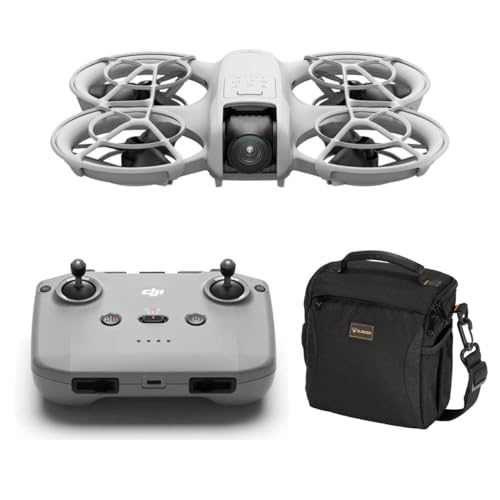
The DJI Neo is the smallest and lightest drone in this guide at 135 grams, and the easiest to launch, because it takes off from and lands on an open palm without a controller at all. This listing pairs the aircraft with the RC-N3 remote controller, adding the precision of physical sticks to the controller-free modes. The camera records 4K video with a 12-megapixel sensor, and electronic stabilization smooths the footage in place of a mechanical gimbal.
AI subject tracking sets the Neo apart for photography beginners. Whether the subject is cycling, hiking, or walking a dog, the drone follows within the frame and keeps the person centred. QuickShots modes include Dronie, Circle, Rocket, Spotlight, Helix, and Boomerang, and the built-in propeller guard protects fingers and walls during indoor practice. The short flight time is the trade-off, so carry a spare battery for a second round of clips.
Specs
- Camera: 4K video, 12-megapixel stills, CMOS sensor
- Stabilization: Electronic image stabilization
- Weight: 135 grams
- Flight time: Up to 18 minutes with one battery
- Transmission: Radio frequency link to the RC-N3 controller
- Controller: RC-N3 remote controller included
- Safety: Built-in propeller guard, palm takeoff and landing, AI subject tracking, QuickShots modes
- Tier: Budget
4. Potensic ATOM SE Expansion Kit Bundle

The Potensic ATOM SE Expansion Kit Bundle is the non-DJI option here, and it answers the most common beginner complaint: running out of battery mid-session. The bundle includes the ATOM SE aircraft, a parallel charging hub, and extra batteries for three batteries in total, so practice outings stretch far beyond a single charge. The camera records 4K video at 30 frames per second through a Sony CMOS sensor, with 12-megapixel stills and ShakeVanish stabilization.
GPS positioning holds the drone steady, and GPS auto return brings it back when the signal drops or the battery runs low. Brushless motors give the aircraft stronger lift and steadier handling in wind rated at level 5, and the transmission link reaches up to 4 kilometres with a live first-person view on a phone. Top speed reaches 16 metres per second in sport mode, enough pace for tracking a cyclist or a runner once basic controls feel natural. Electronic stabilization trails a mechanical gimbal in rough wind, so calm mornings give the best footage.
Specs
- Camera: 4K video at 30 frames per second, 12-megapixel stills, Sony CMOS sensor
- Stabilization: ShakeVanish electronic image stabilization
- Weight: Under 249 grams
- Flight time: Up to 31 minutes per battery, three batteries included
- Transmission: Up to 4 kilometres
- Controller: Remote controller included
- Safety: GPS auto return, GPS positioning, brushless motors, level 5 wind resistance
- Tier: Budget
5. DJI Mini 3

The DJI Mini 3 is the premium pick in this roundup, and it is the drone to choose when a beginner already knows that aerial photography will become a lasting hobby. Its 1/1.3-inch CMOS sensor is larger than the sensors in the Mini 4K and Mini 2 SE, capturing 48-megapixel stills alongside 4K HDR video. The larger sensor gathers more light, which shows in evening shots and shadow detail, and the 3-axis gimbal keeps video steady in wind.
True vertical shooting is the standout feature for anyone who posts to portrait-first platforms, because the camera rotates to record vertical video without cropping away resolution. Flight time reaches up to 38 minutes on a single battery, the longest in this guide. GPS auto return, one-tap takeoff and landing, and QuickShots round out the beginner safety net, and the aircraft still weighs under 249 grams. The premium tier is the only drawback, and it pays off only if the extra stills resolution and vertical video match real plans for sharing and printing.
Specs
- Camera: 4K HDR video at 30 frames per second, 48-megapixel stills, 1/1.3-inch CMOS sensor
- Stabilization: 3-axis mechanical gimbal
- Weight: Under 249 grams
- Flight time: Up to 38 minutes with one battery
- Transmission: Up to 10 kilometres
- Controller: RC-N1 remote controller included
- Safety: GPS auto return, one-tap takeoff and landing, QuickShots modes, true vertical shooting
- Tier: Premium
Which Beginner Drone Fits You
Start with the camera you will actually use. If 4K video and a mechanical gimbal matter, the DJI Mini 4K is the balanced choice, and the Mini 3 adds a larger sensor and vertical shooting. If the budget is tight, the Mini 2 SE keeps the gimbal and the flight experience while giving up 4K, and the Potensic ATOM SE bundle trades the mechanical gimbal for three batteries and a complete kit. If portability and selfies lead the list, the DJI Neo wins outright, since no other drone here launches from a palm.
Next, count the batteries. Beginners learn faster with a second or third battery in the bag, so a bundle can matter more than a small camera upgrade. Finally, think about where the drone will fly. Open parks, beaches, and countryside suit every model here, while the Neo handles tighter spaces best. Whichever model wins, start in a wide open area and keep the drone in sight.
Frequently Asked Questions
Do beginners need to register a drone under 249 grams?
Recreational flyers in the United States generally do not need FAA registration or Remote ID for a drone under 249 grams flown for fun, and every drone in this guide stays under that weight. Rules differ by country and by flying location, so check local regulations before the first flight.
What is the easiest drone for a complete beginner to fly?
The DJI Neo is the easiest to launch, because it takes off from a palm and follows a subject without a controller, while the DJI Mini 4K is the easiest full-featured drone to fly with a remote. Either one lets a new pilot focus on framing shots.
Is 4K video important on a first drone?
4K video matters when footage will be cropped, shown on a large screen, or kept for years, and the Mini 4K, Neo, ATOM SE, and Mini 3 all record it. The Mini 2 SE records 2.7K video instead, which still looks sharp on phones and laptops. A mechanical gimbal affects smoothness more than resolution does.
How long does a beginner drone battery last?
A single battery here lasts between 18 minutes on the DJI Neo and 38 minutes on the DJI Mini 3, with the Mini 4K, Mini 2 SE, and ATOM SE at up to 31 minutes each. Real flight time runs shorter in wind and cold, so spare batteries extend a session more reliably than one large battery.
Conclusion
A first drone should make flying feel simple and photography feel rewarding. The DJI Mini 4K is the best all-round choice for beginners, with stabilized 4K video, GPS return to home, and a mid-range tier that leaves room for spare batteries. The DJI Mini 2 SE brings the same flight experience to a budget tier, the DJI Neo fits in a pocket and follows its subject from a palm launch, the Potensic ATOM SE bundle stretches practice time with three batteries, and the DJI Mini 3 adds a larger sensor, vertical shooting, and the longest flight time. Pick the model that matches the camera and flight time that fits first, then practice in open space until the controls feel natural.
More from Amazon
Programs that pair well with the guide above. Offers and eligibility are set by Amazon and may change.
Free shipping on eligible items, Prime Video and more. Eligible new members can start with a free trial.
Start a Prime free trialAudiobooks and podcasts to listen to on the go. Eligible new members can start with a free trial.
Try Audible freeAd-free music streaming. Eligible new subscribers can start with a free trial.
Try Music Unlimited freeA free business account with business pricing and bulk-buying tools for work, shop or home office.
Create a business accountAs an Amazon Associate we earn from qualifying purchases.