Key takeaways
- Best all-rounder: Scarpa Maestrale RS — a medium-weight, medium-volume boot with a useful blend of touring comfort and downhill control.
- Best for long approaches and frequent tours: Scarpa F1 GT — light, efficient, and highly mobile, but less composed than a four-buckle freeride-touring boot at high speed.
- Best for aggressive skiing: Tecnica Zero G Tour Pro — one of the more downhill-oriented options, with a firm flex and a close, performance-focused fit.
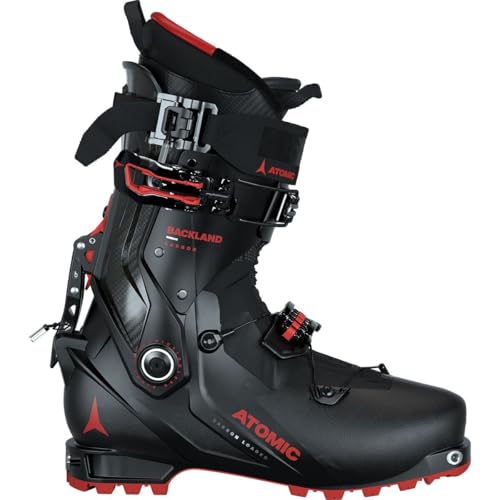
- Best for wide feet: Atomic Backland XTD 120 or 130 — a comparatively accommodating platform with strong binding compatibility.
- Best modern freeride-touring compromise: Dynafit Tigard 130 — designed for skiers who want a tech-compatible boot that feels closer to an alpine boot on the descent.
- Best lightweight option for experienced tourers: Salomon MTN Summit Pro — low weight, generous articulation, and a more uphill-focused character.
The best alpine touring boots for most skiers are the Scarpa Maestrale RS for a dependable balance of uphill mobility and downhill support, while lighter boots such as the Scarpa F1 GT suit long tours and stiffer models such as the Tecnica Zero G Tour Pro suit aggressive descents.
There is no single winner because touring boots trade weight and walk-mode range against cuff stiffness, fit, and binding compatibility. The right choice depends first on how much climbing you do, then on your foot shape and the bindings under your skis.
Our top picks

As an Amazon Associate we earn from qualifying purchases at no extra cost to you. Ratings are shown as listed on Amazon.
Best alpine touring boots by use case
- Best all-rounder: Scarpa Maestrale RS — a medium-weight, medium-volume boot with a useful blend of touring comfort and downhill control.
- Best for long approaches and frequent tours: Scarpa F1 GT — light, efficient, and highly mobile, but less composed than a four-buckle freeride-touring boot at high speed.
- Best for aggressive skiing: Tecnica Zero G Tour Pro — one of the more downhill-oriented options, with a firm flex and a close, performance-focused fit.
- Best for wide feet: Atomic Backland XTD 120 or 130 — a comparatively accommodating platform with strong binding compatibility.
- Best modern freeride-touring compromise: Dynafit Tigard 130 — designed for skiers who want a tech-compatible boot that feels closer to an alpine boot on the descent.
- Best lightweight option for experienced tourers: Salomon MTN Summit Pro — low weight, generous articulation, and a more uphill-focused character.
Comparison: what you gain and give up
| Boot | Approx. weight | Walk-mode movement | Downhill character | Fit tendency | Binding compatibility |
|---|---|---|---|---|---|
| Scarpa F1 GT | About 1,300 g per boot | Very high; approximately 60° cuff range | Light and progressive | Medium to slightly narrow | Tech bindings; check boot and binding specifications |
| Salomon MTN Summit Pro | About 1,400 g per boot | Very high; approximately 75° range | Moderate, favoring efficiency | Medium volume | Tech bindings; compatible inserts are required |
| Scarpa Maestrale RS | About 1,450 g per boot | High; approximately 60° range | Firm, balanced, and predictable | Medium, with a relatively secure heel | Tech bindings and compatible crampons |
| Atomic Backland XTD 120 | About 1,550 g per boot | High; approximately 54° range | Strong and supportive | Medium-wide, depending on shell size | Tech bindings; GripWalk-style sole compatibility depends on the binding |
| Tecnica Zero G Tour Pro | About 1,500–1,550 g per boot | Good; approximately 55° range | Very stiff and downhill-focused | Medium to medium-wide, highly moldable | Tech bindings; verify crampon and binding pairing |
| Dynafit Tigard 130 | About 1,550–1,600 g per boot | Good; approximately 70° range | Very supportive and freeride-oriented | Medium volume, with a close heel | Tech bindings; check compatibility with the exact binding model |
Weights vary with shell size, liners, straps, and manufacturer measuring methods, so use the figures as comparisons rather than guarantees. A larger boot can weigh noticeably more than the commonly published reference size.
How to choose between uphill range and downhill stiffness
If you climb more than you descend
Choose a lighter boot with a generous cuff rotation, low-friction walk mechanism, and a liner that does not absorb excessive moisture. The F1 GT and MTN Summit Pro make sense for long approaches, hut trips, and skiers who prioritize efficient skinning. Their lighter shells reduce leg fatigue, but they transmit less power when skiing heavy snow or driving wide skis.
Very high range of motion is useful only if the boot can move freely in your actual touring stance. Test the boot with the liner installed and the buckle or power strap relaxed. A shell can advertise a large movement angle while the liner, tongue, or calf shape limits practical movement.
If the descent is the main event
Prioritize a supportive cuff, a secure heel, a stiff tongue, and a ski-walk lever that locks positively. The Zero G Tour Pro and Tigard 130 are appropriate starting points for strong skiers using wider skis or skiing steep, variable snow. The compromise is extra weight and more effort during kick turns and long flat exits.
Do not choose flex numbers as if they were standardized. A “130” touring boot is not directly comparable with a “130” alpine boot. Shell geometry, liner thickness, buckle position, forward lean, and your leg leverage can make two boots with the same label feel very different.
Fit by foot shape, not just last width
Last width is the internal width around the forefoot, but it does not describe the whole fit. Instep height, heel volume, toe-box shape, and shell length often matter more than a two-millimeter difference in published last measurements.
- Narrow heel and low-to-medium instep: Look first at the Maestrale RS, F1 GT, or Tigard 130. These generally provide a more secure rear-foot feel than very roomy touring shells.
- Medium feet: The Maestrale RS, MTN Summit Pro, and Zero G Tour Pro are sensible comparison points. Bootfitting can adjust many details, but it cannot reliably make an excessively wide shell narrow.
- Wide forefoot: Try the Backland XTD family and higher-volume versions of performance touring boots. A wide toe box is useful only if the heel remains held without excessive buckle pressure.
- High instep: Pay attention to tongue pressure and buckle position. A boot that feels comfortable standing still may restrict circulation once buckled for climbing.
- Different-sized feet: Fit the larger foot first, then use footbeds, shell work, or liner adjustments to manage the smaller foot. Do not downsize both boots to solve one loose heel.
For sizing, wear the socks you will tour in and check shell fit with the liner removed. A common starting point is roughly 10–15 mm of space behind the heel in a performance fit and around 15–20 mm for a comfort-oriented fit, but foot shape and skiing style can change the appropriate measurement. A qualified bootfitter should make the final call, especially if you have persistent pressure or numbness.
Tech-binding and crampon compatibility
Most boots in this category use metal tech inserts at the toe and heel, but “has tech inserts” does not automatically mean every tech binding is safe. Check the exact boot, binding, and sole combination for manufacturer approval. Some bindings require specific toe-insert geometry, while some boots use sole designs that affect release or heel-height adjustment.
Also check crampon fit. Automatic crampons generally need a defined heel welt and toe geometry; semi-automatic models may be a better match for boots with less conventional touring soles. Bring the actual boot to a shop and confirm that the crampon sits tightly without rocking.
Hybrid bindings and frame-style bindings can accept more boot types, but they add weight and may not eliminate the need to verify sole standards. If you switch between tech bindings and alpine bindings, confirm whether the boot sole is compatible with both rather than assuming a familiar appearance means compliance.
A practical decision matrix
| Your situation | Priority | Best starting choice | Why |
|---|---|---|---|
| New to touring, occasional trips | Forgiving fit and balanced performance | Scarpa Maestrale RS | Manageable uphill weight without giving up useful downhill support |
| Weekly tours or long spring objectives | Low weight and cuff mobility | Scarpa F1 GT or Salomon MTN Summit Pro | Less weight to lift and more natural stride movement |
| Short climbs, steep descents, wide skis | Stiffness and power transfer | Tecnica Zero G Tour Pro or Dynafit Tigard 130 | More stable when the snow is heavy, firm, or inconsistent |
| Wide forefoot or high-volume foot | Shell room without heel slip | Atomic Backland XTD 120/130 | A useful wide-foot comparison point with substantial downhill support |
Ownership realities: what wears out first
Touring boots usually show wear first at the toe and heel contact surfaces, walk-mode pivots, buckles, and liner cuffs. Scraping ski crampons or boot crampons against the shell can damage plastic edges, while packed snow around the tech inserts can prevent reliable binding engagement.
After each tour, remove the liners and dry both liners and shells separately. Keep the boots away from direct high heat, which can deform plastic and shorten liner life. Brush snow and grit from the walk mechanism, and inspect the pivot hardware before a major trip. Replace worn buckles, straps, and sole components rather than compensating with excessive tightening.
A simple cost calculation explains why fit matters: a $700 boot used for 50 touring days costs $14 per day before resale, while a $900 boot used for 100 days costs $9 per day. The cheaper purchase is not automatically better value if discomfort, poor fit, or inadequate downhill control causes you to stop using it.
Bottom line
Choose the Maestrale RS if you want one dependable answer for mixed touring. Choose the F1 GT or MTN Summit Pro when climbing efficiency dominates. Choose the Zero G Tour Pro or Tigard 130 when downhill performance matters most, and start with the Backland XTD line when your foot needs more room. Before buying, confirm shell fit, actual walk-mode clearance, tech-binding approval, and crampon compatibility together; those checks matter more than a headline weight or flex number.