Key takeaways
- 120 g plain flour
- 30 g cornstarch or cornflour
- 1 teaspoon baking powder
- ¾ teaspoon fine salt
- 240 ml very cold beer
- Optional: ¼ teaspoon black pepper, paprika, or garlic powder
Best Beer Batter Recipe for Crispy Fried Food
The best beer batter recipe for consistently crisp fried food uses 120 g plain flour, 30 g cornstarch, 240 ml very cold lager, 1 teaspoon baking powder, and a short 10-minute rest before frying at 175–180°C.
The dependable base ratio
This ratio produces a thin-to-medium coating that clings to fish, onion rings, mushrooms, pickles, shrimp, and vegetables without becoming doughy. The flour provides structure, cornstarch reduces gluten formation and adds crunch, beer supplies liquid and carbonation, and baking powder creates small pockets in the crust.
Our top picks
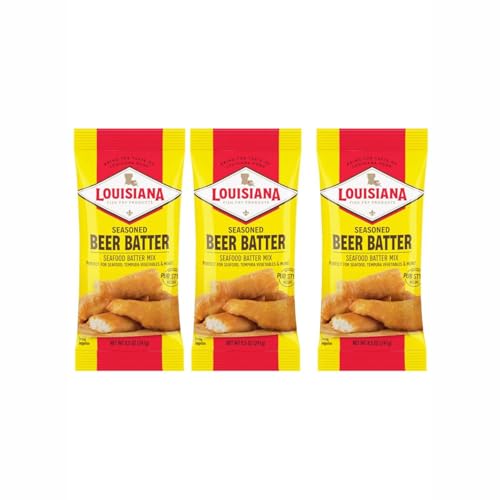
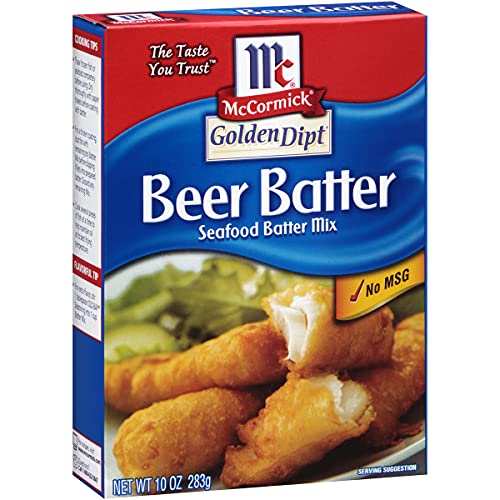


As an Amazon Associate we earn from qualifying purchases at no extra cost to you. Ratings are shown as listed on Amazon.
- 120 g plain flour
- 30 g cornstarch or cornflour
- 1 teaspoon baking powder
- ¾ teaspoon fine salt
- 240 ml very cold beer
- Optional: ¼ teaspoon black pepper, paprika, or garlic powder
Whisk the dry ingredients together. Pour in the cold beer and stir only until no large dry patches remain. A few small lumps are preferable to vigorous mixing, which develops gluten and makes the coating less delicate. The batter should fall from a spoon in a continuous ribbon and briefly leave a visible line on the surface.
Which beer makes the crispiest batter?
Beer style changes flavor more than texture, provided the beer is cold and reasonably carbonated. A pale lager is the safest all-purpose choice because it is light, crisp, and unlikely to overpower delicate food. Wheat beer gives a slightly fuller, more aromatic crust, while pale ale adds bitterness and malt character.
| Beer style | Best use | Flavor result | Recommended amount | Practical verdict |
|---|---|---|---|---|
| American or European pale lager | Fish, shrimp, onion rings | Clean and lightly malty | 240 ml | Best default choice |
| Pilsner | White fish and vegetables | Very crisp with mild hop flavor | 240 ml | Excellent for delicate ingredients |
| Wheat beer | Chicken, shrimp, cauliflower | Soft, bready, slightly fruity | 230–240 ml | Good when more flavor is wanted |
| Pale ale | Onion rings and robust vegetables | More bitter and aromatic | 220–230 ml | Use with strongly flavored foods |
| Stout or porter | Mushrooms, cheese, hearty vegetables | Dark, roasted, malty | 220–230 ml | Flavor-forward, not an all-purpose option |
| Alcohol-free lager | When avoiding alcoholic beer | Light and usually less bitter | 240 ml | Works if well chilled and carbonated |
Avoid heavily sweet, strongly sour, or very high-bitterness beers unless their flavor is intentional. The alcohol itself is not the main source of crispness; carbonation, low batter temperature, starch, and correct oil heat matter more.
How the flour-to-beer ratio changes the coating
The 150 g total dry ingredient to 240 ml beer ratio is a useful middle ground. Adjust it according to the food and the texture you want.
| Style | Dry ingredients | Beer | Result | Best for |
|---|---|---|---|---|
| Light coating | 150 g | 270 ml | Thin, lacy, quick-setting crust | Thin fish fillets and vegetables |
| Balanced coating | 150 g | 240 ml | Crisp outside with moderate coverage | Most foods |
| Thick coating | 150 g | 210 ml | Heavier, more substantial crust | Large fish pieces and onion rings |
For especially wet ingredients, use the balanced batter but dust the food lightly with plain flour first. This dry layer absorbs surface moisture and gives the batter something to grip. Do not coat food heavily with flour, or the finished crust can become pasty.
Resting time: short is better
Rest the mixed batter for 10 minutes in the refrigerator, then stir once before dipping. This gives the flour time to hydrate and produces more even coverage. A rest of 20–30 minutes can make the batter slightly smoother, but it also allows carbonation to escape and gluten to develop if the batter is stirred repeatedly.
For the crispest result, keep the batter cold while the oil heats. If frying several batches, set the bowl over ice or return it to the refrigerator between batches. Make a fresh batch rather than keeping batter overnight; the leavening and carbonation will be less effective, and the texture will suffer.
Frying temperature and method
Heat a neutral oil, such as rapeseed, canola, peanut, or sunflower oil, to 175–180°C. This range is hot enough to drive off moisture quickly without darkening the coating before the food cooks through.
- Pat the food dry with paper towels. Remove excess surface moisture and trim pieces to a similar thickness.
- Fill a heavy pot no more than one-third full with oil. The oil needs room for bubbling and displacement.
- Bring the oil to 175–180°C using a reliable clip-on or instant-read thermometer.
- Dip one piece at a time, allow excess batter to drip for two or three seconds, and lower it gently into the oil.
- Fry in small batches. Leave space between pieces so the oil temperature does not collapse.
- Turn larger pieces once and fry until the coating is deep golden and the food is cooked through.
- Drain on a wire rack rather than directly on paper towels. Air circulation keeps the underside from steaming.
As a practical guide, small shrimp and thin vegetable pieces may take 2–3 minutes, onion rings about 3–4 minutes, and medium fish pieces about 4–6 minutes. Timing depends on thickness, so use appearance and food-safe internal temperatures where appropriate rather than relying on time alone.
Why 175–180°C matters
If the oil falls below about 170°C, the batter absorbs more oil and can turn pale and soft. Above approximately 185–190°C, the outside may brown before thick food cooks, and crumbs can burn between batches. A thermometer is more useful than judging heat by the speed of bubbles alone.
Decision guide by food and experience
| Your situation | Choose | Why |
|---|---|---|
| First time making beer batter | Cold pale lager and the balanced ratio | Neutral flavor and predictable thickness |
| Delicate white fish | Pilsner, 270 ml beer per 150 g dry ingredients | Light crust that does not dominate the fish |
| Thick onion rings or large fillets | Pale lager, 210–220 ml beer | Thicker batter clings better to broad surfaces |
| Strongly flavored vegetables or mushrooms | Wheat beer or pale ale | More malt and aroma can stand up to the ingredient |
| Small pot or limited oil | Small batches and smaller pieces | Prevents dangerous overflow and excessive temperature loss |
| Frequent frying | Thermometer, wire rack, and fine-mesh skimmer | These tools improve consistency more than an elaborate batter |
Common mistakes and ownership realities
The first thing to wear out in repeated frying is usually the thermometer or its probe, followed by the cooking oil itself. Replace oil when it becomes unusually dark, foamy, sticky, or develops a sharp stale odor. Strain it after cooling if it is still clean, but do not keep reusing oil indefinitely; burnt batter particles accelerate deterioration.
Clean the pot only after the oil has cooled completely. Never pour oil down a drain. Transfer used oil to a sealed container for appropriate disposal, then wipe out crumbs before washing the pot. A fine-mesh skimmer is useful for removing loose batter during cooking, while a wire rack prevents the crisp coating from becoming soggy during serving.
- Warm beer produces a heavier, less crisp coating.
- Overmixing creates a tougher crust.
- Wet food causes batter to slide off.
- Overcrowding lowers the oil temperature.
- Covering fried food traps steam and softens it.
- Stacking pieces on a plate has the same steaming effect.
Final recommendation
For the widest range of fried foods, use a cold pale lager with 120 g plain flour, 30 g cornstarch, 1 teaspoon baking powder, and 240 ml beer. Rest it for 10 minutes, maintain 175–180°C oil, fry in small batches, and drain on a rack. Choose the thinner ratio for delicate ingredients and the thicker ratio for large or uneven pieces; those adjustments matter more than selecting an expensive or unusual beer.