Best Diorama Bases
The best diorama bases are sealed MDF or plywood for most modelers, rigid acrylic for clean modern displays, and carved foam for lightweight terrain with complex elevation changes. The right choice depends less on appearance alone than on scale, scene weight, available space, transport needs, and how often you plan to rebuild the scene.
Quick comparison: which base material suits your project?
| Base material | Typical sizes | Approx. weight at 200 × 200 mm | Surface finish | Best for | Main limitation |
|---|---|---|---|---|---|
| MDF, 6–12 mm | 100–600 mm square or rectangular | 250–600 g | Flat, paintable, easy to texture | Most static scenes, buildings, figures, vehicles | Swells if water-based products reach unsealed edges |
| Birch plywood, 6–12 mm | 150–900 mm and custom cut | 180–450 g | Flat, strong, slightly visible grain | Large scenes and repeated handling | More expensive and may need sanding |
| Extruded polystyrene foam, 20–50 mm | 100–1,000 mm | 20–90 g | Carvable, rough or sculpted | Rock, trenches, hills, fantasy terrain | Vulnerable to dents and solvent-based products |
| Rigid acrylic, 3–8 mm | 100–500 mm | 250–700 g | Gloss, satin, mirror, transparent | Product-style displays and clean interiors | Scratches and shows dust easily |
| Plaster or resin casting | 80–400 mm | 500 g–2 kg | Stone, concrete, brick or paving texture | Ruins, streets, masonry and historical scenes | Heavy, brittle and difficult to modify |
Best overall: sealed MDF with a finished edge
For most 1:35, 1:48, 1:72 and 28–32 mm figure dioramas, a 6–9 mm MDF base offers the best balance of price, stiffness and customization. It stays flat under ordinary scenic materials, accepts PVA glue and acrylic paint, and can be cut, drilled or sanded with common workshop tools.
Our top picks
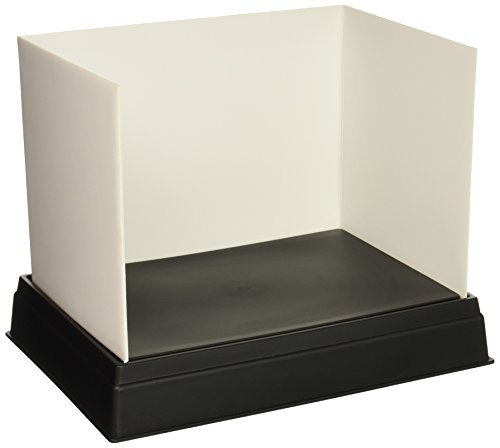 Woodland Scenic Project Base and Backdrop
- Use these wonderful embellishments alone or on your…
- A fun addition to all your paper crafting…
- Made in china
 Segolike 1/35 Scale Wooden Shelf Base for
- Material: Wooden
- Natural marking on the wood make it look…
- Good for grass or other painted model architecture…
 Falling in Art Wood Round Base-Hand Casting
- Classic Colored Wooden Base: Made of colored skinned…
- Small and Exquisite: This hand casting base comes…
- Multiple Use: Our wood sculpture base is not…
As an Amazon Associate we earn from qualifying purchases at no extra cost to you.
Choose MDF when the scene includes a building, vehicle, figures or a moderate amount of plaster and rubble. A raised edge or separate wooden trim makes the display look finished and prevents loose gravel from falling onto furniture. Seal the top, sides and underside before applying wet terrain products. Two thin coats are safer than one heavy coat because they reduce the chance of the board curling.
A practical size rule is to leave 15–25 mm of clear space between the largest object and the nearest edge. For example, a 1:35 tank measuring approximately 250 mm long usually needs a base at least 300–350 mm long once you allow room for ground texture, a road edge and visual breathing space.
Best for large or frequently handled scenes: birch plywood
Plywood is the stronger choice when a diorama will be transported to exhibitions, stored vertically or built on a footprint larger than about 400 mm. It is less prone to edge swelling than MDF and generally offers a better strength-to-weight ratio. A 9 mm plywood panel can support a substantial building or plaster section without feeling excessively heavy.
The trade-off is preparation. Cut edges may need sanding, and the wood grain can show through thin paint. Fill visible edges with wood filler or cover them with a trim strip. Plywood is particularly useful for modular scenes: screw or dowel two panels together, then disguise the joint with removable road sections, fencing or vegetation.
Best for terrain and elevation: extruded polystyrene foam
Carved extruded polystyrene is the easiest way to create slopes, embankments, shell holes and multi-level ground without making the base heavy. It is well suited to fantasy battlefields, rural landscapes, railway scenes and ruined urban settings. Foam can be shaped with a hot-wire cutter, rasp, hobby knife or coarse abrasive tool.
Foam works best as a terrain layer attached to a rigid MDF or plywood foundation. Used alone, a thick foam slab can flex, dent and crack around the edges. For a durable build, glue 20–30 mm foam to a 6–9 mm wooden base, then cover vulnerable edges with thin card, hard plaster or textured paste.
Do not assume every adhesive or paint is foam-safe. Solvent-based contact adhesives, some spray paints and certain automotive products can melt polystyrene. Use products specifically labeled as compatible, or test them on a scrap piece first.
Best for clean presentation: acrylic and finished display plinths
Acrylic bases are appropriate when the base should look like part of a designed display rather than a patch of terrain. Clear acrylic suits science-fiction interiors, water effects and minimalist figure presentations. Black, white or translucent acrylic works well for architectural models and product-style scenes.
Gloss surfaces amplify fingerprints and fine scratches, while satin finishes hide handling marks better. Acrylic also reflects overhead lighting, so a highly polished base may look impressive in one room and distracting in another. Use a soft microfiber cloth and avoid abrasive cleaners. If the scene includes heavy plaster or a tall structure, choose a thicker plate or attach it to a wooden sub-base for extra stability.
How size and stability affect the result
A base should be wide enough to prevent tipping, not merely large enough to contain the scenery. As a starting point, keep the combined center of mass inside the inner 70–80% of the base footprint. Tall trees, walls and buildings close to an edge can make a technically large base unstable.
| Scene type | Common scale | Suggested minimum base | Recommended thickness | Useful finish |
|---|---|---|---|---|
| Single figure or small vignette | 1:35, 1:48 or 28–32 mm | 100 × 100 mm | 6–9 mm | Painted MDF, wood trim or acrylic |
| One vehicle with ground detail | 1:35 or 1:48 | 300 × 200 mm | 9–12 mm | Sealed MDF or plywood |
| Small building scene | 1:72 to 1:35 | 300 × 300 mm | 9–12 mm | Wood base with foam terrain |
| Railway or street section | 1:87, 1:72 or 1:48 | 400 × 200 mm | 9–12 mm | Plywood with modular details |
| Large fantasy or battle scene | 28–32 mm | 600 × 400 mm or larger | 12 mm plus bracing | Plywood foundation with foam terrain |
Decision matrix for common buying situations
- Lowest cost and beginner-friendly: choose a pre-cut MDF board, seal it, and add a thin foam terrain layer. It allows mistakes without sacrificing rigidity.
- Limited shelf space: use a rectangular base rather than a square one and keep the depth between 120 and 200 mm. This is especially effective for streets, walls and railway platforms.
- Frequent transport: choose plywood, rounded corners and a recessed underside for rubber feet. Avoid unsupported plaster edges.
- Maximum customization: combine plywood or MDF with removable foam blocks. You can change elevation without rebuilding the structural base.
- Premium minimalist display: choose acrylic or a professionally finished wooden plinth, with the scene limited to a few carefully positioned elements.
- Wet, muddy or snow-covered scene: use sealed plywood or MDF, raise the scenic surface slightly, and seal the finished terrain after it has fully dried.
Worked sizing and cost calculation
Suppose a 1:35 vehicle is 250 mm long and 90 mm wide. Adding 25 mm of margin at the front and rear gives a minimum length of 300 mm. Adding 25 mm on each side gives a minimum width of 140 mm. A 300 × 180 mm base is therefore a better practical choice because it leaves room for a road edge, track marks and one or two accessories.
If a 300 × 180 mm MDF base costs roughly $8–$15 and is used for a single permanent display, the base contributes $8–$15 to that project. A modular plywood panel costing $20–$35 may be cheaper over time if it is reused for three interchangeable scenes: approximately $6.70–$11.70 per scene before scenic materials. This is one reason a durable foundation can make sense for builders who frequently change subjects.
Ownership details that are easy to overlook
The first parts to wear are usually exposed corners, scenic grass along the edge, and thin plaster around doors or road borders. Round or chamfer the corners before construction, and protect fragile edges with a low wall, curb or wooden trim. Store finished dioramas under a cover; dust settles most visibly on dark ground texture and glossy acrylic.
Vacuum loose flocking with a low-power setting and a piece of mesh over the nozzle. Do not saturate MDF while cleaning. If a base begins to rock, check whether the underside has warped or whether one rubber foot has detached. Adding random layers of scenery to correct a warped board rarely works; replacing or bracing the foundation is more reliable.
Final verdict
For the widest range of diorama projects in 2026, buy a sealed 6–9 mm MDF base with enough margin around the subject and add foam only where elevation is needed. Move up to birch plywood for large or portable scenes, choose acrylic when presentation and clean lines matter more than terrain realism, and reserve plaster or resin bases for scenes that specifically benefit from molded masonry or paving. A rigid foundation, sensible proportions and a finish compatible with the intended surface will matter more than an elaborate material choice.
More from Amazon
Programs that pair well with the guide above. Offers and eligibility are set by Amazon and may change.
Free shipping on eligible items, Prime Video and more. Eligible new members can start with a free trial.
Start a Prime free trialAudiobooks and podcasts to listen to on the go. Eligible new members can start with a free trial.
Try Audible freeAd-free music streaming. Eligible new subscribers can start with a free trial.
Try Music Unlimited freeA free business account with business pricing and bulk-buying tools for work, shop or home office.
Create a business accountAs an Amazon Associate we earn from qualifying purchases.