Key takeaways
- Small home shop: a 10-inch benchtop or compact floor-standing saw with roughly 4–6 inches of resaw capacity, a 12–14-inch throat, and a 1/2–1 HP motor.
- General-purpose workshop: a 14-inch floor-standing saw with 10–12 inches of resaw height, a 14-inch throat, and a 1-1/4–2 HP motor.
- Frequent resawing or furniture production: a 17–18-inch saw with at least 12 inches of resaw height, a 16–18-inch throat, a 2–3 HP motor, and a dedicated dust collector.
- Mobile or occasional use: a portable corded bandsaw can cut curves and small parts, but it is not a practical replacement for a stationary resaw machine.
The best band saws for woodworking depend less on the largest blade wheel than on whether the saw’s resaw height, throat capacity, motor, footprint, and dust collection match your stock and your shop.
Our top picks
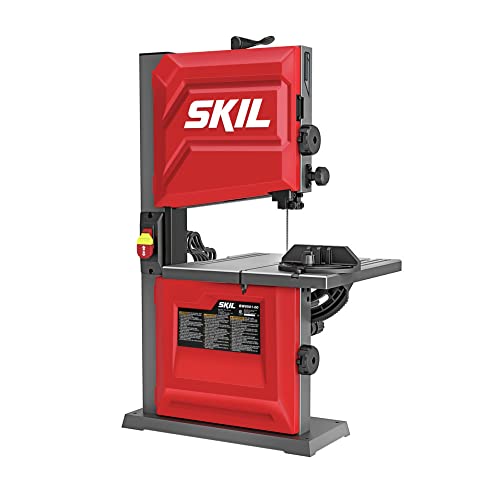


As an Amazon Associate we earn from qualifying purchases at no extra cost to you. Ratings are shown as listed on Amazon.
Quick picks by shop size
- Small home shop: a 10-inch benchtop or compact floor-standing saw with roughly 4–6 inches of resaw capacity, a 12–14-inch throat, and a 1/2–1 HP motor.
- General-purpose workshop: a 14-inch floor-standing saw with 10–12 inches of resaw height, a 14-inch throat, and a 1-1/4–2 HP motor.
- Frequent resawing or furniture production: a 17–18-inch saw with at least 12 inches of resaw height, a 16–18-inch throat, a 2–3 HP motor, and a dedicated dust collector.
- Mobile or occasional use: a portable corded bandsaw can cut curves and small parts, but it is not a practical replacement for a stationary resaw machine.
Among recognizable options, the Rikon 10-3061 suits space-conscious users, the Laguna 14|12 is a strong general-purpose choice, the Jet JWBS-14SFX targets a similar mid-size shop, and the Powermatic PM1500 or Harvey Alpha HW615 make more sense when thick stock, long sessions, and premium adjustment matter more than floor space.
What matters more than the wheel diameter
Resaw height
Resaw height is the maximum thickness of material that can pass between the table and the upper blade guide. It is the deciding specification for turning boards into thinner panels or veneers. A saw with a 6-inch capacity cannot resaw an 8-inch board safely, regardless of its motor rating.
Allow clearance for the actual workpiece and guide adjustment. If you regularly process 8-inch lumber, a nominal 8-inch machine leaves little margin for uneven stock, a tall fence, or a future blade upgrade. A 10–12-inch capacity is more comfortable for furniture work, while 14 inches or more is useful for large slabs and production resawing.
Throat capacity
Throat capacity is the distance from the blade to the frame. It limits the width of a curved cut and the maximum panel size that can be maneuvered without striking the column. A 10–12-inch throat works for most small furniture parts. A 14-inch throat is a useful middle ground; 16–18 inches gives noticeably more room for wide curves and large panels.
Motor power and usable power
Motor horsepower is only part of the story. A rigid frame, stable blade guides, adequate blade tension, and a heavy table help transfer power to the cut. A 1 HP saw can handle general curves and moderate resawing with a sharp, properly selected blade. A 2 HP machine is more forgiving with wide blades and dense hardwoods. For sustained resawing, 3 HP reduces bogging and shortens the time the motor spends under heavy load.
Do not compare horsepower figures without checking whether they are rated input or output. Also confirm the required voltage and circuit. A 2 HP saw may need a 240-volt circuit, which can add electrical installation cost even when the machine itself fits the budget.
Head-to-head comparison for real workshops
| Machine or class | Approx. resaw height | Approx. throat | Motor range | Typical footprint and use |
|---|---|---|---|---|
| 10-inch compact saw, such as Rikon 10-3061 | About 5 inches | About 10 inches | 1/2–1 HP | Roughly 2 x 2 ft; curves, small stock, light resawing |
| 14-inch general-purpose saw, such as Laguna 14|12 | About 12 inches | About 14 inches | About 1-3/4 HP | Approximately 3 x 3 ft; furniture, joinery, regular resawing |
| 14-inch open-base saw, such as Jet JWBS-14SFX | About 13 inches | About 14 inches | About 1-3/4 HP | Approximately 3 x 3 ft; versatile shop saw with cabinet access |
| 17–18-inch premium saw, such as Powermatic PM1500 | About 14 inches | About 15 inches | About 3 HP | About 3.5 x 3.5 ft; heavy resawing and long sessions |
| 18-inch industrial-style saw, such as Harvey Alpha HW615 | About 12–14 inches, depending on configuration | About 16 inches | About 3 HP | About 4 x 4 ft; large workpieces and production-oriented use |
Dimensions and configurations can vary by revision, stand, wheel kit, and electrical version, so confirm the manufacturer’s current specification sheet before ordering. The table is intended to show the practical jump between categories, not replace a final fit check.
Best choice by situation
| Your situation | Best fit | Why | What to compromise on |
|---|---|---|---|
| Limited floor area and occasional use | 10-inch compact saw | Small footprint, lower purchase cost, adequate for curves and thin stock | Resaw height, throat, vibration control |
| One saw for a typical furniture shop | 14-inch, 10–12-inch-resaw model | Balances capacity, power, blade availability, and footprint | Cannot match an 18-inch saw on very wide boards |
| Frequent hardwood resawing | 17–18-inch, 2–3 HP saw | More tension capacity, larger throat, less motor strain | Higher cost, larger dust collector, heavier installation |
| Small budget but demanding cuts | Used mid-size floor-standing saw in good condition | More capacity per dollar than a new compact machine | Possible bearing, tire, guide, and electrical repairs |
| Shared garage or mobile work area | Compact saw with locking casters or a portable corded saw | Easier storage and setup between projects | Less stability and slower thick-stock cutting |
Dust collection: size the system to the cut
A bandsaw’s dust port does not guarantee good extraction. Fine dust often falls below the lower wheel, exits around the blade slot, or remains inside the cabinet. A 1-1/2-inch hose may be adequate for a compact saw, but a stationary 14-inch or larger machine generally benefits from a 4-inch connection and a collector capable of maintaining useful airflow through the hose.
As a practical planning figure, allow roughly 350–500 cubic feet per minute at the machine for a small or mid-size saw, and around 500–800 CFM for a larger cabinet saw with a well-sealed lower enclosure. These are airflow targets at the tool, not the collector’s unrestricted rating. Long hoses, sharp bends, undersized fittings, and clogged filters reduce performance.
For a 14-inch saw in a garage, budget space for the saw’s approximately 3 x 3-foot footprint plus at least 2 feet at the front and blade side for feeding and turning stock. A dust collector may add another 2 x 3 feet. The machine can technically fit in a corner while remaining unusable in practice.
Setup steps that prevent poor cuts
- Install the correct blade. Use a narrow blade with finer teeth for tight curves; use a wider blade with fewer teeth per inch for straight resawing. The blade should have enough tooth gullets to clear the material thickness.
- Set tracking before tension. Center the blade on the crown of the wheel, then apply only the tension recommended for that blade width and saw. Excess tension accelerates bearing and tire wear.
- Adjust guides close to the stock. Set thrust bearings just behind the blade and side guides slightly behind the tooth gullets. Guides positioned too far away permit twisting; guides touching the teeth can damage the blade.
- Align the fence with drift. Make a test cut, observe the direction the blade naturally travels, and angle the fence to follow that path. Forcing the fence parallel to the table can produce binding and wandering cuts.
- Connect dust extraction before cutting. Clear accumulated dust from the lower wheel area and verify that the hose does not restrict table movement.
Ownership costs and parts that wear first
Blades are the main consumable. A quality resaw blade may cost roughly $25–$70 depending on length, width, tooth pattern, and whether it is carbide-tipped. Keep separate blades for curves and resawing rather than asking one blade to do everything. Tires, guide bearings, thrust bearings, and wheel belts are the next parts likely to need attention.
A simple cost calculation explains why the larger saw can be economical for frequent work. Suppose a compact saw takes 20 minutes to resaw a board and a larger 3 HP saw takes 8 minutes. Over 60 boards, the larger saw saves 12 hours of machine time. If those sessions occur weekly, reduced frustration and fewer stalled cuts may matter more than a modest difference in electricity use. For only six boards per year, the compact machine’s lower purchase and installation cost usually wins.
Inspect tires for cracks or glazing, check blade tension after storage, vacuum the cabinet rather than blowing dust into bearings, and replace a blade when it requires excessive force or leaves burn marks despite correct setup. Common mistakes include using too fine a blade for thick stock, pushing faster when the blade is dull, and buying a saw whose dust collector or electrical circuit cannot support it.
Bottom line
Choose a compact 10-inch saw when space and occasional use dominate. Choose a 14-inch machine such as the Laguna 14|12 or Jet JWBS-14SFX when you want the best balance for general woodworking. Move to the Powermatic PM1500, Harvey Alpha HW615, or a comparable 17–18-inch saw when resawing wide hardwood is routine rather than occasional. Before buying, mark the machine’s footprint on the floor, add feeding clearance, confirm the circuit, and size dust collection for the actual hose and filter—not the number printed on the collector’s box.