Key takeaways
- Five steady tripods for snipe photography in marshes and wet meadows, from a light first pick to a tall multi-angle kit, with honest trade-offs.
Snipe photography rewards patience more than speed. A common snipe, Gallinago gallinago, feeds in soft marsh ground at dawn, probes mud with a bill that looks far too long for its body, and melts into rushes at the first hint of movement. You do not chase this bird. You arrive before it, settle into one quiet spot, and wait. That is exactly why a tripod matters here: once the bird appears, a steady support lets you frame and focus without the shake that ruins a long lens image in weak light.
As an Amazon Associate, we earn from qualifying purchases.
This guide covers five tripods that suit marsh edges and wet meadows, from a light first pick to a tall multi-angle kit. Every one of them has honest trade-offs, and this guide names them plainly.
Why Snipe Photography Calls for a Tripod
Snipe live where the ground is soft, the light is low, and the bird is small. Marshes and wet meadows hold water under the grass, so the best snipe spots are also the spots where a photographer sinks or slips. A tripod gives you a stable platform for a long lens in exactly these conditions, and it lets you keep the camera aimed at one feeding patch for a long stretch without tiring your arms.
The right tripod for snipe work balances four things: enough height to shoot over reeds while standing, enough load capacity for a long lens, low enough weight to carry across wet ground, and leg locks you can work with cold, damp hands.
Use a tripod only when standing still, on firm ground at the marsh edge, with walkways kept clear. It is not a monopod replacement: if you need to move with the bird, pack it down and carry it.
Snipe Is Not an Oystercatcher
Both birds are waders, and both turn up on the same birding lists, but snipe and oystercatcher belong to different families and look nothing alike in the field. The common snipe sits in the family Scolopacidae. The oystercatcher sits in the family Haematopodidae, in the genus Haematopus.
A snipe is a secretive marsh bird, mottled brown and buff, with bold stripes along the crown and back, and a very long straight bill built for probing soft mud. It feeds in cover, freezes when alarmed, and often flushes at your feet with a sharp zigzag flight. An oystercatcher is larger, boldly black and white, with a long straight bill in bright orange-red, pink legs, and a loud piping call. It feeds in the open on shores and estuaries, in plain view.
Confusing the two leads to the wrong plan. If you walk an open shore looking for a bird that hides in marsh grass, you will find nothing. Learn the snipe first: small, streaked, long-billed, and hidden. Then pick a tripod for low, still, patient work at a marsh edge.
1. Amazon Basics 60-Inch Lightweight Tripod

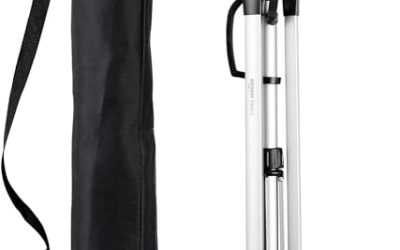
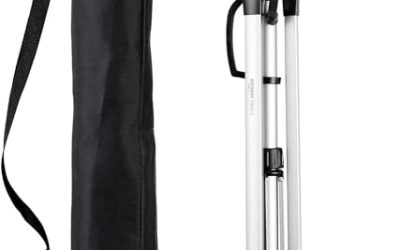
The Amazon Basics 60-inch tripod is the simplest way into tripod photography, and for a first snipe morning it is a fair choice. It weighs about 2.72 pounds, extends to 60 inches with the centre column raised, and folds down for carrying in the included bag. The three-way head gives separate tilt and swivel control, which suits slow, deliberate framing on a bird that feeds in one spot.
Its load figure is 6.6 pounds, which covers a mirrorless body with a modest telephoto lens, but not a heavy prime. Keep the lens short, keep the centre column low, and the tripod holds steady. Raise the column to full height on a windy marsh edge and you will see shake in the viewfinder.
Specs
- Max height 60 inches; min height 25 inches; weight 2.72 lb; load capacity 6.6 lb; 3-way pan-and-tilt head; quick release plate; two bubble levels; carry bag included; aluminium legs.
The trade-offs are plain: plastic parts in the leg locks and head, a narrow stance that needs care on soft ground, and a load ceiling that rules out big glass. For a beginner with a modest lens, it does the job. For a photographer who already owns a heavy telephoto lens, it is the wrong tool.
2. Manfrotto Compact Action Tripod Kit

The Manfrotto Compact Action is a small, light tripod with a clever head, and it suits photographers who walk a long way to a marsh and want a support that disappears into a day pack. It weighs 2.56 pounds, folds to 17.83 inches, and reaches 61.02 inches with the centre column extended. Five leg sections let it pack short, and the aluminium legs with techno polymer parts keep the weight down.
The head is the reason to pick this model. A joystick grip with a scroll-wheel lock lets you aim and lock with one hand, which matters when a snipe appears and you have seconds to frame the shot. The circular quick release plate fits by hand, with no coin or tool needed, and the head tilts 90 degrees for a vertical frame.
Specs
- Max height 61.02 inches; min height 17.32 inches; folded length 17.83 inches; weight 2.56 lb; safety payload 4.4 lb; 5 leg sections; joystick head with scroll-wheel lock; quick release plate; model MKCOMPACTACN-BK.
The trade-off is the payload. At 4.4 pounds, this tripod suits a light mirrorless body and a compact telephoto lens, and nothing heavier. Put a large lens on it and the head will creep until the bird drifts out of frame. Treat it as a walking tripod for light kits, not as a heavy lens platform.
3. Vanguard Alta Pro 2+ 263AB100

The Vanguard Alta Pro 2+ 263AB100 is the most capable tripod in this guide, and the one that best suits a photographer who already owns a serious telephoto lens. Its multi-angle central column swings from vertical to horizontal, which lets you shoot low over marsh grass without spreading the legs into the mud. The legs lock at 25, 50, and 80 degree angles, so you can drop the camera close to the ground for a snipe feeding at water level.
Specs
- Max height 68.2 inches; min height 9 inches; folded length 29 inches; weight 5 lb; load capacity 15.4 lb; 3 leg sections; multi-angle central column; Alta BH-100 ball head; Arca-type compatible quick release plate.
A stock-check note applies to this model: B and H lists the kit as discontinued, so confirm availability with the seller before you order, and check that the listing matches the 263AB100 kit with the BH-100 head. The trade-offs are weight and bulk. At 5 pounds and 29 inches folded, it is the heaviest and longest pick here. Twist locks also need a firm hand when they are wet or cold. If you drive to the marsh and set up in one spot, it is the strongest choice in this guide.
4. NEEWER TP77 77-Inch Tripod

The NEEWER TP77 is the tallest tripod in this guide, and its height is the reason to consider it. Maximum height is 77 inches, which lets a tall photographer stand upright and shoot over reeds without bending. It folds to 19 inches, weighs 3.53 pounds, and carries a 36mm panoramic ball head that turns a full 360 degrees for tracking a bird that moves along a marsh edge.
One leg detaches and joins the centre column to form a monopod, which is a useful extra for travel, but for snipe work you should use this model as a tripod. A monopod cannot hold a long lens steady in low light, and a snipe morning is a still, waiting game.
Specs
- Max height 77 inches; min height 24 inches; folded length 19 inches; weight 3.53 lb; safe working load 8 kg; 4 leg sections; 36mm panoramic ball head; Arca-type quick release plate; carry bag included; aluminium alloy legs.
A load note matters here. Listings for this model give different load figures, with one figure far above the other, so this guide states the lower figure, 8 kg, as the safe working load. Do not load the tripod beyond 8 kg. The trade-offs are the plastic flip locks, which can wear with heavy use, and the flex that comes with a 77-inch column. At full height in wind, the image will shake, so use the extra height only in calm air and keep the column low whenever the wind rises.
5. K and F Concept SA254M1

The K and F Concept SA254M1 is a compact travel tripod that punches above its size, and it is the best balanced pick in this guide for a photographer who walks to the marsh. It weighs about 3.35 pounds, folds to 16.1 inches, and reaches 62 inches with the centre column extended. The magnesium-aluminium alloy legs keep the weight down while staying stiffer than the plastic parts on cheaper travel tripods.
The BH-28L ball head is a 28mm metal head with a stated load capacity of 10 kg, and it turns 360 degrees for panoramic work. A two-in-one quick release plate takes a camera or a phone, which is handy for a quick habitat shot. The centre column splits into two parts, giving a useful range of heights.
Specs
- Max height 62 inches; folded length 16.1 inches; weight 3.35 lb; load capacity 10 kg; 4 leg sections; BH-28L ball head, 28mm; two-in-one quick release plate; magnesium-aluminium alloy legs; carry bag included.
The trade-offs are honest. The slim tubes flex under a heavy telephoto lens, and the 28mm ball head, for all its stated load figure, is small for a big lens and a long hood. Twist locks are slower than flip locks when your hands are cold and wet. It is at its best with a mirrorless body and a telephoto zoom up to a moderate weight, carried a long way and set up on firm ground.
How the Five Compare
The Amazon Basics model is the simplest to use, but it caps your lens at 6.6 pounds. The Manfrotto Compact Action is the lightest to carry and the quickest to aim, but its 4.4 pound payload suits only light kits. The Vanguard Alta Pro 2+ is the strongest, with a 15.4 pound load and a multi-angle column, but it is the heaviest to carry. The NEEWER TP77 is the tallest, reaching 77 inches, but its safe working load is 8 kg and its tall column needs calm air. The K and F Concept SA254M1 is the best balance of weight, folded size, and load, but its slim tubes limit it with heavy glass.
Choose by lens first, then by height, then by how far you walk. A heavy telephoto lens points to the Vanguard. A tall photographer with a mid-weight lens points to the NEEWER. A long walk with a light kit points to the Manfrotto or the K and F Concept. A first snipe morning with a modest lens points to the Amazon Basics model. No single tripod wins on every count.
Frequently Asked Questions
Can I photograph snipe without a tripod?
Yes, you can, and many snipe frames are taken handheld. A tripod earns its place on a snipe morning because the light is weak, the lens is long, and the wait is long. Handheld shooting works for a short spell in good light. For a dawn session with a long lens, a tripod keeps the frame steady and your arms fresh.
Is a snipe the same bird as an oystercatcher?
No. A snipe is a small, mottled, secretive marsh bird in the family Scolopacidae, with a very long straight bill for probing mud. An oystercatcher is a larger, bold black-and-white wader in the family Haematopodidae, with a bright orange-red bill and a loud call, feeding in the open on shores.
Which tripod here suits a heavy telephoto lens?
The Vanguard Alta Pro 2+ 263AB100 suits a heavy telephoto lens best, with a 15.4 pound load capacity and a firm ball head. The K and F Concept SA254M1 and the NEEWER TP77 suit mid-weight lenses, with safe loads of 10 kg and 8 kg. The Amazon Basics model and the Manfrotto Compact Action suit light kits only, at 6.6 pounds and 4.4 pounds.
Should I extend the centre column to full height in a marsh?
No, not as a rule. A raised centre column acts like a sail in wind and a lever on soft ground, and it magnifies every shake. Set the legs to the height you need first, and raise the column only a little, only in calm air, and only when the legs are spread wide on firm ground.
The Bottom Line
Snipe photography is slow, quiet work at the edge of wet ground, and the tripod that suits it is the one that holds still, carries well, and matches your lens. The five picks here cover that range: a simple first tripod, a light walking tripod, a strong multi-angle kit, a tall reach for standing height, and a balanced travel model. Pick by lens weight first, check the load figure twice, and set up on firm ground with the walkway clear.
More from Amazon
Programs that pair well with the guide above. Offers and eligibility are set by Amazon and may change.
Free shipping on eligible items, Prime Video and more. Eligible new members can start with a free trial.
Start a Prime free trialAudiobooks and podcasts to listen to on the go. Eligible new members can start with a free trial.
Try Audible freeAd-free music streaming. Eligible new subscribers can start with a free trial.
Try Music Unlimited freeA free business account with business pricing and bulk-buying tools for work, shop or home office.
Create a business accountAs an Amazon Associate we earn from qualifying purchases.