Key takeaways
- Weight: A mirrorless body is typically 200-300g lighter than its DSLR equivalent. The bigger saving comes from mirrorless APS-C and compact full-frame lenses. A Nikon Z 28mm f/2.8 weighs 155g vs 290g for the DSLR AF-S 28mm f/1.8G. Over a three-lens kit, you save 400-600g.
- Battery life: DSLRs win by a factor of 3-5x on a single charge because the optical viewfinder draws almost no power. If you shoot long events, weddings or wildlife from a hide without charging, a DSLR can last a full day on one battery. Mirrorless shooters should plan on 2-3 batteries for the same coverage.
- Burst speed: Mirrorless wins decisively. Electronic shutters allow 20-40 fps with continuous autofocus, while even the best DSLRs top out around 10-14 fps mechanically. For birds, sports and action, that difference means more keepers.
- Stabilization and autofocus: Almost all mirrorless bodies from 2022 onward have in-body stabilization and on-sensor phase-detect AF covering 90%+ of the frame with eye/animal detection. DSLRs rely on a separate AF module with fewer points clustered in the center and no IBIS unless the lens provides it.
What's inside
Mirrorless is the right choice for most buyers in 2026 if you want the lightest kit, fastest burst speeds and the widest future lens support, while a DSLR only makes sense if you want to save money by buying into a mature used system with proven battery life and optical viewfinder reliability.
For the dslr vs mirrorless decision, the gap is no longer about image quality. Both systems use similar sensors and can produce identical results in stills. The difference now comes down to measurable trade-offs in weight, battery endurance, shooting speed, and how much you will spend to build a lens kit over the next 3-5 years.
As an Amazon Associate we earn from qualifying purchases at no extra cost to you.


DSLR vs Mirrorless Head-to-Head: Measured Differences
The numbers below compare popular full-frame and APS-C pairs that represent what you will actually find new or used in 2026. Weights include battery and card, battery life is CIPA-rated, and burst rates are with mechanical shutter unless noted.
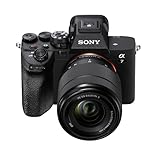
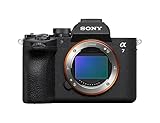
| Specification | DSLR Example: Nikon D850 | DSLR Example: Canon EOS 90D (APS-C) | Mirrorless Example: Nikon Z6 III | Mirrorless Example: Canon EOS R6 Mark II | Mirrorless Example: Sony A7 IV |
|---|---|---|---|---|---|
| Body weight (with battery) | 1,005g | 701g | 760g | 680g | 658g |
| Dimensions (W x H x D) | 146 x 124 x 78.5mm | 140.7 x 104.8 x 76.8mm | 139 x 102 x 74mm | 138.4 x 98.4 x 88.4mm | 131.3 x 96.4 x 79.8mm |
| Viewfinder type | Optical pentaprism, 0.75x, 100% coverage | Optical pentaprism, 0.95x (APS-C), 100% | Electronic OLED, 3.69M dots, 0.80x | Electronic OLED, 3.69M dots, 0.76x | Electronic OLED, 3.69M dots, 0.78x |
| CIPA battery life (per charge) | 1,840 shots (EN-EL15a, optical finder) | 1,300 shots (LP-E6N, optical finder) | 340 shots (EN-EL15c, EVF) / 380 (LCD) | 380 shots (LP-E6NH, EVF) / 450 (LCD) | 520 shots (NP-FZ100, EVF) / 580 (LCD) |
| Max mechanical burst | 7 fps (9 fps with battery grip) | 10 fps | 14 fps (mechanical), 20 fps (electronic) | 12 fps (mechanical), 40 fps (electronic) | 10 fps (mechanical/electronic) |
| In-body stabilization | No | No | Yes, 8 stops | Yes, 8 stops | Yes, 5.5 stops |
| Video (internal) | 4K 30p (1.5x crop), Full HD 120p | 4K 30p (1.6x crop, no Dual Pixel at 4K) | 4K 60p (full-width), 6K RAW via external | 4K 60p (oversampled), Full HD 180p | 4K 60p (1.5x crop), 4K 30p full-width 10-bit |
| Card slots | 1x XQD + 1x SD UHS-II | 1x SD UHS-II | 1x CFexpress Type B + 1x SD UHS-II | 1x CFexpress Type B + 1x SD UHS-II / 2x SD UHS-II | 1x CFexpress Type A + 1x SD UHS-II |
What the numbers mean in practice
- Weight: A mirrorless body is typically 200-300g lighter than its DSLR equivalent. The bigger saving comes from mirrorless APS-C and compact full-frame lenses. A Nikon Z 28mm f/2.8 weighs 155g vs 290g for the DSLR AF-S 28mm f/1.8G. Over a three-lens kit, you save 400-600g.
- Battery life: DSLRs win by a factor of 3-5x on a single charge because the optical viewfinder draws almost no power. If you shoot long events, weddings or wildlife from a hide without charging, a DSLR can last a full day on one battery. Mirrorless shooters should plan on 2-3 batteries for the same coverage.
- Burst speed: Mirrorless wins decisively. Electronic shutters allow 20-40 fps with continuous autofocus, while even the best DSLRs top out around 10-14 fps mechanically. For birds, sports and action, that difference means more keepers.
- Stabilization and autofocus: Almost all mirrorless bodies from 2022 onward have in-body stabilization and on-sensor phase-detect AF covering 90%+ of the frame with eye/animal detection. DSLRs rely on a separate AF module with fewer points clustered in the center and no IBIS unless the lens provides it.
Lens Ecosystem Cost: Where the Real Money Goes
Body price is only about 30-40% of a system’s cost after two years. Lens availability and price matter more. In 2026, DSLR lens systems are mature and cheap on the used market, but no major manufacturer is developing new DSLR lenses. Mirrorless mounts (Canon RF, Nikon Z, Sony E) are where all new optical development is happening.
| Kit Type | DSLR Build (Used EF / F-mount) | Mirrorless Build (New RF / Z / E-mount) | Typical Market Range (New Equivalent) |
|---|---|---|---|
| Starter APS-C: body + 18-55mm + 55-200mm | Canon EOS 90D + EF-S 18-55mm IS STM + EF-S 55-250mm IS STM | Canon EOS R10 + RF-S 18-45mm + RF-S 55-210mm | $650-$900 (DSLR used) vs $1,100-$1,400 (mirrorless new) |
| Full-frame general purpose: body + 24-105mm f/4 + 50mm f/1.8 | Nikon D780 + AF-S 24-120mm f/4G + AF-S 50mm f/1.8G | Nikon Z6 III + Z 24-120mm f/4 S + Z 50mm f/1.8 S | $1,600-$2,100 (DSLR used) vs $2,800-$3,400 (mirrorless new) |
| Full-frame pro zoom trio: 14-24mm f/2.8 + 24-70mm f/2.8 + 70-200mm f/2.8 | F-mount or EF versions, widely available used | Native Z / RF / E f/2.8 trio | $3,000-$4,200 (DSLR used) vs $5,500-$7,200 (mirrorless new) |
The calculation to run before you buy: Estimate your 3-year lens plan and divide by expected shutter count.
Worked example – Cost per 10,000 shots: A used DSLR kit at $900 with two lenses that you sell two years later for $550 costs you $350 in depreciation. If you shoot 15,000 frames per year (30,000 total), that is $0.011 per shot for the body/lens depreciation, plus $0 for extra batteries. A new mirrorless kit at $1,300 that resells for $850 after two years costs $450 in depreciation plus $120 for two spare batteries and a charger, total $570. Over 30,000 shots that is $0.019 per shot. The mirrorless kit costs more per shot initially, but retains higher resale value because the mount is current, and you avoid the risk of buying into lenses that will be harder to service in 2028-2030.
Which System Fits Your Situation
| Your Situation | Best Fit in 2026 | Why |
|---|---|---|
| First interchangeable-lens camera, budget under $1,000, learning stills | Used DSLR (Canon EOS 90D, Nikon D7500/D780) or entry mirrorless (Canon EOS R50, Nikon Z30) | DSLR gives you the cheapest path to quality glass and longest battery life; entry mirrorless gives you better video and lighter carry with modern autofocus |
| Travel, hiking, daily carry prioritized | Mirrorless APS-C or compact full-frame (Sony A7C II, Nikon Zf, Fujifilm X-T50) | Body + lens kit is 30-40% smaller and lighter, IBIS helps handheld low-light shots without a tripod |
| Sports, wildlife, birds in flight | Mirrorless (Canon EOS R6 Mark II / R7, Sony A7 IV / A6700, Nikon Z6 III / Z8) | 20-40 fps electronic bursts, full-frame subject detection, and no viewfinder blackout beat any DSLR for hit rate |
| Weddings, events, long days without charging | DSLR if you already own it, otherwise mirrorless with 3+ batteries | DSLR optical finder and 1,300+ shot battery is reassuring; mirrorless matches it only if you manage power and carry spares |
| Video hybrid (YouTube, interviews, 4K 60p needed) | Mirrorless only | DSLRs are limited to cropped 4K, weaker autofocus in video, and no 10-bit internal or advanced log profiles |
| On a tight budget but want full-frame | Used DSLR full-frame (Nikon D850, Canon 5D Mark IV) as short-term value | Exceptional image quality for 40-60% less than new mirrorless equivalent, but budget for eventual mount transition |
Durability and Ownership Realities
Both systems are durable, but they wear differently.
- Shutter and mirror mechanism: DSLRs have a mechanical mirror box rated for 100,000-300,000 cycles. The mirror is the first part to need service if you shoot high bursts regularly. Mirrorless cameras remove the mirror, but retain a mechanical shutter rated similarly. Using the electronic shutter for most shooting dramatically extends shutter life.
- Sensor dust: DSLRs keep the shutter and mirror closed when changing lenses, which offers slight protection. Mirrorless sensors are exposed when the lens is off and attract dust due to constant sensor charging. Turn the camera off before lens changes, keep the mount facing down, and use a blower monthly. Budget $75-$120 for a professional wet clean once a year if you change lenses outdoors.
- Battery care: Mirrorless batteries cycle faster. Avoid leaving EN-EL15c, LP-E6NH or NP-FZ100 batteries at 100% for weeks. Store at 40-60% if not shooting for a month. Expect 300-500 full charge cycles before capacity drops to ~80%.
- Weather sealing: Mid-range and pro bodies in both systems (D850, Z6 III, R6 Mark II, A7 IV) have magnesium alloy chassis and sealing. Entry bodies do not. No camera is waterproof; sealing only resists light rain and dust.
- Common mistakes: Using adapted DSLR lenses on mirrorless without checking firmware can cause slow autofocus or aperture errors. Storing a camera with the electronic viewfinder sensor always-on drains the battery in a bag. Leaving stabilization on when on a tripod can introduce micro-blur on some systems.
Simple Maintenance Routine (and why it matters)
- After dusty shoots, use a rocket blower on the mount and sensor area with the camera facing down. This prevents dust from welding to the sensor coating through heat and humidity.
- Clean the rear lens element and body contacts with a dry microfiber. Oily contacts cause aperture communication errors.
- Update body and lens firmware together. Mirrorless autofocus improvements often come via lens firmware, not just body updates.
- For DSLRs, run the mirror lock-up sensor cleaning mode before manual blowing to avoid hitting the mirror.
The Buying Decision in 2026
If you own no lenses yet, buy mirrorless. In 2026, Canon RF, Nikon Z and Sony E mounts have complete lineups from 14mm to 600mm, with third-party support from Tamron and Sigma filling affordable gaps. You get lighter kits, silent shooting, and autofocus that locks onto eyes across the frame. The higher upfront cost is offset by a system that will still receive new lenses and repair support in five years.
Choose a used DSLR only for two reasons: you need the absolute lowest entry price with access to decades of used EF and F-mount glass, or you shoot long stills-only assignments where 1,500+ shots per charge and an optical viewfinder matter more than burst speed and video. In those cases, a Nikon D850, D780 or Canon 5D Mark IV remains an excellent stills tool, but treat it as a value buy with a finite upgrade path rather than a long-term system.
A practical compromise: buy a mirrorless body and adapt used DSLR glass as a bridge. Nikon FTZ II and Canon EF-EOS R adapters retain full autofocus and stabilization for most modern DSLR lenses, letting you save on lenses now while moving to native mirrorless glass over time.
Frequently Asked Questions
Can I use my DSLR lenses on a new mirrorless body?
Yes, with a mount adapter. Canon EF to RF and Nikon F to Z adapters maintain autofocus, aperture control and EXIF data for the vast majority of lenses made after 2000. Older screw-drive Nikon AF-D lenses will be manual focus on Z bodies, and some third-party DSLR lenses need a firmware update to focus reliably.
Do mirrorless cameras overheat more than DSLRs?
Only in long video recording. For stills, heat is not an issue. For 4K 60p video longer than 30 minutes, mirrorless bodies can limit recording time to protect the sensor. DSLRs rarely overheat in video because their video specs are lower. Check the specific model’s record time limit if video is critical.
Is the electronic viewfinder as good as an optical viewfinder?
Modern 3.69M-dot OLED viewfinders at 60-120Hz are sharp and bright enough for most shooters and show exposure and color in real time, which helps beginners. Optical finders still offer zero lag and better visibility in very low light without gain noise, and they use no battery. Preference is personal, but for action tracking, the latest mirrorless EVFs with blackout-free bursts have an advantage.
Should I buy a DSLR as an investment in 2026?
Buy it as a tool, not an investment. DSLR bodies and lenses are at the bottom of their depreciation curve, so they hold value reasonably well for the next 2-3 years as used student and backup bodies. Long term, resale demand will continue to shift toward mirrorless mounts.